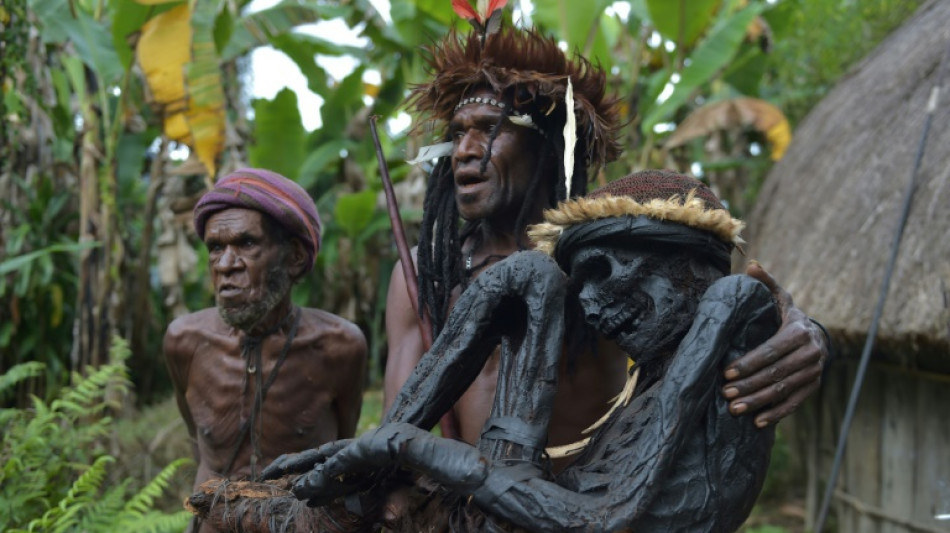
Smoke-dried bodies could be world's 'oldest mummies': study / Photo: © AFP/File

 Verdict due in Mexico trial over murders of Australia, US surfers

 B2PRIME Welcomes Christina Barbash as Commercial Manager

 Russia forcing Kyiv into 'survival' mode before winter, mayor tells AFP

 Closing arguments begin in Maradona death trial

 UEFA president Ceferin to stand for re-election in 2027

 Nearly 300,000 Nepalis at flood risk: study

 Riyadh kindergarten hit by interception debris as Houthis say targeted airport

 Alex Bodi mizează, alături de CRIF, pe investiții transparente și pe prevenirea riguroasă a spălării banilor

 Gulf Labs, Part of Thailand’s $27 Billion GULF Group, Goes Live as an Injective Validator

 EU okay for winter despite 'historically low' gas stocks: operators

 Rwanda to host F1 Grand Prix: sources close to both sides

 EU top diplomat says bloc in favour of UN Lebanon peacekeepers' extension

 Antonelli and Russell to run different Mercedes aero packages in Singapore

 WTO hikes 2026 trade growth forecast on AI boom

 'I love that challenge': Hamilton prays for rain in Singapore

 G.Bissau moves towards postponement of December general election

 Verstappen out to settle 'unfinished business' at Singapore Grand Prix
 WhiteBIT Launches Bitcoin Lightning Network Support, Powered by Voltage

 Oil surges, stocks sink as US reportedly eyes fresh Iran strikes

 Anne Carson: modern takes on Greek classics

 Canada's Anne Carson wins Nobel literature prize

 Ethiopia drones hit Eritrean troops in Tigray

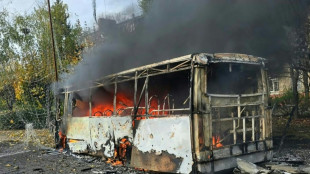 Russian strike on buses kills 30 in frontline Ukrainian city

 Thailand begins extradition process against Chinese journalist

 Quarantine, unease and rumours: Russian city grapples with plague scare

Some ancient societies in China and southeast Asia appear to have smoke-dried their dead, effectively mummifying them thousands of years earlier than their Egyptian counterparts, new research has found.
While the bandage-bound bodies of ancient Egypt date back perhaps as far as 4,500 years ago, the oldest previously known examples of mummification are from ancient Chilean societies.
There, the dry air of the Atacama coastline allowed for natural mummification by drying.
But the bodies retrieved by researchers from China and southeast Asia came largely from humid regions.
The scientists were initially intrigued by the contorted positions of skeletons found in burial sites in China, Vietnam, the Philippines, Laos, Thailand, Malaysia and Indonesia.
The remains appeared to have scorch marks in some places, but in patterns inconsistent with attempts at cremation.
They theorised that the contorted burials might have been possible because no soft tissue remained on the bodies -- the result of mummification by drying, a practice known in parts of Indonesia's Papua.
They tested this by analysing the composition of bone samples from the sites against control samples taken from ancient burial sites in Japan and found evidence of exposure to mostly low-temperature heat.
The intact nature of the skeletons suggested there was no attempt to cremate the bodies, and preservation was the goal.
The samples include some dating back more than 10,000 years, suggesting societies were practicing forms of mummification thousands of years earlier than previously known.
The results were "a great surprise," said Hsiao-chun Hung, senior research fellow at Australian National University.
"The bones are so ancient, and it is remarkable to discover that this tradition is so old, connecting the practices of ancient peoples with those still found in some communities today."
While the scientists said smoking was probably the "most effective option for preserving corpses in tropical climates," the process also likely held cultural significance.
Several societies in Indonesia and Australia are known to have smoke-dried bodies by binding them tightly and placing them above a continuously burning fire, often for several months.
The process allowed relatives to maintain contact with the deceased, and in some cases was believed to allow the spirit to roam freely during the day and return to a body at night.
"I believe this reflects something deeply human -- the timeless wish that our loved ones might never leave us, but remain by our side forever," Hung told AFP.
The researchers theorise that the practice may have been common in ancient Asian civilisations.
"This tradition may have been known among hunter-gatherer societies across a vast region, for many millennia," they wrote in the study, published Monday in the Proceedings of the National Academy of Sciences journal.
F.Müller--BTB