China, EU stand firm on shipping emission deal despite US threats / Photo: © AFP

 North Korea demands South show 'utmost respect' to restore relations

 Saudi says three dead in airport attacks claimed by Houthis

 'Mad dream': New showcase for African film opens in London

 All Blacks coach Rennie says Wallabies exit 'part of the game'

 The growing protests against India's poll body - and PM Modi

 Stocks fall further as oil spike fans fresh inflation worries

 Bad COP, worse COP? EU tempers hopes for UN climate summit

 Rookie Henry named in Wallabies midfield to face All Blacks

 Housing crisis set to dominate Spain's snap election
 Gas, health care, utilities: high costs squeeze US midterm voters

 New Zealand Rugby seeks injunction over PNG Chiefs name

 Samsung expects 780% quarterly operating profit jump on AI boom
 Guardians survive with 9-3 win over White Sox

 Saudi Arabia says 3 dead at airports after Houthis claim attacks
 Stocks slide as oil sees volatile trading day over Iran war fears

 Microsoft pushes AI vision with new, expensive Surface laptop

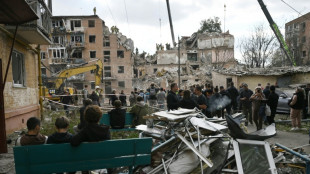 Five children among 28 killed in Russian strikes on Ukraine

 Odell Beckham Jr signs with Minnesota Vikings

 Saudi Arabia says three dead at airports after Houthis claim attacks

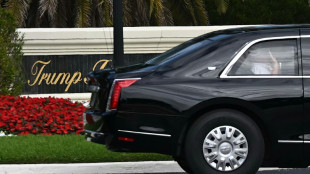 Trump plans to turn Florida golf course into presidential retreat

 WHO says cannot conduct full risk assessment on Russia plague reports

 After botched execution, US woman is awake and shackled to bed

 New Zealand fly-half Mo'unga ruled out of Australia Tests
 Protests in major Turkish city after mayor defects to Erdogan party
 Climate change strips island's title of largest penguin colony: study

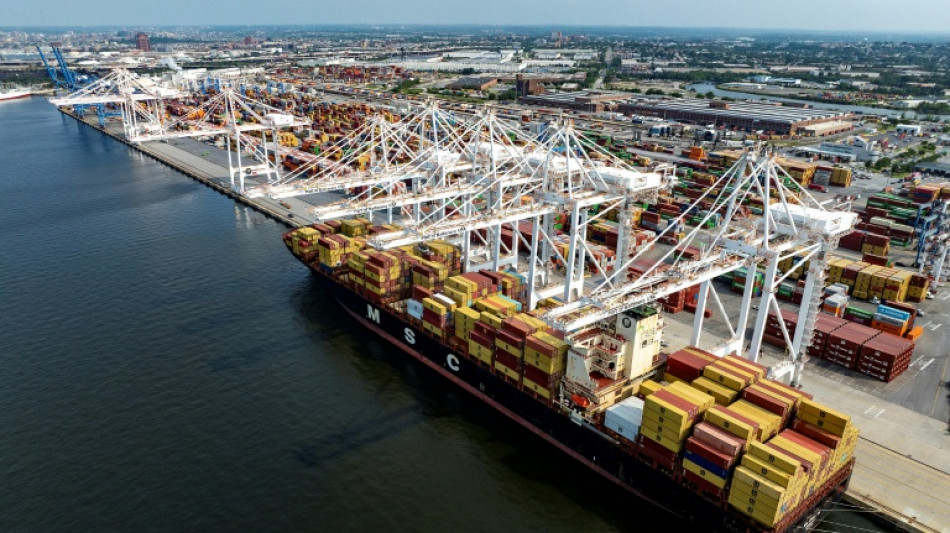
China, the European Union and several other members of the International Maritime Organization reaffirmed their support on Tuesday for ambitious plans to cut shipping emissions, despite US threats.
Initially approved in April, the London-based IMO are set to vote on Friday on formally adopting the Net Zero Framework (NZF), the first global carbon-pricing system.
However, Washington's threat to impose sanctions on those supporting it had cast doubt on the future of the framework, just as the summit where it is due to be adopted got under way.
The summit's first day on Tuesday was marked by friction between members supporting the NZF and those opposing it.
The framework would require ships to progressively reduce carbon emissions from 2028, or face financial penalties.
Last week, the United States threatened countries who vote in favour of the framework with sanctions, visa restrictions and port levies, calling the proposal a "global carbon tax on the world".
But several countries, including Britain, Brazil, China and the European Union, reaffirmed their commitment during Tuesday's meeting of the 176-nation IMO.
"We believe that reaching a consensus on global implementation (of the framework) is essential," a representative from China told members.
- Oil producers' opposition -
To be adopted, the framework needs the backing of two-thirds of the present and voting IMO members that are parties to the so-called MARPOL anti-pollution convention.
The convention has 108 members.
A majority of members -- 63 states -- that voted in favour of the NZF in April are expected to maintain their support on Friday.
The plan would charge ships for emissions exceeding a certain threshold, with proceeds used to reward low-emission vessels and support countries vulnerable to climate change.
Several major oil producers -- Saudi Arabia, Russia and the United Arab Emirates -- voted against the measure, and are expected to do so again this week, arguing it would harm the economy and food security.
Pacific Island states, which abstained in the initial vote over concerns the proposal was not ambitious enough, are now expected to support it.
The United States withdrew from IMO negotiations in April and did not comment on the proposal until last week.
US threats could affect "countries more sensitive to US influence and vulnerable to these retaliations", a European source told AFP.
"We remain optimistic about the outcome, but it will probably be tighter than before, with a higher risk of abstention," the source added.
Countries highly dependent on the maritime industry, such as the Philippines and Caribbean islands, would be particularly impacted by US visa restrictions and sanctions.
Contacted by AFP, IMO Secretary-General Arsenio Dominguez declined to respond directly to the US statement, maintaining he was "very confident" about the NZF vote.
If the global emissions pricing system was adopted, it would become difficult to evade, even for the United States.
IMO conventions allow signatories to inspect foreign ships during stopovers and even detain non-compliant vessels.
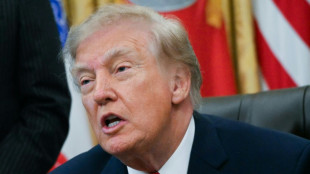
Since returning to power in January, US President Donald Trump has reversed Washington's course on climate change, denouncing it as a "scam" and encouraging fossil fuel use by deregulation.
J.Fankhauser--BTB