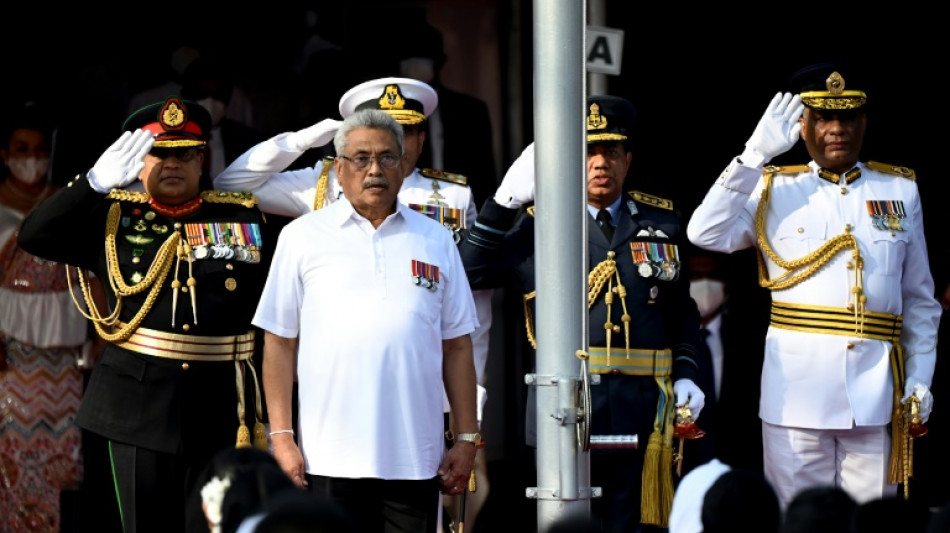
Sri Lanka calls for diaspora investment on independence day / Photo: ©

 Prague’s Concert for the Future Kicks Off on Wenceslas Square

 Prince William and Princess of Wales to Announce Earthshot Prize Winners in Mumbai

 Indonesia Forest Fires: Health Crisis, Diplomatic Strains and the Search for Solutions

 BYD Dolphin G Leasing Deal: Plug-in Hybrid Supermini Available from £174 a Month

 JUEL Group Expands from Real Estate to Hospitality with Hyatt Centric Malta Opening

 French Economy Shrinks 0.1% as Consumer Confidence Slumps

 Wall Street Ends Turbulent Week Higher Despite Inflation and AI Jitters
Sri Lanka marked its independence day on Friday with an appeal to its diaspora to send money home to overcome the island's worsening economic crisis and a pledge to protect foreign investments.
President Gotabaya Rajapaksa urged millions of Sri Lankans abroad to invest their savings in their home country, which is facing its worst debt crisis since independence from Britain 74 years ago.
"Expatriate Sri Lankans who provide foreign exchange to the country are a major resource to us," Rajapaksa said.
"I invite all expatriate Sri Lankans to invest in their homeland."
Colombo's foreign reserves, which stood at $7.5 billion when Rajapaksa took office in November 2019, have fallen by more than half, to $3.1 billion.
Worker remittances, Sri Lanka's number one foreign currency source, fell nearly 60 percent in December. For 2021 as a whole, the figure dropped a record 22.7 percent, to $5.49 billion.
Tourism, another key source of income for the country, has been battered by the coronavirus pandemic.
The government imposed a broad import ban in March 2020 in a bid to save foreign currency, leading to shortages of food and fuel as well as raw materials needed for manufacturing and export-oriented industries.
Rajapaksa, who came to power two years ago pledging to "retake" all state enterprises either leased or partly sold to foreign companies by the previous administration, called for greater foreign involvement in Sri Lanka's economy.
"Foreign investment is especially important for large-scale projects, industries requiring modern technological know-how and new ventures that open up global market opportunities for us," he said.
He criticised "those who attempt to propagate incorrect public opinion against foreign investments, based on political motives".
His own coalition cabinet is divided on a move to sell a stake in a state electricity utility to a US company.
Faced with record inflation, falling reserves and warnings from international rating agencies about Sri Lanka's ability to service its $35 billion external debt, Rajapaksa's finance minister brother Basil announced Wednesday that he had sought technical advice from the International Monetary Fund.
The IMF responded by saying it was ready to discuss "options" if the government asked for financial support.
"While the IMF has not received a request for financial support from Sri Lanka, the staff stands ready to discuss options if requested," mission chief Masahiro Nozaki said in a written statement to AFP in Washington.
In an address to the nation ahead of a military parade, Rajapaksa made no reference to seeking IMF help, but said he was focused on finding both short- and long-term solutions and called for an "optimistic approach".
M.Furrer--BTB