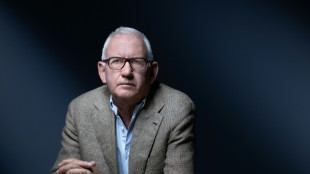
New Japan PM vows to take US ties to 'new heights' with Trump / Photo: © JIJI Press/AFP

 Bad COP, worse COP? EU tempers hopes for UN climate summit

 Rookie Henry named in Wallabies midfield to face All Blacks
 Housing crisis set to dominate Spain's snap election
 Gas, health care, utilities: high costs squeeze US midterm voters

 New Zealand Rugby seeks injunction over PNG Chiefs name
 Samsung expects 780% quarterly operating profit jump on AI boom
 Guardians survive with 9-3 win over White Sox

 Saudi Arabia says 3 dead at airports after Houthis claim attacks
 Stocks slide as oil sees volatile trading day over Iran war fears

 Microsoft pushes AI vision with new, expensive Surface laptop

 Five children among 28 killed in Russian strikes on Ukraine

 Odell Beckham Jr signs with Minnesota Vikings

 Saudi Arabia says three dead at airports after Houthis claim attacks
 Trump plans to turn Florida golf course into presidential retreat

 WHO says cannot conduct full risk assessment on Russia plague reports

 After botched execution, US woman is awake and shackled to bed

 New Zealand fly-half Mo'unga ruled out of Australia Tests
 Protests in major Turkish city after mayor defects to Erdogan party

 Climate change strips island's title of largest penguin colony: study

 Rubio says West must choose between national power or decline

 Russia's plague scare: What we know
 French luxury giant to fund redevelopment of two Paris streets: city hall

 Trump wants to turn Florida golf course into presidential retreat

 Mayor of Turkish opposition stronghold defects to Erdogan party

 Children among heavy casualties in Ukraine after Russian strikes

Japan's new Prime Minister Sanae Takaichi said Friday she will bring US ties to "new heights" in talks with President Donald Trump, while taking a swipe at China and vowing a stricter stance on foreigners.
In her first policy speech, Takaichi also told a rowdy parliament that the target of spending two percent of gross domestic product on defence will be brought forward by two years.
Trump, who wants Tokyo and other allies to boost their military spending, is due to visit Japan next week -- just days after Takaichi took office.
Tokyo's previous target was to spend two percent of GDP on defence in the 2027-28 fiscal year but Takaichi wants this achieved in the current tax year.
Takaichi said she would build "a relationship of trust" during Trump's visit, "elevating the Japan-US relationship to new heights".
During her maiden speech, China hawk Takaichi also warned that "the military activities of neighbouring countries -- China, North Korea and Russia -- have become a grave concern."
"The free, open and stable international order we have grown accustomed to is being profoundly shaken by historic shifts in the balance of power and intensifying geopolitical competition," she said.
Takaichi has previously said that "Japan is completely looked down on by China", and that Tokyo must "address the security threat" posed by Beijing, while calling for more security cooperation with Taiwan.
But Japan's first woman prime minister also has a host of other complex issues to tackle in the coming months, including a flatlining economy and a declining population.
On Friday she said the country needed foreign workers to address labour shortages, but alluded to growing anxiety over foreigners in Japan, a country with historically low levels of immigration.
"Some illegal activities and breaches of rules by certain foreigners have created situations where members of the public feel uneasy and perceive unfairness," Takaichi said.
"While we draw a clear line from xenophobia, the government will respond resolutely to such acts," she added, saying they will enforce compliance with existing rules and examine sensitive issues such as land acquisition.
The populist Sanseito party, which calls immigration a "silent invasion", has been making gains in recent elections.
- Rising inflation -
A new poll published Thursday by the Yomiuri Shimbun daily put support for Takaichi at 71 percent, the fifth-highest for a new cabinet since 1978.
Ahead of her parliament address, Takaichi had promised to ease pressure on households, saying the cost-of-living squeeze was a priority and telling her cabinet to draw up measures to address it.
However, there was little further detail Friday on the promised economic package.
Takaichi's predecessor Shigeru Ishiba survived barely a year in office, with voters hammering the ruling party in elections partly because of rising prices.
Official data Friday showed inflation accelerated last month, with the consumer price index jumping to 2.9 percent in September from 2.7 percent the previous month.
But without volatile fresh fruit and energy prices, the reading eased to 3.0 percent from 3.3 percent.
A particular cause of voter anger over the past year has been skyrocketing prices for rice.
This was linked to a very hot summer in 2023 and panic-buying after a "megaquake" warning last year, amongst other factors.
Prices for the staple in September climbed 48.6 percent year-on-year, though the rate has eased from recent months, having hit around 100 percent in June.
Takaichi has long-advocated for more government spending and easing monetary policy to spur growth, and her appointment has boosted stocks to record highs.
Since taking office, however, she has said monetary policy decisions would be left to the Bank of Japan (BoJ).
The BoJ has been "normalising" its super-easy monetary policy and inflation has been above target for some time.
"Overall, the big picture continues to be that price pressures appear to be reasonably firm," said Abhijit Surya at Capital Economics.
D.Schneider--BTB