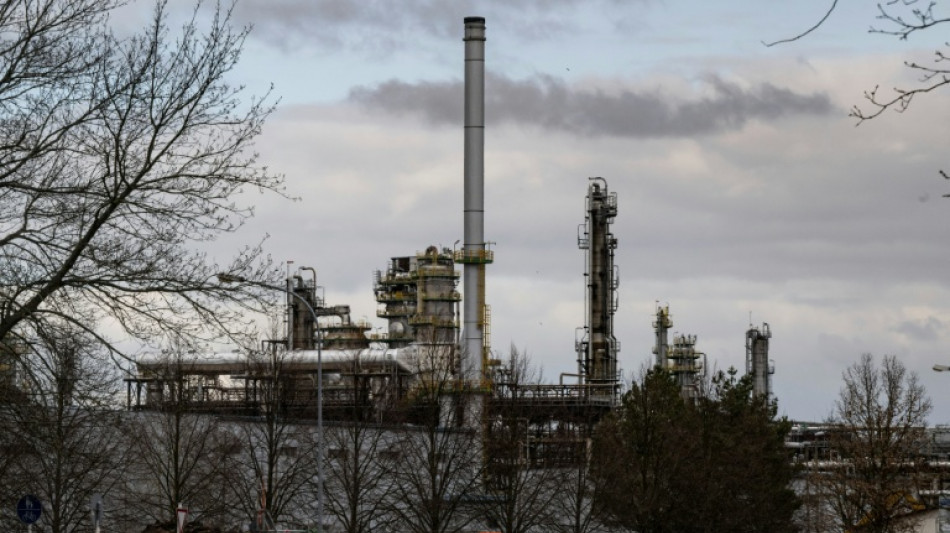
Berlin says Rosneft subsidiaries not impacted by US sanctions / Photo: © AFP/File

 Bad COP, worse COP? EU tempers hopes for UN climate summit

 Rookie Henry named in Wallabies midfield to face All Blacks

 Housing crisis set to dominate Spain's snap election
 Gas, health care, utilities: high costs squeeze US midterm voters

 New Zealand Rugby seeks injunction over PNG Chiefs name
 Samsung expects 780% quarterly operating profit jump on AI boom
 Guardians survive with 9-3 win over White Sox

 Saudi Arabia says 3 dead at airports after Houthis claim attacks
 Stocks slide as oil sees volatile trading day over Iran war fears

 Microsoft pushes AI vision with new, expensive Surface laptop

 Five children among 28 killed in Russian strikes on Ukraine

 Odell Beckham Jr signs with Minnesota Vikings

 Saudi Arabia says three dead at airports after Houthis claim attacks

 Trump plans to turn Florida golf course into presidential retreat

 WHO says cannot conduct full risk assessment on Russia plague reports

 After botched execution, US woman is awake and shackled to bed

 New Zealand fly-half Mo'unga ruled out of Australia Tests
 Protests in major Turkish city after mayor defects to Erdogan party
 Climate change strips island's title of largest penguin colony: study

 Rubio says West must choose between national power or decline

 Russia's plague scare: What we know

 French luxury giant to fund redevelopment of two Paris streets: city hall

 Trump wants to turn Florida golf course into presidential retreat
 Mayor of Turkish opposition stronghold defects to Erdogan party
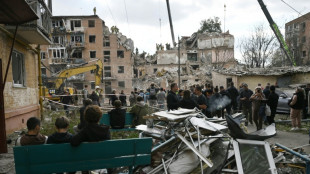 Children among heavy casualties in Ukraine after Russian strikes
US sanctions targeting Rosneft will not impact the Russian oil giant's German subsidiaries, the German government told AFP Tuesday, downplaying fears their operations could be affected as they were not formally excluded.
Last week US President Donald Trump slapped sanctions on Rosneft and another Russian oil giant, Lukoil, complaining that talks with Vladimir Putin on ending the Ukraine war were going nowhere.
Rosneft's German business operations -- it still holds stakes in three German refineries that account for 12 percent of the country's refining capacity -- were not provided an exemption.
Berlin has placed the assets under state control and insists they are "decoupled" from their Russian parent company, but it has held off from a full nationalisation, instead seeking a buyer for the shares.
Concerns had mounted that Rosneft's German operations might be forced to halt, with reports saying that oil traders and banks were threatening to cut them off.
But the economy ministry said that it had now "received assurances from the relevant US authorities that the sanctions are not intended to target Rosneft's German subsidiaries".
"Business transactions with the subsidiaries can continue" once the sanctions, which will freeze Rosneft's assets and prohibit US companies from doing business with it, come into effect, a spokesman told AFP.
- Ownership limbo -
The US administration had provided a document offering reassurance that the sanctions are not intended to target German subsidiaries, and Berlin expects to soon receive "further clarifications that provide legal certainty", he said.
The spokesman noted that Rosneft's German businesses "cannot be controlled from Russia and do not generate income for the Russian parent company or the Russian state".
Britain also sanctioned Rosneft last week, and provided an exemption to the company's German subsidiaries.
The German government placed Rosneft's German assets under the trusteeship of the federal energy regulator in September 2022, in response to Russia's full-scale invasion of Ukraine.
But Berlin has struggled to find a permanent solution, and has been forced to extend trusteeship every six months while it hunts for a buyer for the assets.
The Financial Times reported the Qatar Investment Authority had expressed interest, but Rosneft was reluctant to sell, arguing they would have been more valuable had Berlin not seized them.
Rosneft's interests in Germany include a stake in the major PCK refinery, which supplies oil to Berlin and the surrounding region.
A spokeswoman for the refinery told AFP that PCK was "in contact with the energy ministry about the ongoing talks with the US sanctions authorities".
After Moscow sent its forces into Ukraine, Germany sought to take control of a swathe of Russian energy assets in the country.
It seized Russian gas firm Gazprom's subsidiary in the country, which had been a key energy supplier to Germany before the war but slashed deliveries in apparent retaliation for Western sanctions on Moscow.
The German government also had to step in to nationalise Uniper after the gas importer was pushed to the brink of bankruptcy when Gazprom halted its deliveries.
F.Pavlenko--BTB