Under pressure? EU states on edge over migrant burden-sharing / Photo: © AFP

 After botched execution, US woman was nearly taken off life support before revival
 Searing AIDS drama 'Elsinore' opens London film festival

 Evicted pensioner who sparked Spain housing protests dies: tenant union
 Golf star Rahm quitting LIV tour over 'unacceptable' terms

 Thousands march fearing return of a Bolsonaro presidency in Brazil
 French PM denies police ordered to confront student protesters

 Rubio touts US power, calls on Europe to emerge from 'slumber'

 Trump says 'we don't think' Russian plague is bio-weapon
 Five children among 26 killed in Ukraine after Russian strikes

 Man City should 'accept' punishment for rule breaches, says Lineker

 US woman who survived botched execution is awake and speaking
 From 1800s to modern pharma: a Nobel-winning chemistry quest

 Southampton boss Eckert given suspended ban over 'Spygate'

 Russia warns of 'false' information as second plague case reported
 IEA ready to release more oil reserves if necessary
 HSBC 'consults' over UK unit job cuts amid AI adoption

 UK court quashes five ex-traders' Libor rate rigging convictions
 XM Receives “Global Customer Experience Leader Award 2026” at the TrustFinance Performance Awards
 Stocks slide as oil climbs on Mideast flareup

 Heavy casualties in Ukraine after Russian strikes
 French wine harvest set to hit historic low

 Kyiv 'cannot agree' to EU membership limiting food exports: minister

 Arteta targets more Arsenal glory after signing new deal until 2030

 Russell hit with Singapore grid penalty for taking new power unit

 Spotify expands audiobooks to more than 180 markets

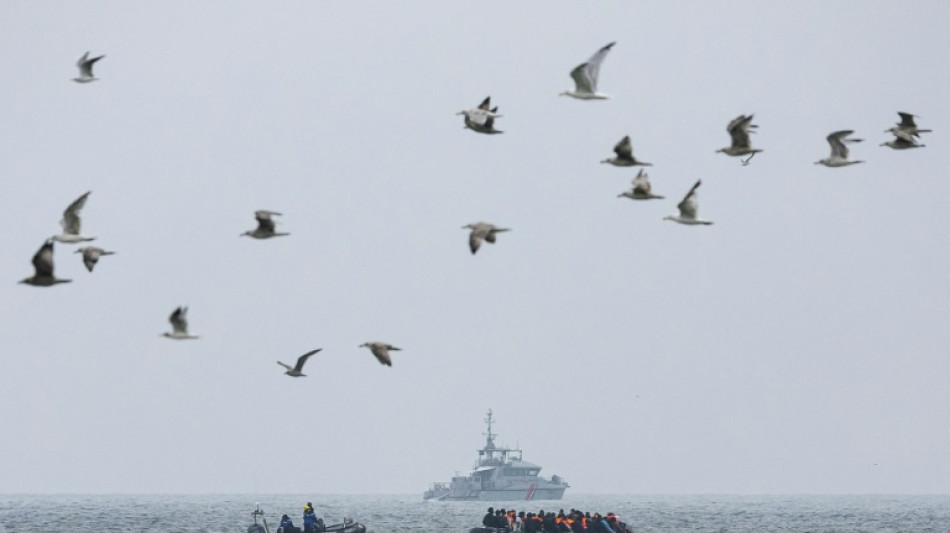
Which EU countries face the most pressure from migration? The question is proving deeply divisive as capitals scramble to agree by year-end how to redistribute at least 30,000 asylum seekers across the bloc.
The 27-nation European Union adopted a sweeping overhaul of its migration policies in 2024, soon to come into force.
A key element is a new "solidarity" system for managing asylum seekers, aimed at easing the burden on frontline countries such as Spain, Greece and Italy.
The idea is broadly speaking to sort member states into different categories:
-- Those deemed by Brussels to be under "migratory pressure", based on criteria such as the number of irregular arrivals and sea rescue operations.
-- Other countries, which will be required to either take in a share of asylum seekers from countries under pressure, or provide them with financial support amounting to 20,000 euros ($23,000) per person.
- Feeling the pressure -
There the trouble begins: how to decide who qualifies as "under pressure".
"You can see in the political rhetoric that everyone feels that they are under migratory pressure," said a source within the European Commission, which is tasked with sorting countries into categories.
Member states are lobbying hard to influence the methodology used.
In recent days, for instance, Sweden has pointed to the 300,000 asylum applications it received over the past decade as a high figure for a "medium-size country".
Belgium highlights that its migrant "reception centres are full", while Germany has stressed it has taken in more than a million Ukrainian refugees since Russia's invasion in 2022.
France, meanwhile, has underscored its maritime rescue operations for migrants attempting to cross the Channel to Britain.
The commission is expected to unveil its proposal next week, following nearly a month of delays.
That will form the basis for negotiations among member states on how many additional asylum seekers each is willing to accept -- or how much financial support they are ready to offer.
At least 30,000 migrants will need relocating each year under the new system, with a decision on who goes where required by the end of December.
- 'Tricky balance' -
But with governments across the bloc under pressure to tighten immigration policies, putting a hand up to take in extra asylum seekers is fraught with political risk.
"It's an extremely tricky balance to strike," said Camille Le Coz, head of the Migration Policy Institute Europe think tank.
All the more so because "countries don't trust each other on this question," she told AFP.
Several states -- including Germany, Belgium and The Netherlands -- accuse frontline countries of allowing migrants to move on into the bloc, rather than processing their asylum claims as required under EU law.
Frontline countries tend to reject the charge.
"The Germans are on edge -- there are tensions with the Italians and the Greeks over this file," said an EU diplomat, granted anonymity to discuss the sensitive matter.
"It's not easy, because everyone is watching one another and wondering: 'Will the other member state end up with a better deal?'" he said.
N.Fournier--BTB