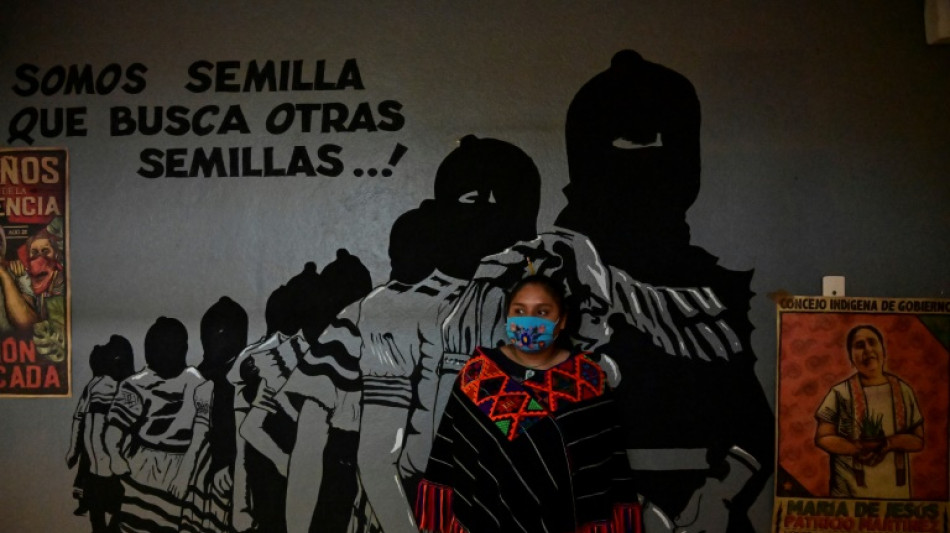
Mexican schoolboy set on fire for being Indigenous / Photo: © AFP/File

 Kenya reports first-ever Ebola death

 Tennis world No.1 Sinner's season over due to knee injury

 Yemen's Houthis claim attack on Riyadh airport, deny losing territory
 7-Eleven exits India amid mounting competition

 The alleged murder by US marine on Okinawa: five things to know

 End of an era as Messi prepares to hang up Argentina boots

 Superstar duo headline strong New Zealand squad for Rugby League World Cup

 South Korea warns of possible AI use in banking hacks

 EU vows AI rules will protect Europeans. Will they?

 Myanmar leader to visit Malaysia after migrant returns begin
 Germany's AfD poised to preside over state assembly for first time
 Australia's opposition vows 'largest cut to immigration' in country's history
 Ready, set, snooze: Sleep-deprived Japanese compete for best-rested

 Falcons thump Saints 45-24 as New Orleans marks Katrina anniversary

 Tuvalu govt adviser says Australia overstepped in pre-COP visit
 Asian stocks mixed despite tech-led Wall St record

 Tens of thousands expected in Paris for high school protests

 AI borrowing binge rattles US markets

 Young Canadians sue government over alleged climate failures

 White Sox down Guardians to take 2-0 series lead
 NHL record-breaker Ovechkin says current season will be his last
 France roar back in Nations League as Italy beat Turkey
 Messi readies for final farewell in Argentina send-off
 Esposito seals Italy win over Turkey in Nations League

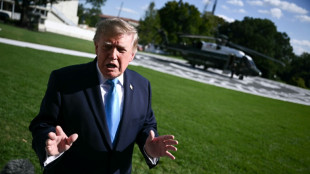 Russia downplays plague reports as Trump offers US help

A Mexican schoolboy was set on fire and badly burned in a classroom -- his "only crime" was speaking an Indigenous language in a country struggling to end racial discrimination.
Two classmates are accused of pouring alcohol on Juan Zamorano's seat at a high school in the central state of Queretaro in June.
When the 14-year-old realized his trousers were wet and stood up, one of them set Zamorano on fire, according to his family.
He suffered second and third degree burns and was only this week discharged from hospital.
Juan had already suffered weeks of bullying because of his Indigenous Otomi roots, according to his family's lawyers, who filed complaints against the alleged attackers and school authorities.
With an estimated population of 350,000, the Otomi are one of dozens of Indigenous groups in the Latin American country.
The Otomi language is Juan's mother tongue "but he doesn't like to speak it much because it's a cause of ridicule, harassment and bullying," Ernesto Franco, one of the family's lawyers, told AFP.
The family has alleged to the media that even Zamorano's teacher harassed him because of his origin.
"She thinks that we're not her class, we're not her race," Zamorano's father, who described the attack as "attempted murder," told the newspaper El Universal.
- 'Recurring attacks' -
Queretaro state prosecutors have announced an investigation into the attack and the alleged perpetrators face possible legal proceedings.
President Andres Manuel Lopez Obrador said that if necessary, the country's attorney general's office might handle the case.
Juan's "only crime was speaking Otomi," tweeted Lopez Obrador's spokesman Jesus Ramirez, who said that eradicating racism was everyone's responsibility.
Mexico's National Institute of Indigenous Peoples urged the authorities to "sanction minors and adults involved in harassment and recurring attacks on minors."
Urgent measures are needed in schools to prevent further cases of discrimination and racism, it said.
Discrimination is common in Mexico, a country of 126 million where 23.2 million people identify as Indigenous and more than 7.3 million speak an Indigenous language, according to a 2020 census.
In a case in March, an Otomi woman accused staff at a restaurant in a trendy Mexico City neighborhood of preventing her from using the toilet, telling her it was only for customers.
- Systemic racism -
Around 40 percent of the Indigenous population complained of having faced discrimination in a survey published by the national statistics agency in 2018.
Almost half felt that their rights were respected little or not at all.
The survey also revealed prejudices against the Indigenous population.
Three out of 10 people questioned agreed with the statement: "The poverty of Indigenous people is due to their culture."
Cases like Zamorano's are not isolated but part of systemic racism, said Alexandra Haas, the Mexico head of the international charity Oxfam.
In 2019, an Oxfam study in Mexico found that speaking an Indigenous language, identifying with an Indigenous, Black or mixed ethnicity community, or having a darker skin tone, meant less chance of educational and labor advancement.
Mexico has a law aimed at preventing discrimination and has created institutions responsible for dealing with complaints.
Even so, Zamorano's case is a stark illustration of "how far discrimination can go," according to Haas, a former president of the country's National Council to Prevent Discrimination.
"We can't say that it was impossible to predict. There have been centuries of racial, Indigenous and very structural discrimination," she said.
S.Keller--BTB