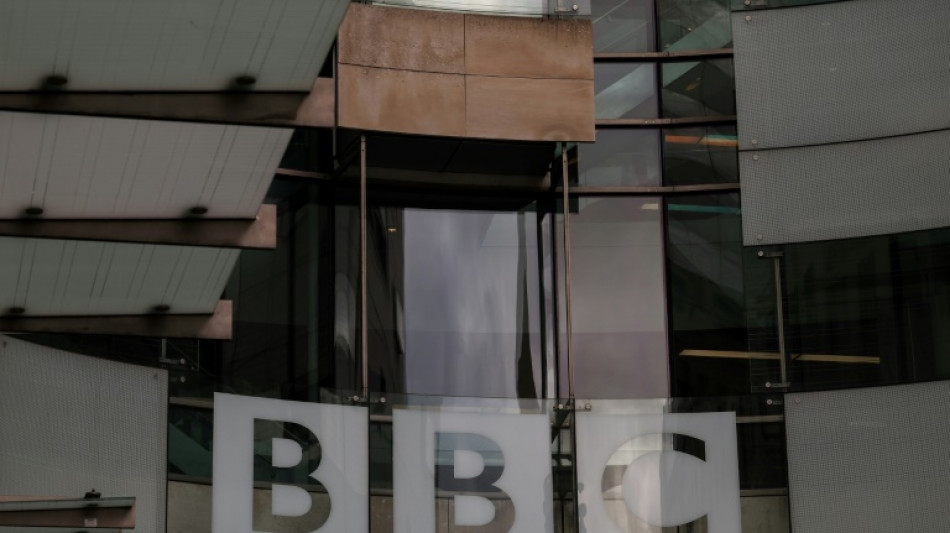
BBC caught in crossfire of polarised political and media landscape / Photo: © AFP

 Rubio touts US power, calls on Europe to emerge from 'slumber'
 Trump says 'we don't think' Russian plague is bio-weapon
 Five children among 26 killed in Ukraine after Russian strikes
 Man City should 'accept' punishment for rule breaches, says Lineker
 US woman who survived botched execution is awake and speaking
 From 1800s to modern pharma: a Nobel-winning chemistry quest
 Southampton boss Eckert given suspended ban over 'Spygate'
 Russia warns of 'false' information as second plague case reported
 IEA ready to release more oil reserves if necessary
 HSBC 'consults' over UK unit job cuts amid AI adoption
 UK court quashes five ex-traders' Libor rate rigging convictions
 XM Receives “Global Customer Experience Leader Award 2026” at the TrustFinance Performance Awards
 Stocks slide as oil climbs on Mideast flareup
 Heavy casualties in Ukraine after Russian strikes
 French wine harvest set to hit historic low
 Kyiv 'cannot agree' to EU membership limiting food exports: minister
 Arteta targets more Arsenal glory after signing new deal until 2030
 Russell hit with Singapore grid penalty for taking new power unit
 Spotify expands audiobooks to more than 180 markets
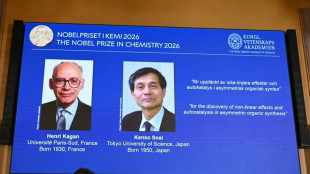 French-Japanese duo wins chemistry Nobel for solving molecular 'mystery'
 England's Nations League surge helps heal World Cup wounds
 Mayor of opposition stronghold Izmir defects to Erdogan party
 Mertens beats Gauff to set up Swiatek clash at China Open
 Benin full of pride at role in Messi's last dance
 France suspends stun grenade use at student protests ahead of PM speech

Accused of being biased by some, defended as a champion of impartiality by others, the BBC is once again the subject of a thorny debate about the role of a publicly funded broadcaster in an increasingly polarised landscape.
The BBC is regularly used as political football, with the organisation facing flak for how it chooses to cover issues from climate change to Brexit.
Now it is under greater scrutiny than ever before, following the revelation that a documentary it aired last year misleadingly edited a speech by US President Donald Trump.
Trump has issued an unprecedented threat to sue over the documentary, which was broadcast before the US presidential ballot and examined why US voters were prepared to re-elect a convicted felon.
In the former constituency of ex-prime minister Boris Johnson, a vocal critic of the BBC, one pensioner questioned by AFP appeared torn between her attachment to the BBC and its struggles sometimes to fulfil its public service duty when it comes to the news.
"I don't want to get rid of the BBC... but I think they have been biased on a lot of things," said Sandra Madden, a resident of Uxbridge, west London.
The octogenarian retiree said the editing of Trump's speech -- which gave the impression he made a direct call for violence before his supporters attacked the Capitol in January 2021 -- was "really the straw that broke the camel's back".
It showed that the BBC was "too left-wing", she concluded.
The public broadcaster nevertheless remains the most popular UK news source, according to the latest figures published by media watchdog Ofcom.
- 'Weaponised' -
Around half of Britons have a positive opinion of the BBC, compared to 29 percent who hold a negative view, according to a YouGov poll published this week.
While 31 percent said it was too left-wing, 19 percent said it was too right-wing.
BBC chairman Samir Shah this week defended the organisation's "sacred job" of upholding impartiality and the truth.
On hot-button issues like immigration, transgender rights, Gaza or the rise of the far-right, the BBC finds itself caught in the crossfire of different ideological camps.
The BBC "has been weaponised by people who want to use it as an example (in their view) of the world going too far in one direction", said Lee Edwards, professor at the Department of Media and Communications at London School of Economics (LSE).
In a parliamentary debate this week, Conservative lawmakers led the charge attacking the BBC.
Oliver Dowden accused it of being "obsessed" with liberal and urban issues, while Nigel Huddleston slammed it for "seeking inclusivity and diversity" in "every area".
But centrist MP Anna Sabine from the Liberal Democrats said the BBC was vital in fending off "dangerous misinformation and conspiracy theories that populists like... Donald Trump trade on".
- 'Expectations' -
And the BBC's international World Service, described as a "light on the hill" by Culture Secretary Lisa Nandy, reaches more than 318 million people around the globe every week.
The World Service is "an absolute lifesaver" in some countries, said 78-year-old writer Jennifer Kavanagh.
"The BBC has always been attacked from the right and from the left," Kavanagh told AFP in central London this week after the Trump speech edit led to the resignation of two top BBC executives.
"It's important not to exaggerate the collapse of public faith in the BBC," insisted Dan Hind, an author focusing on media and democracy.
But he said more and more people, including young people, were "slipping outside the zone of the BBC influence", as a result of growing "distrust" in its content and reliance on social media for information.
Robin Scott, another penisoner in Uxbridge, said she no longer relies on the BBC, and instead watches GB News -- a right-wing commercial rival to the BBC where anti-immigration Reform UK party leader Nigel Farage regularly presents a show.
"They talk about things... that you never see talked about on the BBC," said Scott.
The BBC "struggles to compete with these platforms because it's just not sensational, tries to be sober, it tries to be balanced, it tries to be accurate", said Hind.
In contrast, "a lot of very extreme political ideas are becoming much more easily accessible" on less-regulated platforms on social media, often originating in the United States where the discrediting of traditional media has worsened under Trump, he explained.
Since people have a "certain expectation" of the broadcaster, "when you have events like the Trump speech or the debates around the coverage of the Gaza war, those things are perhaps more existential" for the BBC, said LSE professor Edwards.
P.Anderson--BTB