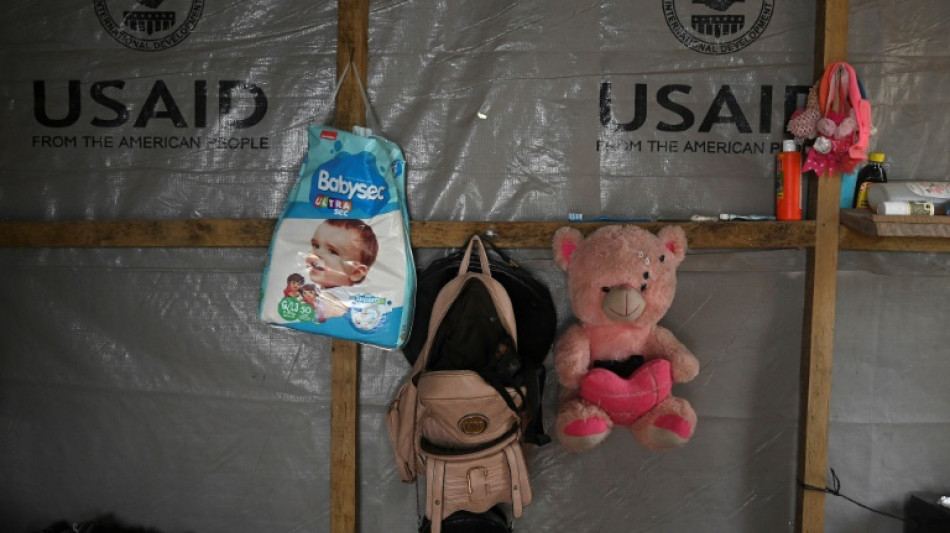
Western aid cuts could cause 22.6 million deaths, researchers say / Photo: © AFP/File

 Rubio touts US power, calls on Europe to emerge from 'slumber'

 Trump says 'we don't think' Russian plague is bio-weapon

 Five children among 26 killed in Ukraine after Russian strikes

 Man City should 'accept' punishment for rule breaches, says Lineker

 US woman who survived botched execution is awake and speaking

 From 1800s to modern pharma: a Nobel-winning chemistry quest

 Southampton boss Eckert given suspended ban over 'Spygate'

 Russia warns of 'false' information as second plague case reported

 IEA ready to release more oil reserves if necessary
 HSBC 'consults' over UK unit job cuts amid AI adoption

 UK court quashes five ex-traders' Libor rate rigging convictions
 XM Receives “Global Customer Experience Leader Award 2026” at the TrustFinance Performance Awards
 Stocks slide as oil climbs on Mideast flareup

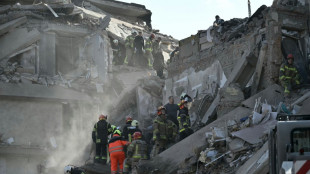 Heavy casualties in Ukraine after Russian strikes
 French wine harvest set to hit historic low

 Kyiv 'cannot agree' to EU membership limiting food exports: minister

 Arteta targets more Arsenal glory after signing new deal until 2030

 Russell hit with Singapore grid penalty for taking new power unit

 Spotify expands audiobooks to more than 180 markets

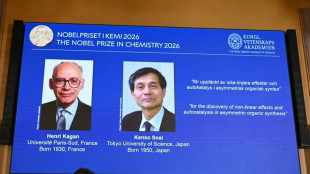 French-Japanese duo wins chemistry Nobel for solving molecular 'mystery'

 England's Nations League surge helps heal World Cup wounds

 Mayor of opposition stronghold Izmir defects to Erdogan party
 Mertens beats Gauff to set up Swiatek clash at China Open

 Benin full of pride at role in Messi's last dance

 France suspends stun grenade use at student protests ahead of PM speech

More than 22 million people, many of them children, could die preventable deaths by 2030 due to aid cuts by the United States and European countries, new research said Monday.
The findings are an update of a study earlier this year that said President Donald Trump's sweeping reductions in assistance, including the dismantling the US Agency for International Development (USAID), could lead to 14 million additional deaths.
The new research, seen by AFP, takes into account reductions in all official development assistance as Britain, France and Germany also slash their aid to the developing world.
"It is the first time in the last 30 years that France, Germany, the United Kingdom and the United States are all cutting aid at the same time," said one of the new research's authors, Gonzalo Fanjul, policy and development director at the Barcelona Institute for Global Health (ISGlobal).
"The European countries do not compare with the US, but when you combine all of them, the blow to the global aid system is extraordinary. It's absolutely unprecedented," he told AFP.
The research by authors from Spain, Brazil and Mozambique was submitted Monday to The Lancet Global Health and is awaiting peer review.
The research is based off data on how aid in the past has reduced deaths, especially in preventable areas such as HIV/AIDS, malaria and tuberculosis.
In a scenario in which aid cuts turn out to be severe, the new research expects 22.6 million excess deaths by 2030, including 5.4 million children under the age of five.
The researchers gave a range of 16.3-29.3 million deaths to account for uncertainties, including which programs will be cut and whether there are external shocks such as wars, economic downturns or climate-related disasters.
A milder defunding scenario would see 9.4 million excess deaths, the research said.
- Major donors cut at once -
Trump, in a cost-cutting spree advised by the world's richest person Elon Musk, soon after taking office slashed foreign assistance by more than 80 percent and shut down USAID, which was the world's largest aid agency and handled $35 billion in the 2024 fiscal year.
Secretary of State Marco Rubio said that aid did not serve core US interests, pointing in part to how aid recipient nations have voted against the United States at the United Nations, and called instead for assistance with clear and narrow aims.
Testifying before Congress, Rubio denied any deaths from US aid cuts and accused critics of being beneficiaries of an "NGO industrial complex."
Instead of seeking to fill the gap, Britain, France and Germany have also cut aid owing to budgetary pressure at home and decisions to focus more on defense spending following Russia's invasion of Ukraine.
Among top donors of official development assistance, only Japan's assistance has remained relatively steady over the past two years.
Beyond the immediate ends to projects, the study said that cuts would have knock-on effects by tearing down institutional capacities "painstakingly built over decades of international cooperation."
Fanjul acknowledged a need for countries to transition from the existing setup, especially their reliance on international HIV/AIDS funding.
"The problem has been the speed and the brutality of the process. In six months, we are experiencing a process that should have taken over a decade" or more, he said.
Davide Rasella, the principal investigator on the latest research, put aid budgets in comparison by noting that the Trump administration has promised $20 billion to prop up Argentina.
"In the world context these amounts of money are nothing huge," Rasella said.
Policymakers "change budgets and they really have no perception how many lives are at stake," he said.
The research was funded by the Rockefeller Foundation and Spain's science ministry.
A Rockefeller Foundation spokesperson said the New York-based philanthropy will "look forward to the publication of the peer-reviewed numbers, which will make even clearer the human cost of inaction and the profound opportunity we have to save lives."
"This data is an urgent alarm for the world."
H.Seidel--BTB