Unequal South Africa seeks to tackle inequality as its G20 'legacy' / Photo: © AFP

 Rubio touts US power, calls on Europe to emerge from 'slumber'
 Trump says 'we don't think' Russian plague is bio-weapon
 Five children among 26 killed in Ukraine after Russian strikes
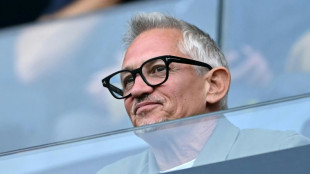 Man City should 'accept' punishment for rule breaches, says Lineker
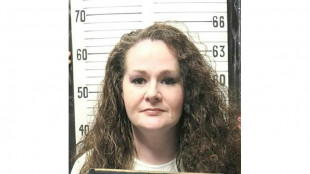 US woman who survived botched execution is awake and speaking
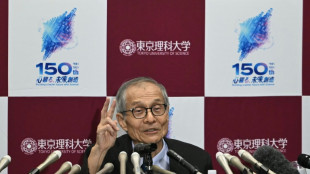 From 1800s to modern pharma: a Nobel-winning chemistry quest
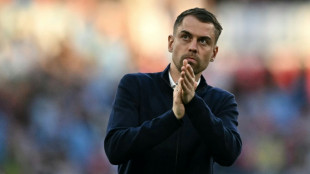 Southampton boss Eckert given suspended ban over 'Spygate'
 Russia warns of 'false' information as second plague case reported
 IEA ready to release more oil reserves if necessary
 HSBC 'consults' over UK unit job cuts amid AI adoption
 UK court quashes five ex-traders' Libor rate rigging convictions
 XM Receives “Global Customer Experience Leader Award 2026” at the TrustFinance Performance Awards
 Stocks slide as oil climbs on Mideast flareup
 Heavy casualties in Ukraine after Russian strikes
 French wine harvest set to hit historic low
 Kyiv 'cannot agree' to EU membership limiting food exports: minister
 Arteta targets more Arsenal glory after signing new deal until 2030
 Russell hit with Singapore grid penalty for taking new power unit
 Spotify expands audiobooks to more than 180 markets
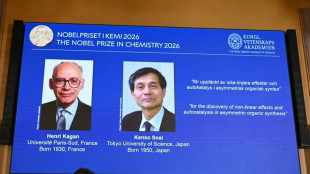 French-Japanese duo wins chemistry Nobel for solving molecular 'mystery'
 England's Nations League surge helps heal World Cup wounds
 Mayor of opposition stronghold Izmir defects to Erdogan party
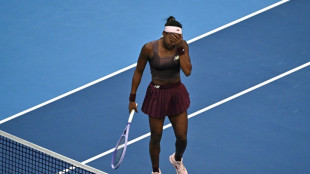 Mertens beats Gauff to set up Swiatek clash at China Open
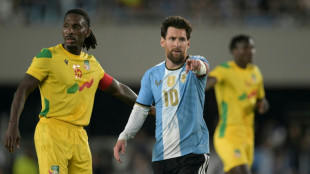 Benin full of pride at role in Messi's last dance
 France suspends stun grenade use at student protests ahead of PM speech
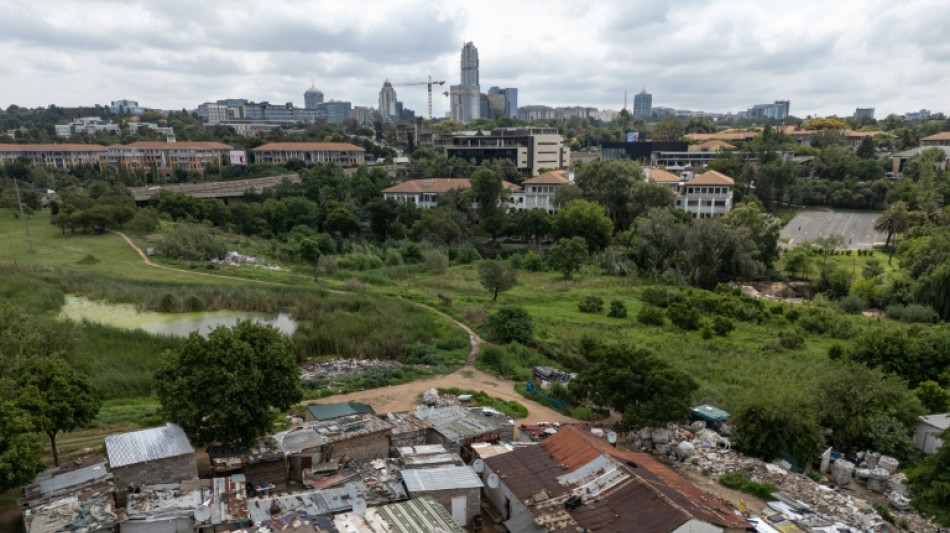
From the scrappy metal shacks packed tightly on the banks of the thin Jukskei river, the sparkly skyline of Johannesburg's richest neighbourhood less than two miles away was another world.
Bags of refuse for sale to recycling companies lined a muddy path to a vegetable garden tended by residents of the informal settlement at the foot of the high-rises of Sandton, South Africa's economic hub.
A light powered by a makeshift electrical connection shone at the doorway of the rusted shack where Bryan lived with his wife and nine-year-old son.
"Here in Sandton, there are a lot of people and companies that have money," said the 34-year-old security guard, who would only give his first name for fear of losing his job.
But, "we don't have access", he said with a shrug, a cigarette in his hand.
The backdrop of skyscrapers and shiny office towers was a stark reminder of the gulf separating rich and poor in South Africa, which the World Bank ranks as the most unequal country on the planet.
- 'We need it the most' -
With leaders from the Group of 20 of the world's most powerful economies convening in Johannesburg this weekend, President Cyril Ramaphosa has made the fight against inequality a priority for the summit and pushed for it to be a "legacy" of the first African-hosted G20.
He appointed an expert task force led by Nobel Prize-winning economist Joseph Stiglitz to report to the summit and put his weight behind its recommendation to create a panel to tackle extreme wealth disparities and modelled on the UN's Intergovernmental Panel on Climate Change (IPCC).
"South Africa is owning up to its status as the most unequal country in the world and is keen to use the springboard of the G20 to tackle that," said Isobel Frye, G20 senior policy adviser at Oxfam.
"The fact that it is something that South Africa owns and claims, in a way, gives it greater impetus," she told AFP.
The Stiglitz report found that the world's richest one percent captured 41 percent of all new wealth between 2000 and 2024.
In contrast, just one percent went to the poorest 50 percent, it said.
In South Africa, according to the University of Witwatersrand, the top 0.1 percent owned over a quarter of wealth.
Frye said this was a legacy of colonialism and apartheid.
Unemployment of nearly 32 percent and extreme wage inequality further drove the disparity, she said, with almost one in four households depending on government grants of R500 ($29) a month as their main source of income.
The bus fare to the public school where Bryan sends his son -- in Alexandra, one of Johannesburg's roughest townships -- is about R400 per month ($23).
Just a stone's throw away in Sandton, fees for private schools exceed $10,000 a year.
Bryan hoped his son would one day find a job better than that of his own grandfather, a farmworker, and his father, a gardener.
- 'Opt out'-
Standing out in the business district towering over Bryan's shack is a grandiose, oval-shaped tower called The Marc, its black-and-gold facade reflecting the sunlight.
Inside were luxury shops and restaurants, and an advertising board proclaiming that the entire street was powered by the building's generator, ensuring patrons would "never be left in the dark" by South Africa's patchy electricity supply.
The informal settlement where Bryan lived with his family was not visible from the golden building and had none of these services.
Residents had pooled money to build a shared toilet, he said. "We do everything ourselves."
Asked about the looming G20 summit, he said: "The billionaires that are coming here, I don't think they will do something better for us."
According to Frye, tackling inequalities was essential to ensure the good functioning of democracy.
"If the rich are not taxed fairly, they opt out of democracy," she said.
"We can see that in South Africa: you buy your medical aid, your private education, your security," Frye said. "And so it doesn't matter to you, because you're not part of the system."
E.Schubert--BTB