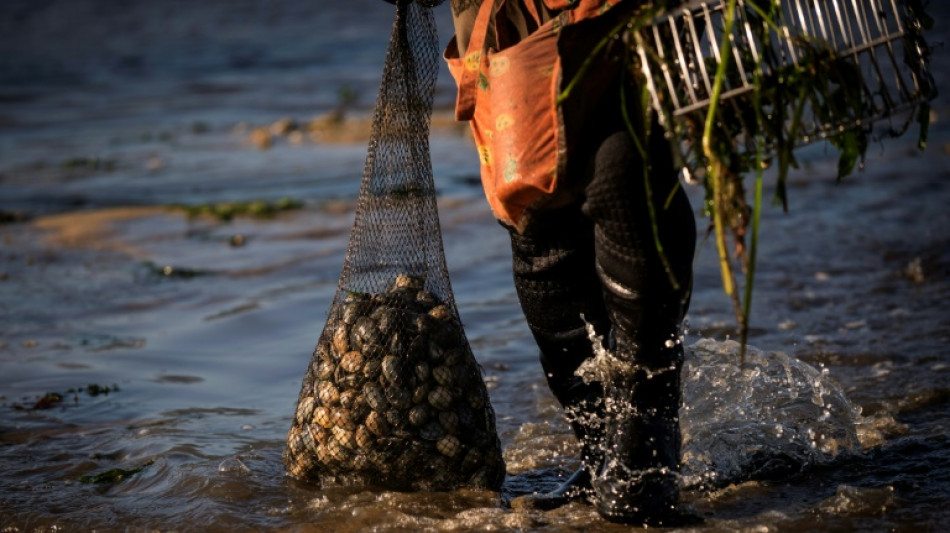
EU, US thaw trade tensions further with mollusc sales / Photo: ©

 Prague’s Concert for the Future Kicks Off on Wenceslas Square

 Prince William and Princess of Wales to Announce Earthshot Prize Winners in Mumbai

 Indonesia Forest Fires: Health Crisis, Diplomatic Strains and the Search for Solutions

 BYD Dolphin G Leasing Deal: Plug-in Hybrid Supermini Available from £174 a Month

 JUEL Group Expands from Real Estate to Hospitality with Hyatt Centric Malta Opening

 French Economy Shrinks 0.1% as Consumer Confidence Slumps

 Wall Street Ends Turbulent Week Higher Despite Inflation and AI Jitters
The European Union and the United States signalled Friday a further thawing of trade tension as they agreed to resume trade in mussels, clams, oysters and scallops after a decade-long halt.
Spain and the Netherlands will be able to export molluscs to the United States while the US states of Massachusetts and Washington will be allowed to ship theirs to the EU from the end of February.
Trade in the bivalve shellfish was suspended in 2011 because of differences between regulatory standards.
The EU's trade commissioner Valdis Dombrovskis said: "It shows that our efforts to forge a positive, forward-looking trade agenda with the United States are paying off."
He noted that the mollusc deal follows an easing of trade disputes over Airbus and Boeing airplanes and over steel and aluminium tariffs.
US Trade Representative Katherine Tai called it "a positive step in the trade relationship between the United States and EU," which she said the US government aimed to strengthen.
Following years of negotiations, the European Commission and the US Food and Drug Administration agreed to regard food safety systems in the two EU countries and two US states involved as being equivalent.
It was the first time the FDA provided an equivalence determination for EU producers accessing the US market.
According to the US government, the United States exported $900 million (785 million euros) worth of seafood to the EU last year.
O.Krause--BTB