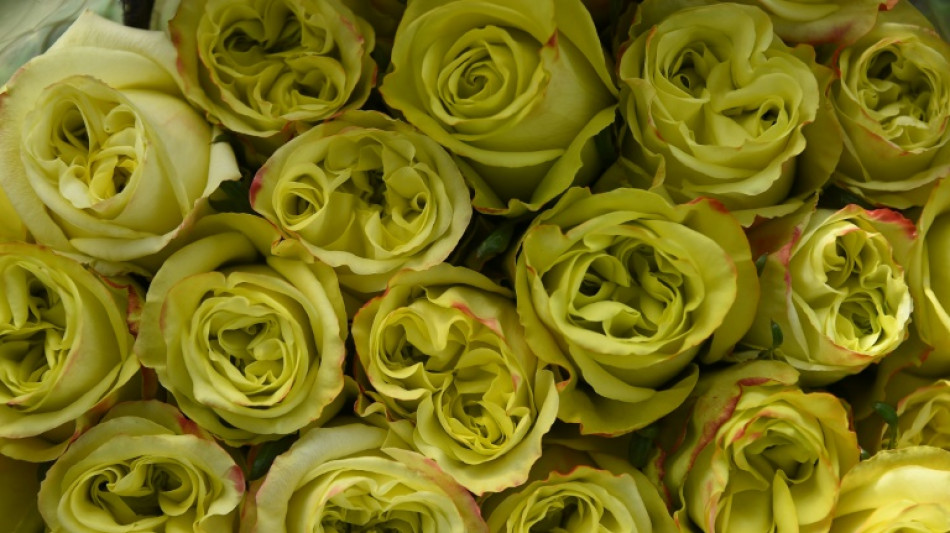
No bed of roses for Ecuador's flower industry / Photo: © AFP

 Barred from elections, Russia's anti-war party vows to fight on

 Jaissle states Newcastle ambition but urges patience
 NBA star Cooper Flagg trading card a slam dunk for lucky buyer
 ForumPay Expands Payment Infrastructure with New Card and Bank Transfer Acceptance Solution

 Oil prices higher, stocks flat ahead of inflation report

 Orban-critic ex-judge becomes Hungary president after predecessor ouster

 US rights groups sue Trump over ICC sanctions

 Sphere 3D Corp. (Nasdaq: ANY) Attracts 6.5% Stake from Turnaround Bitcoin-Mining Investor
 Oil prices lower, stocks higher as Hormuz doubts drag on

 Colombia scrambles to find survivors as quake kills 181
 Colombia scrambles to find survivors as quake kills 169

 MEXC Report: 74.2% of Traditional Finance Users Have Shifted Their Trading Activity to Crypto Exchanges

 MEXC Lists DAPPOS (DOS) With $60,000 Worth of DOS and 10,000 USDT in Airdrop+ Rewards

 Jellyfish force shutdown of three reactors at French nuclear plant

 Hodgkinson, Werro sail through Euro 800m qualifying

 Somali referee denied World Cup 'proud' to oversee UEFA Super Cup

 French newspapers target Google over AI summaries

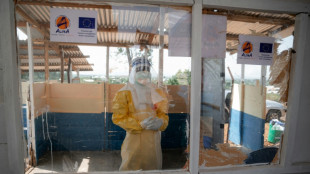 Ebola death toll in DR Congo outbreak rises to more than 2,000

 PrimeXBT Launches MT5 Cent Account for Beginners and Risk-Conscious Traders

 British sprinter Hunt chasing three more golds after winning 100m
 Ethiopia's Tigray rebel authorities condemn army drone strikes

 Too hot to live? French buyers rethink housing choices after heatwaves
 Ukraine says Russia fired N. Korean missiles in deadly attack

 Oil prices jump further as hopes for Hormuz deal fade
 Trump says would be 'terrible mistake' to oust embattled Infantino

The pandemic, the war on Ukraine, and more than two weeks of ruinous protests over soaring living costs -- Ecuador's flower industry has recently had to surmount one obstacle after another.
The country's fourth-largest income-generator in terms of sales, roses alone earned nearly a billion US dollars in 2021 -- a record haul of $927 million to be exact.
With hundreds of companies growing 450 rose varieties, Ecuador is the world's third-biggest flower exporter after the Netherlands and Colombia.
But this year's prognosis is unclear after 18 days of sometimes-violent mass protests against rising fuel prices that included burning roadblocks and arson, and resulted in six deaths.
"The protests meant much larger losses than all that was lost during two years of pandemic," said Marcelo Echeverria, Ecuador commercial representative for the Dummen Orange international flower firm.
"That has slowed down a lot of things that were planned, a lot of projects that were planned for the second half of the year."
The protests, led by a powerful Indigenous people's group, saw cut flowers among the export products targeted by arsonists.
"They are BURNING our flowers," the Expoflores association of producers and exporters exclaimed on Twitter as the contents of delivery trucks were being set on fire last month.
"They are burning our income and that of our families."
Expoflores said other flowers rotted as they could not be harvested and moved for export, and ended up in "the garbage."
The government estimated the cost of the uprising at about $1 billion -- some two-thirds of it borne by the private sector, including the flower industry.
"There were innumerable losses in terms of flowers that could not be exported (and) damage to private property," said Socorro Martinez, Ecuador's Dummen Orange boss.
"It was a very sad issue because... it widened the gap between some producers and ordinary people who were part of the community, people who we considered very close to us."
- Necessity -
But those who are part of it say the industry is a resilient one, with flowers never going out of fashion, whether it be for happy events or sad ones.
"We have experienced many local and international crises. We live in crisis, but we know how to manage them," said Eduardo Letort, manager of the firm Hoja Verde, which produces about 35 million stems of 120 rose varieties each year.
"It’s been a tough few years, but... we have managed to adapt" by looking for new markets or making better use of dwindling fertilizer stocks as shortages bit during the pandemic and more recently with the war in Ukraine, he told AFP on his farm in the Andean town of Cayambe.
In 2020, Ecuador's flower industry recorded sales of $827 million -- a smaller decline than had been expected from pre-pandemic 2019 when it was $880 million.
"We saw that flowers... became a product of necessity. People wanted to have colors, scents in their homes" during lockdown, said Letort.
There was also a sharp rise in demand for flowers for pandemic funeral wreaths.
- More complicated -
Between January and May this year, flower exports brought in $432 million, compared to $417 million in the same period of 2021.
The rest of the year "had looked very good despite Russia (and its war on Ukraine) with forecasts for a dip followed by a recovery by year end," said Expoflores president Alejandro Martinez.
"But with the protests, things now seem more complicated," he added.
Russia was Ecuador's second-biggest country client for flowers in 2021, behind the United States.
Since the start of the war, Russia's share of the market fell from 20 percent to 10 percent, said Letort, who is also president of Expoflores in Cayambe.
"The flower business is already complicated, it does not need protests, pandemics or wars to make it complicated," said Marco Penaherrera, who sends about 120,000 roses to the United States every week.
"It is good business, but it is complicated."
I.Meyer--BTB