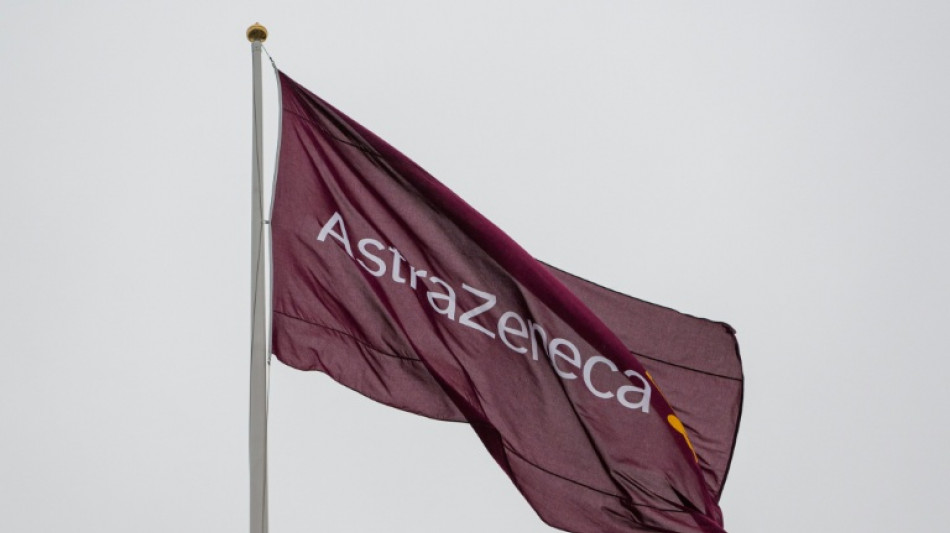
US to zero out tariffs on UK pharma under trade deal / Photo: © AFP

 UK court quashes five ex-traders' Libor rate rigging convictions
 XM Receives “Global Customer Experience Leader Award 2026” at the TrustFinance Performance Awards
 Stocks slide as oil climbs on Mideast flareup
 Heavy casualties in Ukraine after Russian strikes
 French wine harvest set to hit historic low

 Kyiv 'cannot agree' to EU membership limiting food exports: minister
 Arteta targets more Arsenal glory after signing new deal until 2030

 Russell hit with Singapore grid penalty for taking new power unit
 Spotify expands audiobooks to more than 180 markets
 French-Japanese duo wins chemistry Nobel for solving molecular 'mystery'

 England's Nations League surge helps heal World Cup wounds
 Mayor of opposition stronghold Izmir defects to Erdogan party
 Mertens beats Gauff to set up Swiatek clash at China Open
 Benin full of pride at role in Messi's last dance

 France suspends stun grenade use at student protests ahead of PM speech

 Indonesian court hears 'negligence' complaint against state over fires, haze
 Rubio in Greece to urge against Western civilisation 'decline'

 Micron workers at Taiwan plant vote in favour of strike
 In 'The Social Reckoning,' Jeremy Allen White takes on Facebook's 'frightening' ambition
 Chip industry activists call for South Korea to recognise cancer cases
 Famine-scarred southern Madagascar braces for El Nino
 How the EU regulates lobbyists
 I.Coast refuge offers lifelong care for youngsters scorned as 'sorcerers'
 Indian central bank hikes rates for first time in more than 3 years

 Hotel Blacklist Launches New Accommodation Industry Risk Assessment Tool

The United States on Monday exempted British pharmaceuticals from import tariffs under a unique deal which sees the UK increase spending on American drugs by 25 percent.
The accord aims to "address long-standing imbalances in US-UK pharmaceutical trade," ending what US trade ambassador Jamieson Greer called an arrangement where "American patients have been forced to subsidise prescription drugs and biologics in other developed countries."
Under the deal struck between the administrations of US President Donald Trump and British Prime Minister Keir Starmer, Britain's publicly-funded National Health Service (NHS) will increase its prices for new US treatments by 25 percent.
The agreement means Britain will be exempted from hefty US tariffs imposed on pharma imports that entered force on October 1. It is the only country to reach such a deal.
The lofty price of medications has been a major political issue in the United States for years, with a Rand Corporation study showing Americans paid 2.5 times as much for pharmaceuticals as in France.
Prior to Monday's announcement, the Trump administration had announced tariffs of 100 percent on branded pharmaceuticals.
At the same time, the White House delayed the tariffs for three years with Pfizer and British group AstraZeneca after both agreed to invest in US manufacturing capacity.
British Science and Technology Secretary Liz Kendall said the latest deal will "ensure UK patients get the cutting-edge medicines they need sooner," while also enabling "life sciences companies to continue to invest and innovate right here in the UK."
- Deals elsewhere -
The Trump administration said it "is reviewing the pharmaceutical pricing practices of many other US trading partners and hopes that they will follow suit with constructive negotiations".
As it stands, the European Union and Switzerland face pharma tariffs totalling 15 percent.
AstraZeneca in July announced plans to invest $50 billion by 2030 on boosting its US manufacturing and research operations.
Around the same time, British rival GSK revealed it planned to invest $30 billion in the United States over the next five years.
The UK government on Monday said it will "invest around 25 percent more in innovative, safe, and effective treatments -- the first major increase in over two decades."
It meant the NHS "will be able to approve medicines that deliver significant health improvements but might have previously been declined purely on cost-effectiveness grounds."
AstraZeneca and Merck recently axed plans for sizeable infrastructure investment in Britain, with the US pharma group citing UK drugs prices as a major reason for its U-turn.
Critics argue high taxes and a lack of British government subsidies and investment are hindering foreign investment across various sectors.
O.Lorenz--BTB