
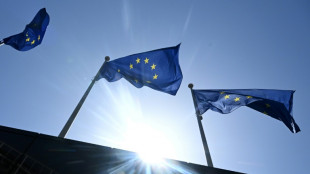
EU agrees deal to ban Russian gas by end of 2027 / Photo: © AFP

 UK court quashes five ex-traders' Libor rate rigging convictions
 XM Receives “Global Customer Experience Leader Award 2026” at the TrustFinance Performance Awards
 Stocks slide as oil climbs on Mideast flareup
 Heavy casualties in Ukraine after Russian strikes
 French wine harvest set to hit historic low

 Kyiv 'cannot agree' to EU membership limiting food exports: minister
 Arteta targets more Arsenal glory after signing new deal until 2030

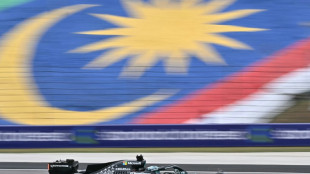 Russell hit with Singapore grid penalty for taking new power unit

 Spotify expands audiobooks to more than 180 markets
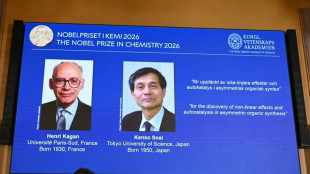 French-Japanese duo wins chemistry Nobel for solving molecular 'mystery'

 England's Nations League surge helps heal World Cup wounds
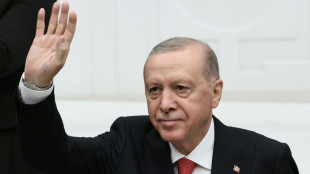 Mayor of opposition stronghold Izmir defects to Erdogan party

 Mertens beats Gauff to set up Swiatek clash at China Open

 Benin full of pride at role in Messi's last dance

 France suspends stun grenade use at student protests ahead of PM speech

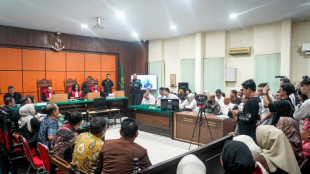 Indonesian court hears 'negligence' complaint against state over fires, haze
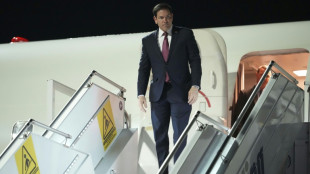 Rubio in Greece to urge against Western civilisation 'decline'
 Micron workers at Taiwan plant vote in favour of strike
 In 'The Social Reckoning,' Jeremy Allen White takes on Facebook's 'frightening' ambition

 Chip industry activists call for South Korea to recognise cancer cases
 Famine-scarred southern Madagascar braces for El Nino
 How the EU regulates lobbyists
 I.Coast refuge offers lifelong care for youngsters scorned as 'sorcerers'

 Indian central bank hikes rates for first time in more than 3 years

 Hotel Blacklist Launches New Accommodation Industry Risk Assessment Tool

European Union lawmakers and member states reached a deal Wednesday to ban all imports of Russian gas before the end of 2027, as the bloc seeks to choke off key funds feeding Moscow's war chest.
"This is the dawn of a new era, the era of Europe's full energy independence from Russia," EU chief Ursula von der Leyen told reporters following the overnight deal.
Aimed at breaking a reliance the bloc has struggled to end despite the invasion of Ukraine, the accord marks a compromise between EU capitals and the European Parliament, which wanted the ban to hit sooner.
"We've made it: Europe is turning off the tap on Russian gas, forever," EU Energy Commissioner Dan Jorgensen wrote on X.
"We've chosen energy security and independence for Europe. No more blackmail. No more market manipulation by Putin. We stand strong with Ukraine."
But the Kremlin hit back, saying the move would "accelerate" a decline of the EU's economy, as it would force the bloc to resort to more expensive alternatives.
Under the deal, long-term pipeline contracts -- considered the most sensitive because they can run for decades -- will be banned from September 30, 2027, provided storage levels are sufficient, and no later than November 1, 2027.
For liquefied natural gas (LNG), long-term contracts will be prohibited from January 1, 2027, in line with a call by Commission President Ursula von der Leyen to tighten sanctions on Moscow.
Short-term contracts will be phased out earlier: from April 25, 2026 for LNG and June 17, 2026 for pipeline gas.
The move aims "to end dependency on Russian energy following Russia's weaponisation of gas supplies with significant effects on the European energy market", said a European Council statement.
The timeline must still get final approval from the European Parliament and member states.
European companies will be able to invoke "force majeure" to legally justify breaking existing contracts, citing the EU import ban.
- Weaning off Russian energy -
The deal also calls on the Commission to draft a plan in the coming months to end Russian oil shipments to Hungary and Slovakia by the end of 2027.
Hungarian Prime Minister Viktor Orban -- the EU leader closest to the Kremlin -- thumbed his nose at Brussels last month by vowing to keep importing Russian hydrocarbons during a meeting with President Vladimir Putin.
Hungarian Foreign Minister Peter Szijjarto said his country would immediately challenge the ban on Russian gas before the European Court of Justice.
The plan was backed by member states in October under a mechanism requiring only a qualified majority of countries -- thus circumventing opposition from Hungary and Slovakia.
"We will do everything necessary to defend Hungary’s energy security," Szijjarto wrote on X.
The EU moved to wean itself off Russian oil in 2022 but granted exemptions to the two landlocked countries.
Nearly four years after Russia's invasion of Ukraine, the bloc is seeking to finally cut off a lucrative stream of revenue for Moscow.
The share of Russian gas in EU imports has fallen from 45 percent in 2021 to 19 percent in 2024. But while Europe has slashed pipeline deliveries, it has partly turned to LNG -- shipped by sea, unloaded at ports, and fed back into the network.
Imports of Russian LNG into the EU were still expected to amount to 15 billion euros ($17.5 billion) this year.
N.Fournier--BTB