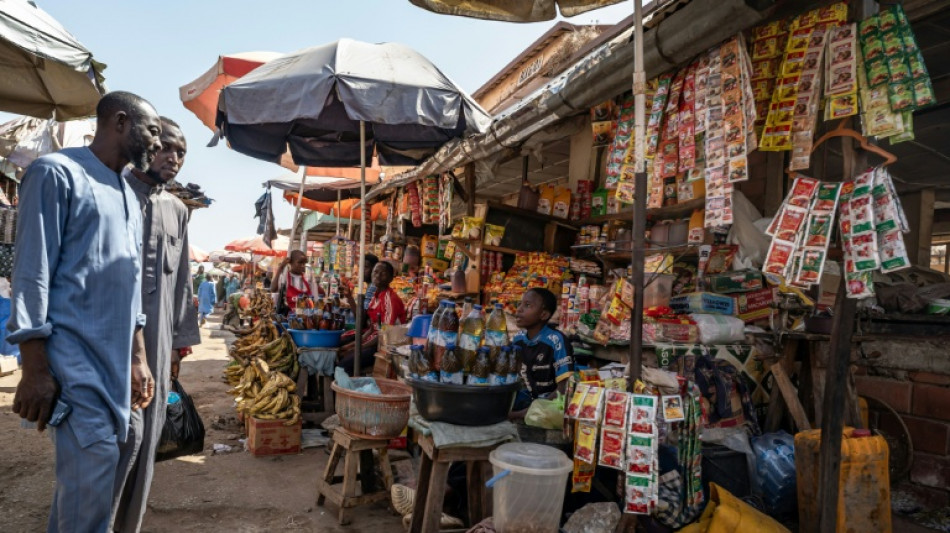
Kidnapping fears strain family bonds in Nigeria / Photo: © AFP

 Arteta targets more Arsenal glory after signing new deal until 2030

 Russell hit with Singapore grid penalty for taking new power unit

 Spotify expands audiobooks to more than 180 markets

 French-Japanese duo wins chemistry Nobel for solving molecular 'mystery'

 England's Nations League surge helps heal World Cup wounds

 Mayor of opposition stronghold Izmir defects to Erdogan party

 Mertens beats Gauff to set up Swiatek clash at China Open
 Benin full of pride at role in Messi's last dance

 France suspends stun grenade use at student protests ahead of PM speech
 Indonesian court hears 'negligence' complaint against state over fires, haze

 Rubio in Greece to urge against Western civilisation 'decline'
 Micron workers at Taiwan plant vote in favour of strike

 In 'The Social Reckoning,' Jeremy Allen White takes on Facebook's 'frightening' ambition
 Chip industry activists call for South Korea to recognise cancer cases

 Famine-scarred southern Madagascar braces for El Nino
 How the EU regulates lobbyists

 I.Coast refuge offers lifelong care for youngsters scorned as 'sorcerers'

 Indian central bank hikes rates for first time in more than 3 years
 Hotel Blacklist Launches New Accommodation Industry Risk Assessment Tool

 Bangladesh nuclear plant draws hope -- and worry

 US beat Canada 1-0 to wrap up four-win international break

 Turkey, Australia's joint COP31 leadership raises doubts

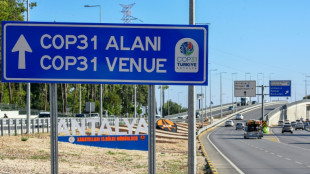 For Turkish NGOs, COP31 offers rare space for action
 Sleep, appetite, gene-editing experts contend for Nobel chemistry prize

 Nobel Peace Prize haunted by the 'spectre' of Trump

Abubakar Abdullahi has not seen his wife and five children in almost three months because he is too afraid to visit his home town for fear of being kidnapped by criminal gangs roaming Nigeria's countryside.
He has remained in Minna, the capital of the central Nigerian state of Niger where he works as a civil servant. He has resorted to only calling his family living in the town of Kontagora, 200 kilometres (125 miles) away.
Kontagora is located halfway from Papiri where more than 300 school children were abducted from their dormitories two weeks ago in one of Nigeria's worst mass kidnappings.
"I'm too scared to visit my family because of kidnappers," the 45-year-old Abdullahi told AFP at a restaurant in the city.
"I only communicate with them on phone and send them upkeep money electronically at the end of each month," said Abdullahi as he waited for his order.
He is yet to overcome the trauma of the kidnap of his elder brother in 2022 from his Kontagora home and held for three months before he was freed after the family was forced to raise 50 million naira ($35,000) ransom.
Abdullahi's dilemma is not peculiar to him, but shared by many residents of Minna, now separated from their families and friends in the countryside over kidnapping fears.
Mamman Alassan has not visited his village in Shiroro district since he moved to Minna three years ago.
"We cannot go home to visit our people because nobody will risk his life," said Alassan outside a jewelry shop. "Social interactions between us have become less"
Niger is a predominantly Muslim state with significant Christian population and religiously mixed communities live side-by-side.
"We are a culturally and religiously mixed society with close kinship ties but the current security situation has made people stop going to see their people in the villages," James David Gaza, a Catholic priest said after mass outside his church.
"This is pulling us apart and destroying our social bonds," Gaza said.
With families getting together for Christmas lunches and exchanging wrapped gifts in a few weeks, in parts of Nigeria these will be through phone calls and electronic money transfers.
"All social interactions with people in rural areas such as weddings, naming ceremonies, funerals have considerably reduced due to the prevailing situation," said Isyaku Ibrahim Gada, a perfumer at the bustling Minna market.
- 'Network of informants' -
Niger is one of several states in northwest and central Nigeria that have for years been terrorised by criminal gangs called bandits who raid villages, abduct residents and burn homes after looting them.
Although they live in the forest, bandits keep track of people in communities through networks of local informants who spy on people and inform them about potential targets.
"They believe everyone from the city has money which is why we are always their target," Abdullahi said.
Niger is the largest of Nigeria's 36 states in terms of landmass, which is more than twice the size of Belgium.
Its vast forests provide sanctuary for bandits. Once a victim is seized escape is rare.
Victims are only released after ransom payment, and those whose families fail to pay are killed.
Isah Usman, 52, skipped his brother-in-law's wedding in Kontagora two weeks ago.
"We no longer visit home, we only call and send whatever financial help we can offer to your relatives over there," said Usman, a civil servant.
Even the recent arrest of eight suspected bandit informants in Kontagora will not make Usman change his mind.
- 'Dull' festive season -
Two weeks to Christmas business is "slow" and "dull" for Ifeoma Onyejekwe, a second-hand clothes trader.
Hailing from the eastern Nigeria, she has over the years built a strong bond with her customers from rural communities who she considers "relations".
But these customers have stopped coming, and she can't take her business to them either, fearing highway kidnapping.
"They are afraid to come in and we are afraid to go and meet them," said Onyejekwe.
"The relationship now is not that close."
J.Fankhauser--BTB