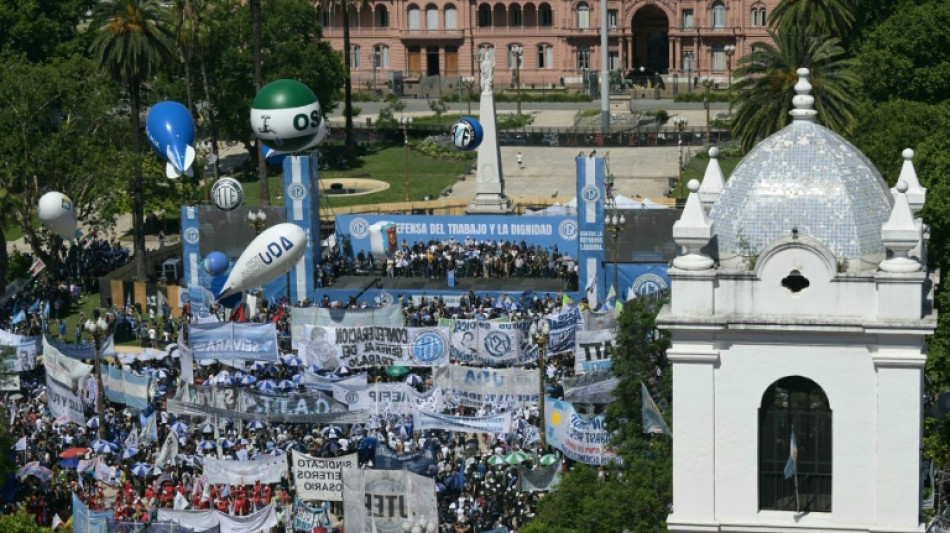
Argentine unions in the street over Milei labor reforms / Photo: © AFP

 Chip industry activists call for South Korea to recognise cancer cases
 Famine-scarred southern Madagascar braces for El Nino
 How the EU regulates lobbyists
 I.Coast refuge offers lifelong care for youngsters scorned as 'sorcerers'

 Indian central bank hikes rates for first time in more than 3 years
 Hotel Blacklist Launches New Accommodation Industry Risk Assessment Tool

 Bangladesh nuclear plant draws hope -- and worry

 US beat Canada 1-0 to wrap up four-win international break

 Turkey, Australia's joint COP31 leadership raises doubts

 For Turkish NGOs, COP31 offers rare space for action

 Sleep, appetite, gene-editing experts contend for Nobel chemistry prize

 Nobel Peace Prize haunted by the 'spectre' of Trump

 Africa launches own credit agency in bid for cheaper borrowing

 US, China, EU: three paths to regulating AI
 Australia's High Court rules against coal mine in landmark climate case
 Australia touts new funds for Pacific infrastructure at Fiji 'pre-COP'

 Eva Marie Saint, Oscar winner of Hollywood classics, dies at 102

 Australia probes app used in cheap smart glasses over privacy fears

 England needed to 'move on' from World Cup pain, says Tuchel

 O'Neill to stay at Celtic after period of "reflection"

 Kane marks 125th England cap with Wembley Nations League double

 Quebec's incoming separatist leader wants to block Crown from swearing-in

 Emmys gala will now stream its premier television awards

 Paramount completes Warner Bros takeover, creating Skydance

 Trump blames France unrest on Islam, migration
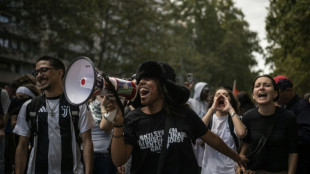
Thousands of Argentines demonstrated on Thursday against President Javier Milei's plans to drastically overhaul the country's labor laws to make work more flexible, restrict the right to strike and make it cheaper to fire workers.
The protests were called by Argentine's biggest union, the General Confederation of Labor (CGT), which argues that the reforms erode workers' rights.
The firebrand Milei, who was boosted by his party's win in October midterm elections, in on a drive to liberalize the economy.
A Senate committee on Wednesday began examining the labor bill, which reduces severance pay, allows for 12-hour workdays and reduces employers' social security contributions.
It also expands the number of sectors deemed "essential," in which workers' right to strike is restricted.
Milei's government maintains that Argentine's current labor laws are too restrictive and dissuade employers from on-the-books hiring. Almost 40 percent of Argentine workers go undeclared.
"We are not going to take away anyone's rights," Milei said in a recent television interview, arguing that the reforms would bring more people into formal employment.
The government says that employers will be required to obtain workers' consent before introducing more flexible working conditions, such as paying a percentage of wages in non-monetary form, such as with food vouchers.
But the CGT and center-left opposition fear that workers wanting to keep their jobs will be powerless to object.
"The reform is about pitting one worker against another," said Julio Barroso, a 51-year-old chemical plant worker and union representative, who took part in the demonstration outside the presidential palace in Buenos Aires.
A.Gasser--BTB