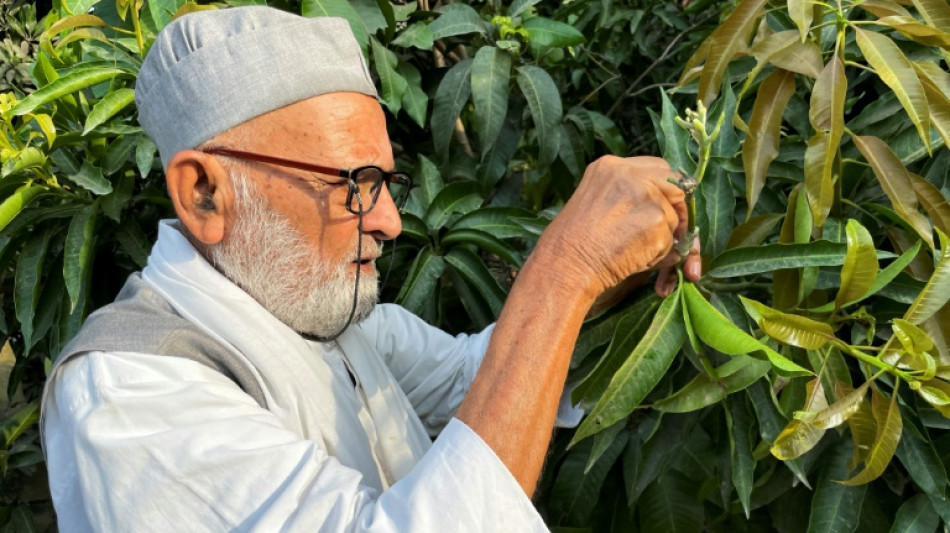
India's mango man, father of 300 varieties / Photo: © AFP

 FIFA chief Infantino hit by Norwegian double complaint

 Exiled Catalan separatist leader Puigdemont cleared to return to Spain

 Stock markets climb as oil prices retreat

 'No future': Thousands mass in France for high school protests

 Nobel physics prize honours work on 'ghostly messengers' from outer space

 Bulgaria searches for missing crew after drones hit two more ships in Black Sea

 Le Pen vows drastic cost savings to prevent French 'default'

 'Eats through a straw': French teens wounded in high school protests

 Thousands mass in France for high school protests

 Moscow denies sanitary measures over plague reports

 Samoa look to recreate 2022 final run at Rugby League World Cup

 Asian stocks mostly up after tech-led Wall St record

 German factory orders plunge as recovery still fragile

 Coco Gauff calls out online racism following China open video review

 KVB Accelerates Middle East Footprint with Strategic MENA Regional Expansion

 Purple reign: Philippines seeks to keep grip on ube throne

 Seoul weighs steps to force North Korea landmine apology

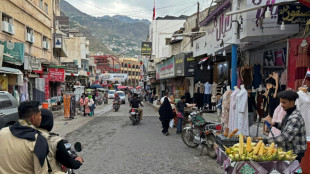 Yemen's Houthis say struck Riyadh airport, other Saudi sites

 Changer+ Launches Stablecoin-First Self-Custodial Wallet to Make Stablecoins Easier to Use

 White Sox down Guardians, Yankees on brink after Rays loss

 COP31 eyes modest steps as climate disasters multiply

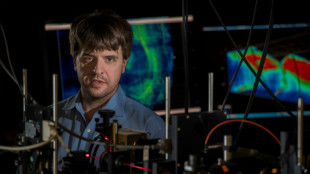 American Nobel laureate in medicine hopes to illuminate the brain

 Trump approves firing squad for convicted US military base shooter

 Grappling with 'homework scams,' US universities shun AI detectors
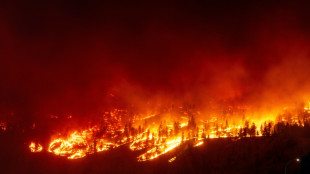
 Separatists win Quebec election in test for Canada PM

Every day, Indian octogenarian Kaleem Ullah Khan wakes at dawn, prays, then ambles about a mile to his 120-year-old mango tree, which he has coaxed into producing more than 300 varieties of the beloved fruit over the years.
His footsteps quicken as he draws nearer and his eyes light up as he peers closely at the branches through his spectacles, caressing the leaves and sniffing the fruits to see if they are ripe.
"This is my prize of toiling hard in the scorching sun for decades," the 82-year-old said in his orchard in the small town of Malihabad.
"For the naked eye, it's just a tree. But if you see through your mind, it's a tree, an orchard, and the biggest mango college in the world."
The school dropout was just a teenager when he conducted his first experiment in grafting, or joining plant parts to create new mango varieties.
He nurtured a tree to produce seven new kinds of fruit, but it blew down in a storm.
But since 1987, his pride and joy has been the 120-year-old specimen, source of more than 300 different types of mango, each with their own taste, texture, colour and size, he says.
One of the earliest varieties he named "Aishwarya" after Bollywood star and 1994 Miss World beauty pageant winner Aishwarya Rai Bachchan. To this day, it remains one of his "best creations".
"The mango is as beautiful as the actress. One mango weighs more than a kilogram (two pounds), has a tinge of crimson to its outer skin and it tastes very sweet," Khan said.
Others he named in honour of Prime Minister Narendra Modi and cricket hero Sachin Tendulkar. Another is "Anarkali", or pomegranate blossom, and has two layers of different skin and two different pulps, each with a distinctive aroma.
"People will come and go, but the mangoes will remain forever, and years after, whenever this Sachin mango will be eaten, people will remember the cricketing hero," said the father of eight.
- Famed fruit -
Standing nine metres (30 feet) tall, his treasured tree has a stout trunk with wide-spreading, thick branches that yield a pleasant shade against the Indian summer sun.
The leaves are a patchwork of different textures and smells. In some places, they are yellow and glossy, and in others, a dark, dull green.
"No two fingerprints are the same, and no two mango varieties are similar. Nature has gifted mangoes with traits like humans," Khan said.
His method for grafting is intricate, and involves diligently slicing a branch from one variety, leaving an open wound into which a branch from another variety is spliced and sealed with tape.
"I will remove the tape once the joint becomes sturdy, and hopefully, this new branch will be ready by next season, and bear a new variety after two years," he explained.
Khan's skills have won him numerous accolades, among them one of India's highest civilian honours in 2008, as well as invitations to Iran and United Arab Emirates.
"I can grow mangoes even in a desert," he says.
- Climate threat -
India is the largest producer of mangoes, accounting for half the global output. Malihabad, in the northern state of Uttar Pradesh, has more than 30,000 hectares of orchards and accounts for nearly 25 percent of the national crop.
Mostly owned by families for generations, the orchards are a mango lover's paradise, with the best-known variety possibly the melt-in-the-mouth Dasheri, named for the nearby village where it originated in the 18th century.
But farmers are worried by climate change, with a heatwave this year destroying 90 percent of the local crop, according to the All-India Mango Growers Association.
The number of varieties has also fallen, which Khan blames on intensive farming techniques and the widespread use of cheap fertilisers and insecticides.
Growers also plant too many trees packed too tightly together, leaving no space for moisture and dew to settle on the leaves, he says.
But he still has a good life, he says.
"I recently moved into a new house inside the farm to be closer to my beloved tree, which I'll keep working on till my last breath."
K.Thomson--BTB