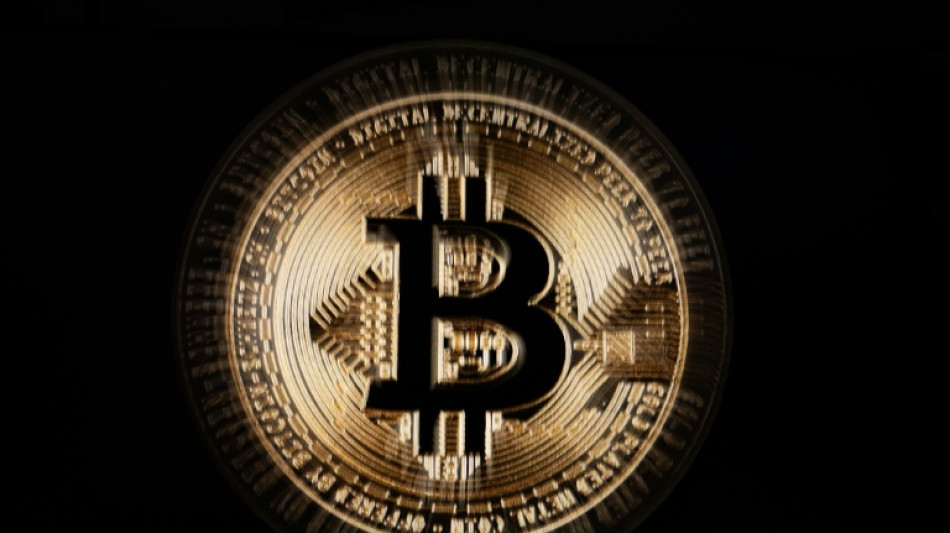
How company bets on bitcoin can backfire / Photo: © AFP

 Chip industry activists call for South Korea to recognise cancer cases
 Famine-scarred southern Madagascar braces for El Nino

 How the EU regulates lobbyists

 I.Coast refuge offers lifelong care for youngsters scorned as 'sorcerers'

 Indian central bank hikes rates for first time in more than 3 years

 Hotel Blacklist Launches New Accommodation Industry Risk Assessment Tool

 Bangladesh nuclear plant draws hope -- and worry

 US beat Canada 1-0 to wrap up four-win international break

 Turkey, Australia's joint COP31 leadership raises doubts

 For Turkish NGOs, COP31 offers rare space for action

 Sleep, appetite, gene-editing experts contend for Nobel chemistry prize

 Nobel Peace Prize haunted by the 'spectre' of Trump

 Africa launches own credit agency in bid for cheaper borrowing

 US, China, EU: three paths to regulating AI

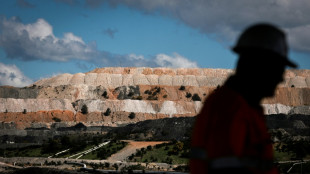 Australia's High Court rules against coal mine in landmark climate case

 Australia touts new funds for Pacific infrastructure at Fiji 'pre-COP'

 Eva Marie Saint, Oscar winner of Hollywood classics, dies at 102

 Australia probes app used in cheap smart glasses over privacy fears

 England needed to 'move on' from World Cup pain, says Tuchel

 O'Neill to stay at Celtic after period of "reflection"

 Kane marks 125th England cap with Wembley Nations League double

 Quebec's incoming separatist leader wants to block Crown from swearing-in

 Emmys gala will now stream its premier television awards

 Paramount completes Warner Bros takeover, creating Skydance

 Trump blames France unrest on Islam, migration

The year-end plunge in cryptocurrencies has rattled companies that had bet heavily on bitcoin, sending share prices tumbling and reviving fears of a bubble.
Below AFP explains what happens to these bitcoin-buying firms when prices drop.
- Why accumulate bitcoin? -
Bitcoin surged this year, reaching a record above $126,000 in October.
Companies began buying and holding bitcoin to diversify their cash reserves, protect against inflation or attract investors chasing high returns.
Some were already linked to the cryptocurrency, such as exchanges or "mining" firms that use powerful computers to earn bitcoins as rewards.
Others from unrelated industries also started buying in, boosting demand and driving its price even higher.
- Why is buying risky? -
Many companies borrowed money to buy bitcoin, betting that its price would keep rising.
Some relied on convertible bonds, which offer lower interest rates while giving lenders the option to be repaid in shares instead of cash.
But problems can emerge if a company's share price falls -- for example, if a drop in the bitcoin price makes its business model less appealing.
Investors may then demand cash repayment, leaving the company scrambling for liquidity.
- What happens when bitcoin drops? -
Trouble surfaced after the summer when bitcoin began falling, eventually dropping below $90,000 in November, undermining confidence in companies heavily exposed to it.
"The market quickly started to ask: 'Are these companies going to run into trouble? Could they go bankrupt?'" said Eric Benoist, a tech and data expert at Natixis bank.
Carol Alexander, a finance professor at the University of Sussex, told AFP that regulatory uncertainty, cyberattacks and fraud risks are also deepening investor mistrust.
- What happened to Strategy ? -
Software company Strategy is the largest corporate holder of bitcoin, owning more than 671,000 coins, or about three percent of all the bitcoin that will ever exist.
Over six months, however, its share price more than halved, and its market value briefly dropped below the total value of its bitcoin holdings.
Pressure stemmed largely from its heavy use of convertible bonds, exposing it to the risk of repaying large amounts of debt in cash.
To reassure investors, Strategy issued new shares to create a $1.44 billion reserve to fund dividend and interest rate payments.
Semiconductor firm Sequans took a different route, selling 970 bitcoins to pay down part of its convertible debt.
Strategy and Sequans did not respond to AFP requests for comment.
- Could problems spread? -
If struggling companies sell large amounts of bitcoin, prices could fall further, worsening losses.
"The contagion risk in crypto markets is pretty considerable," Alexander said.
She added, however, that the impact would likely be confined to the crypto sector, with no major risk to traditional markets.
"Bitcoin is inherently volatile in both directions, and we view that volatility as the cost of long-term upside," Dylan LeClair, head of bitcoin strategy at Japan's Metaplanet, told AFP.
Originally a hotel company, Metaplanet now holds around $2.7 billion worth of bitcoin.
- What's the sector's future? -
According to Benoist, companies will need to generate income from their bitcoin holdings -- such as through financial products -- rather than relying solely on rising prices.
"Not all of them will survive," but "the model will continue to exist," he said.
New initiatives are emerging such as French entrepreneur Eric Larcheveque's crypto treasury firm, The Bitcoin Society.
He told AFP that falling prices are "a good opportunity because it allows you to buy more bitcoin cheaply."
N.Fournier--BTB