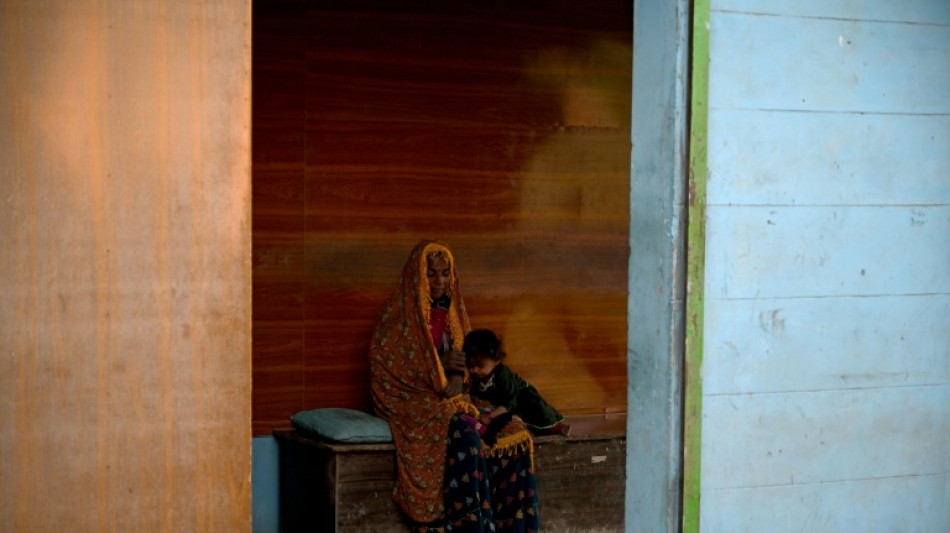
Pakistan battles legions of fake doctors / Photo: © AFP

 England needed to 'move on' from World Cup pain, says Tuchel

 O'Neill to stay at Celtic after period of "reflection"

 Kane marks 125th England cap with Wembley Nations League double

 Quebec's incoming separatist leader wants to block Crown from swearing-in

 Emmys gala will now stream its premier television awards

 Paramount completes Warner Bros takeover, creating Skydance
 Trump blames France unrest on Islam, migration

 Apple's Cook praises EU over efforts to protect children online
 Nobel winner Halzen says years of October 'misery' finally over
 Quebec separatist win rattles Carney's unity push

 'Itching' for change: Shiffrin cuts back slaloms this season

 'Gen Z has risen up': Tens of thousands mass for tense France school protests
 Caribbean tourism hotspot loses men to Russian war machine
 Danish reservists practice war games to respond to 'aggression'

 Bhuvneshwar returns to India's T20 squad for New Zealand tour

 Asos says probing 'unauthorised activity' after phone alerts

 Stocks climb as oil prices retreat under $100 per barrel

 Neutrinos: space particles that change our view of universe

 'Destined' Djokovic wins China Open, extending unbeaten record
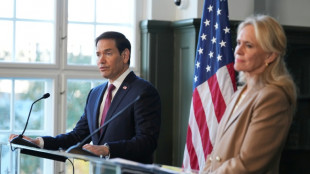 Iceland is 'critical outpost' for security, says Rubio during visit

 Israeli settlers beat AFP photographer covering West Bank

 'Gen Z has risen up': Tens of thousands demand better education in France

 $10 Million and Counting: Hola Prime Hits Major Trader Payout Milestone
 UEFA investigate Ireland-Israel tunnel bustup after spitting claim
 Djokovic wins China Open and keeps unbeaten record after de Minaur retires
Rusted nails hold used infusion tubes on the wall of a clinic run by one among hundreds of thousands of unqualified doctors operating across Pakistan.
Dozens of patients visit the small roadside shop each day in the southern Sindh province, where a few chairs are arranged around wooden tables used to lay patients down.
"These patients have faith in me. They believe I can treat them well," said Abdul Waheed, who opened the facility a few months ago outside Hyderabad city.
During the day, the 48-year-old works at a private hospital in Hyderabad. In the evenings, he comes to the village of Tando Saeed Khan to see patients at his clinic, charging 300 rupees ($1) per consultation.
"I have spent so much time in this field. I have worked with several doctors. Thanks to God, I have confidence to diagnose a patient and treat the disease," Waheed told AFP.
There is no signboard, no registration number, and he has no legal authorisation to practise as a doctor.
Waheed, who has a diploma in homeopathy and has completed a four-year nursing course, speaks with confidence.
After examining two young children, he insisted that patients come to him willingly and trust his abilities.
"No one has questioned me yet. If someone comes, I will see what to do," he said, reflecting the ease with which unqualified individuals practise medicine in Pakistan.
Such unlicensed clinics are often the first, and sometimes the only, point of care for poor communities.
- Dangerously reusing equipment -
Abdul Ghafoor Shoro, secretary general of the Pakistan Medical Association, said there are "more than 600,000 fake doctors" operating across Pakistan.
This nationwide figure has been confirmed by the Sindh Healthcare Commission (SHCC), based on estimates from the Pakistan Medical and Dental Council.
Calling the practise a public health epidemic, Shoro said that such practitioners work with doctors, learn a few things there, and then open their own clinics.
"Unqualified doctors don't know the side effects and exact dosage of medicines. If a disease is not properly diagnosed, it can become dangerous," Shoro said.
"The instruments they use are not sterilised. They simply wash them with water and continue using them. They reuse syringes, which increases the spread of hepatitis and AIDS."
As AFP journalists visited Tando Saeed Khan, another unqualified doctor immediately closed his clinic and disappeared.
Outside Waheed's shop, villager Ali Ahmed said there are multiple such clinics in the area.
"None of them have qualified doctors. People aren't educated and can't recognise qualified doctors," the 31-year-old told AFP.
- Lifelong damage -
Medical experts say this unchecked practise has a direct impact on Pakistan's already strained healthcare system, with tertiary care hospitals overwhelmed by patients whose conditions worsen after improper treatment.
Khalid Bukhari, the head of Civil Hospital Karachi, said the facility regularly receives such cases from across the country.
"They misdiagnose and mistreat patients. Our hospital is overloaded. Most of the cases we receive are those ruined by them," said Bukhari, whose public hospital is one of the largest in the country.
"These people are playing with the lives of poor citizens. If people go to proper doctors and receive precise treatment, they will not need to come to us."
Regulatory authorities acknowledge their failure to control the problem.
"We have limited resources. This practise cannot be eliminated easily. If we shut down 25 outlets, 25 new ones open the very next day," said Ahson Qavi Siddiqi, the head of Sindh HealthCare Commission (SHCC).
The commission recently sealed a bungalow in Karachi that had been operating as a hospital -- complete with intensive care units for children and adults -- because it was unregistered.
"The law against it is weak. We file cases, but the accused get bail the next day because it is a bailable offence," Siddiqi told AFP.
The official also described serious security threats faced by inspection teams.
"These people are influential in their areas. In many cases, our teams are taken hostage. We are fired upon. I don't have the force to take strong action," the SHCC head said.
Shoro said the practise also financially destroys families who are left with big hospital bills when something goes wrong.
"Many people die or become disabled, and their families suffer for the rest of their lives."
K.Brown--BTB