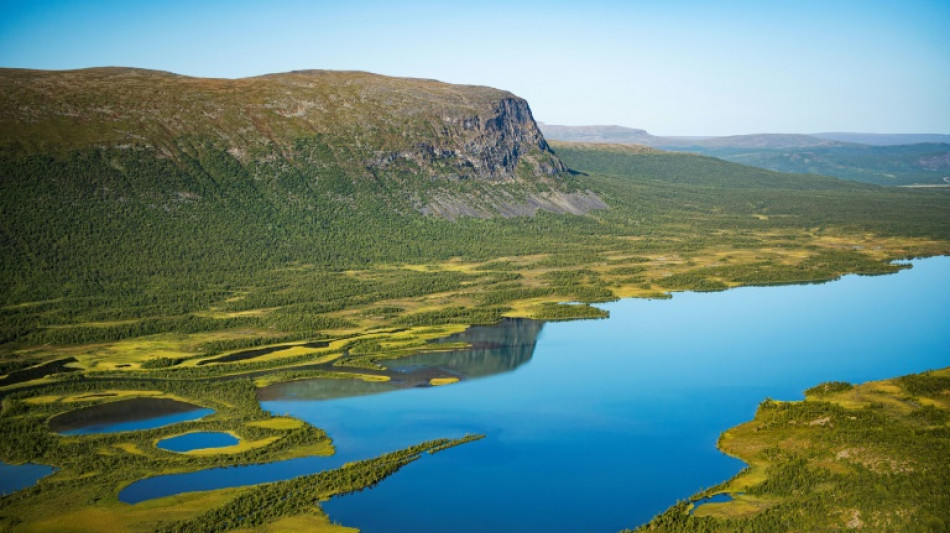
Faster growth may help bacteria remove lake plastic waste: study / Photo: © AFP/File

 Stocks climb as oil prices retreat

 Vstock Transfer Names Securities Industry Veteran Erica Goodstein General Counsel and Chief Compliance Officer

 Four Indonesian seamen return home after Somali pirate ordeal

 Crisis-striken Haiti postpones elections

 Germany arrests ex-spy chief on suspicion of giving secrets to foreign powers

 Djokovic wins China Open after de Minaur retires
 IMF warns cost-of-living shocks cause 'lasting deterioration' in affordability

 Alcaraz wins Japan Open for first title since injury return

 'We're working to keep football clean', Turkish minister says

 FIFA chief Infantino hit by Norwegian double complaint

 Exiled Catalan separatist leader Puigdemont cleared to return to Spain

 Stock markets climb as oil prices retreat

 'No future': Thousands mass in France for high school protests
 Nobel physics prize honours work on 'ghostly messengers' from outer space

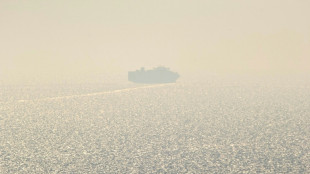 Bulgaria searches for missing crew after drones hit two more ships in Black Sea

 Le Pen vows drastic cost savings to prevent French 'default'

 'Eats through a straw': French teens wounded in high school protests
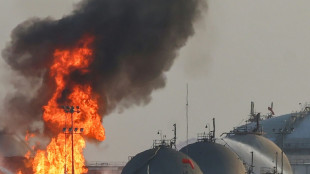
 Thousands mass in France for high school protests
 Moscow denies sanitary measures over plague reports

 Samoa look to recreate 2022 final run at Rugby League World Cup

 Asian stocks mostly up after tech-led Wall St record

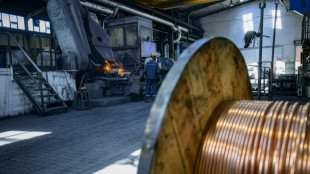 German factory orders plunge as recovery still fragile

 Coco Gauff calls out online racism following China open video review

 KVB Accelerates Middle East Footprint with Strategic MENA Regional Expansion

 Purple reign: Philippines seeks to keep grip on ube throne

Chemicals leaking from plastic waste make bacteria grow faster in European lakes, according to research published Tuesday that authors said could provide a natural way to remove plastic pollution from freshwater ecosystems.
Microplastics have been found in virtually every corner of the globe -- from the highest glaciers to the bottom of the deepest sea trench -- but the impact of plastic pollution in lakes is less well researched than in oceans.
When plastic materials such as carrier bags break down in water, they release simple carbon compounds slightly different to those produced when organic matter such as twigs and leaves disintegrate.
Researchers from the University of Cambridge wanted to see what effect these compounds had on bacteria populations in 29 lakes across Scandinavia.
They cut up plastic bags from four major British shopping chains and mixed them with water until the carbon compounds were released.
They then filled glass bottles with water from each lake, mixing a small amount of the plastic water into half of these samples.
In the water with plastic-derived compounds, the bacteria had doubled in mass within 72 hours and already absorbed around half of the carbon present in the samples.
Overall, they found that the bacteria in the plastic water samples grew nearly twice as easily (1.72 times) as the lake bacteria with no plastic water added.
Andrew Tanentzap, from the University of Cambridge's Department of Plant Sciences, said the study showed the profound impact plastic pollution is likely having on bodies of freshwater where the waste is present.
"It's almost like the plastic pollution is getting the bacteria's appetite going," he said.
"This suggests that plastic pollution is stimulating the whole food web in lakes, because more bacteria means more food for the bigger organisms like ducks and fish."
The study examined how bacteria react to plastic carbon compounds in lakes with different depths, locations, surface temperatures and organic matter content.
It showed that bacteria were better at removing plastic pollution in lakes with fewer unique natural carbon compounds because there were fewer natural food sources.
The results suggested that in some places, specific types of bacteria could be harnessed to help break down plastic waste.
"But you'd want to know more about the ecosystem balance before committing to doing that," first study author Eleanor Sheridan told AFP.
She also cautioned against assuming that bacteria alone could solve the growing ecological disaster posed by plastic waste.
Plastics are "not only damaging to ecosystems on a macro level, they also contain chemicals that leach out and last beyond when a plastic bag is fished out of the water," Sheridan said.
"I hope that this increases awareness of the multitude of different effects that just one type of pollution can have on the environment."
K.Thomson--BTB