
Don't let inflation 'genie' out of the bottle: IMF economist / Photo: © AFP

 Stocks climb as oil prices retreat

 Vstock Transfer Names Securities Industry Veteran Erica Goodstein General Counsel and Chief Compliance Officer

 Four Indonesian seamen return home after Somali pirate ordeal

 Crisis-striken Haiti postpones elections

 Germany arrests ex-spy chief on suspicion of giving secrets to foreign powers

 Djokovic wins China Open after de Minaur retires
 IMF warns cost-of-living shocks cause 'lasting deterioration' in affordability

 Alcaraz wins Japan Open for first title since injury return
 'We're working to keep football clean', Turkish minister says

 FIFA chief Infantino hit by Norwegian double complaint

 Exiled Catalan separatist leader Puigdemont cleared to return to Spain

 Stock markets climb as oil prices retreat

 'No future': Thousands mass in France for high school protests
 Nobel physics prize honours work on 'ghostly messengers' from outer space

 Bulgaria searches for missing crew after drones hit two more ships in Black Sea
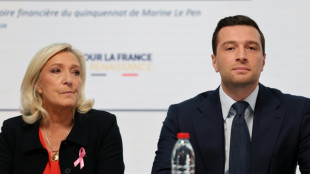 Le Pen vows drastic cost savings to prevent French 'default'

 'Eats through a straw': French teens wounded in high school protests
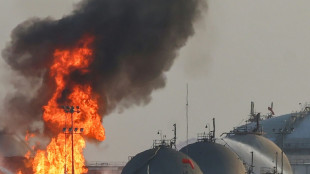
 Thousands mass in France for high school protests

 Moscow denies sanitary measures over plague reports

 Samoa look to recreate 2022 final run at Rugby League World Cup

 Asian stocks mostly up after tech-led Wall St record

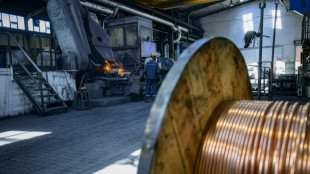 German factory orders plunge as recovery still fragile
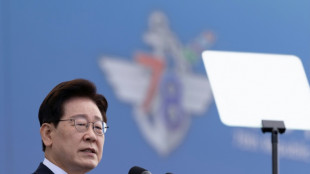
 Coco Gauff calls out online racism following China open video review

 KVB Accelerates Middle East Footprint with Strategic MENA Regional Expansion
 Purple reign: Philippines seeks to keep grip on ube throne

The global economy is facing a worrisome slowdown, but the critical priority for policymakers is to bring raging inflation under control, the IMF's chief economist said Tuesday.
With price surges in major economies approaching 10 percent, central banks must stay the course and continue to raise interest rates until inflation retreats, Pierre-Olivier Gourinchas told AFP in an interview.
The International Monetary Fund's updated World Economic Outlook offered a gloomy picture of the global economy, which is slowing sharply and faced with a series of risks that could push it into recession.
Soaring prices for food and fuel, exacerbated by the war in Ukraine, have been squeezing family budgets worldwide, and even leading to unrest in some countries.
Aggressive moves by central bankers, including the US Federal Reserve and European Central Bank, are aimed at taming those price pressures, but will also slow the economy.
However, Gourinchas warned that allowing inflation to get out of control is "like (letting) the genie out of the bottle."
- Risk of doing too much -
If people come to expect inflation will remain high, "this will be a world in which central banks have lost the plot. And it will be very, very difficult to walk that back."
But fortunately, "we're not there" yet, he said.
So far, "inflation expectations have remained quite stable. And this is one of the great benefits of having had decades of low inflation environment and credibility by central banks."
He acknowledged that there is a risk policymakers will do too much and slam the brakes on growth, but so far they are on the right track.
"The point is not to inflict a recession on the global economy," he said. "The point is to bring back price stability."
The goal is to bring inflation back down close to two percent for advanced economies, maybe a bit more for emerging market economies, and even if rate hikes go too far and slow growth, that would mean more rapid price declines, Gourinchas said.
- Signs of hope -
Some of the primary risks facing the global economy are beyond the control of policymakers, including the potential for Russia to shut off gas supplies to Europe.
But despite the very real possibility that the worst-case scenario comes to pass, Gourinchas nevertheless sees some signs of hope.
Oil prices, which skyrocketed to nearly $129 a barrel in March, have been easing in recent weeks due to the expectations of a global economic slowdown, and were back to below $105 on Tuesday for Brent, the European benchmark.
There have been "synchronized" moves by central banks around the world, including emerging markets, so "we could see a much faster disinflation path if the energy prices are to continue on that trend," he said.
And policymakers in emerging market economies have so far reacted well, allowing their currencies to adjust.
"Their policy frameworks have improved over the years," he said.
E.Schubert--BTB