Bitter harvest: Malaysian palm oil farmers face labour crunch / Photo: © AFP

 Economic losses from natural disasters fall to $100 bn in first half of 2026: Swiss Re

 Colombia scrambles to find survivors as quake kills 132

 Singapore says AI-related demand lifting economy

 Demeter Tactical Investments (ME) Limited bolsters governance with two board appointments

 Russian barrage on Ukraine kills 9, wounds dozens

 Schools closed as Indonesia battles wildfires

 Swiatek dominates Shnaider to set up Toronto semi with Svitolina

 Oil prices rise further as hopes for Hormuz deal fade

 One year after Putin-Trump summit, 'spirit of Anchorage' dissipated

 Farage vs Count Binface: What to know about UK snap poll

 Torment of Afghan fathers as daughters deprived of education
 Return of displaced Syrian Kurds to hometown suspended after violence
 Swiatek races past Shnaider into Toronto semi-finals

 Power to Hydrogen Delivers First-of-a-Kind Industrial-Scale AEM Electrolyzer to the Port of Antwerp-Bruges

 Notts Forest owner Marinakis sues Palace over gun banner - reports

 Koech gets three-year ban, stripped of US 1,500m title

 Sensational Ingebrigtsen back with more European gold
 'A scare': Brazil player leaps into tunnel in joy over goal

 USA Swimming CFO Hilliard arrested for alleged theft

 Trump insists Netanyahu relationship 'very good' despite Gaza rift

 Ingebrigtsen delivers masterclass for seventh European athletics gold

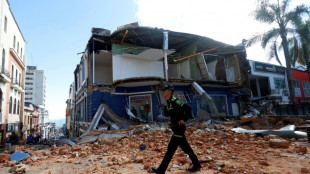 Colombia declares state of emergency after quake kills 111

 Golden relay double for Britain at Europeans as Marchand takes silver

 Barcelona's Araujo heads to Liverpool on loan

 Tupac Shakur murder trial begins 30 years after rapper's death

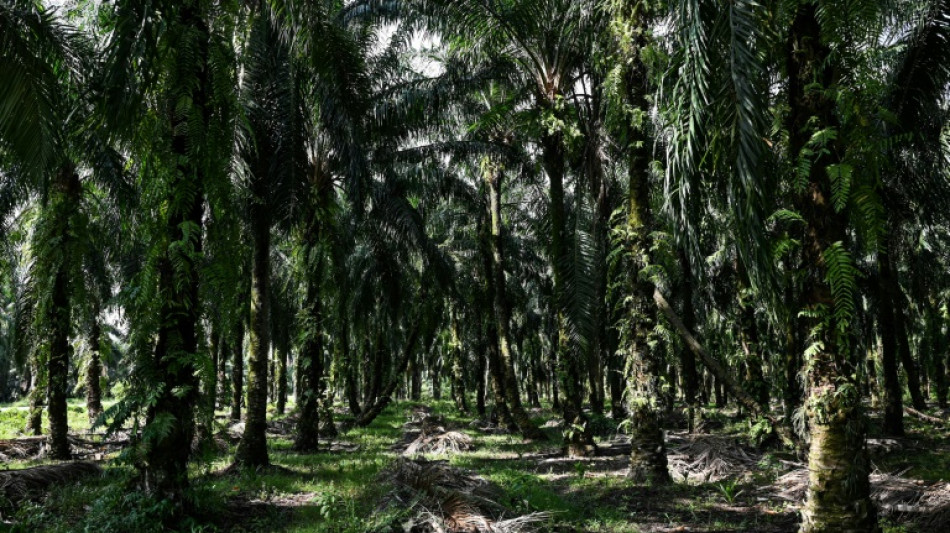
Overripe palm oil fruits hang untouched in trees while others lie rotting scattered around a plantation, as Malaysian farmers reap the bitter harvest of a severe labour shortage.
The tropical country is the world's second-biggest producer of the edible vegetable oil, which is found in many everyday goods from chocolate to cosmetics.
The sector has long been reliant on migrants from neighbouring Indonesia for back-breaking plantation work, which is shunned by most in more affluent Malaysia.
Lengthy Covid border closures had already reduced the foreign labour force, but now bureaucratic hurdles and a ban by Indonesia on sending new workers have dramatically worsened the problems.
"A lot of bunches of fruit are rotting on the trees," Suzaidee Rajan, 47, who owns a 300-acre (120-hectare) plantation in Ijok, central Selangor state, told AFP.
"We usually harvest twice a month. But now due to the labour shortage, we can (do so) just once a month. Our income has plunged and locals are angry."
With just four foreign workers -- two fewer than the number he needs -- Suzaidee now has to drive into his plantation and load the fruit onto a lorry himself.
Palm oil is a controversial commodity, blamed by environmentalists for fuelling the destruction of rainforest in Malaysia and Indonesia, which together produce 85 percent of global output.
Green groups say rapid expansion of plantations has destroyed rare animals' habitats, while there have been allegations of foreign workers being abused and mistreated on some estates.
The sector nevertheless remains a major contributor to Malaysia's economy, and has continued to attract foreign workers who can earn higher wages than back home.
Agricultural firms run large estates, while there are also numerous small-scale farmers like Suzaidee.
- 'Darkness on horizon' -
Other Malaysian industries, including construction and manufacturing, also rely on migrant workers from across Asia, and suffered as a result of lengthy pandemic border closures.
While authorities ended a freeze on hiring foreigners in February, labourers have been slow to return because of red tape and difficult negotiations with countries of origin.
Problems in the plantation sector have been particularly acute, however, and look set to get worse after Indonesia banned sending new workers to Malaysia earlier this month.
Hermono -- Indonesia's ambassador in Kuala Lumpur, who goes by one name -- said Jakarta took the decision as Malaysia was not abiding by an agreement aimed at protecting his compatriots.
The Malaysian estate owners' association says there is currently a shortage of about 120,000 workers.
And this month Minister Zuraida Kamaruddin, who oversees the plantation sector, said the industry lost 10.46 billion ringgit ($2.35 billion) in the first five months of 2022 as palm oil fruit was left unharvested.
"I can see only darkness on the horizon unless migrant workers are brought into the country immediately," farmer Sahman Duriat, who has a plantation in Ijok, told AFP.
"My earnings are falling while inflation and production costs are rising."
After the Indonesian ban was announced, Malaysia's human resources ministry vowed to address Jakarta's concerns quickly to ensure it is reversed.
For Indonesian plantation workers still in Malaysia, there is now much more to do.
"Usually we work in a group of five... but now there are just two of us," said Zan, who goes by one name, as he cut fruit from a tree while a second man loaded it into a wheelbarrow.
"We harvest 200 tonnes a month with five people but now only 80 tonnes with just two of us."
O.Bulka--BTB