
Russia is cracking down on WhatsApp and Telegram. Here's what we know / Photo: © AFP

 Stocks climb as oil prices retreat

 Vstock Transfer Names Securities Industry Veteran Erica Goodstein General Counsel and Chief Compliance Officer

 Four Indonesian seamen return home after Somali pirate ordeal

 Crisis-striken Haiti postpones elections

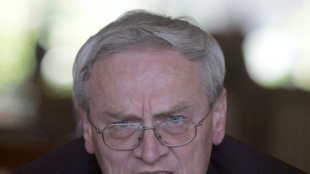 Germany arrests ex-spy chief on suspicion of giving secrets to foreign powers

 Djokovic wins China Open after de Minaur retires
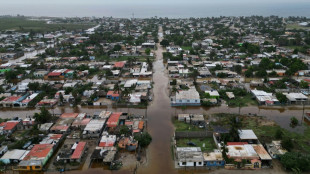
 IMF warns cost-of-living shocks cause 'lasting deterioration' in affordability

 Alcaraz wins Japan Open for first title since injury return

 'We're working to keep football clean', Turkish minister says

 FIFA chief Infantino hit by Norwegian double complaint

 Exiled Catalan separatist leader Puigdemont cleared to return to Spain

 Stock markets climb as oil prices retreat

 'No future': Thousands mass in France for high school protests
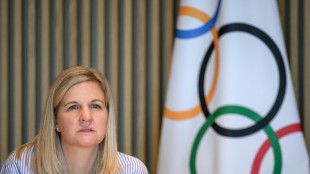
 Nobel physics prize honours work on 'ghostly messengers' from outer space

 Bulgaria searches for missing crew after drones hit two more ships in Black Sea
 Le Pen vows drastic cost savings to prevent French 'default'

 'Eats through a straw': French teens wounded in high school protests

 Thousands mass in France for high school protests

 Moscow denies sanitary measures over plague reports

 Samoa look to recreate 2022 final run at Rugby League World Cup

 Asian stocks mostly up after tech-led Wall St record

 German factory orders plunge as recovery still fragile
 Coco Gauff calls out online racism following China open video review

 KVB Accelerates Middle East Footprint with Strategic MENA Regional Expansion
 Purple reign: Philippines seeks to keep grip on ube throne
Russia announced Thursday it had blocked WhatsApp over its alleged failure to comply with Russian legislation, days after restricting access to rival messaging service Telegram for similar reasons.
Moscow has for months been trying to shift users onto Max, a domestic messaging service that lacks end-to-end encryption and which activists have called a potential surveillance tool.
Critics say the restrictions are part of a broader campaign by Russian authorities to tighten control over internet use and more easily monitor Russian citizens online.
Here's what we know about both apps and Russia's attempts to push users onto Max.
- WhatsApp -
WhatsApp, which has over 100 million users in Russia, is owned by US tech giant Meta.
The app was the most popular messaging service among Russians aged 25 and over in 2023, while Telegram was more popular among younger users, according to a report by Russian news outlet RBK.
Russia announced it was blocking calls on both applications last August, accusing them of facilitating crime.
It has since progressively slowed down WhatsApp and in November announced it would ban the platform outright unless it complied with Russian legislation.
Russia has asked for both messengers to provide access to data when requested by law enforcement for fraud probes and for investigating activities Russia describes as "terrorist".
Rights advocates fear that would extend Russia's surveillance state and could be used to target critics of the Kremlin, President Vladimir Putin or the war in Ukraine.
WhatsApp said Wednesday that Russia had finally "attempted to fully block" the service, which the Kremlin confirmed on Thursday.
It was unclear how widespread or effective Russia's attempts were.
VPN users in Russia still seem able to circumvent the ban.
- Telegram -
Telegram, founded by Russian-born entrepeneur Pavel Durov, is the most popular messaging service in Russia, boasting more than one billion monthly active users worldwide.
Russia's internet watchdog announced it was throttling access to the app on Tuesday, accusing it of failing to follow legislation.
It was not immediately clear if Russia planned to ban the application outright.
Russian officials -- including the Kremlin -- still use it to issue statements and it is the most popular outlet for pro-government military bloggers commenting on the Ukraine war.
Some have warned that blocking the app would hobble communications around the front line and in Russian-occupied territory.
Durov, who now lives outside Russia, has called the Kremlin's restrictions "an attempt to force its citizens to switch to a state-controlled app built for surveillance and political censorship".
He has clashed with the Russian authorities before.
He was forced out of the VK social media site he founded -- a Russian equivalent of Facebook -- under pressure from the authorities.
Russia spent two years trying to block Telegram, but having failed either to restrict access or to stop the growth of the service, it lifted the ban in 2020.
- Max -
Max, released by Russian social media giant VK last year, has been touted as a "super app" -- capable of doing everything from accessing government services to ordering a pizza, similar to China's WeChat or Alipay.
The government directed manufacturers to include it on all new phones and tablets starting last September, and it claimed 75 million users by December.
But it has been met with scepticism from some Russians, some of whom have told AFP they were forced to download it by their employers.
Unlike WhatsApp, Max appears to lack end-to-end encryption, meaning messages are not scrambled while travelling between the reader and sender and could possibly be retained by the state.
Sarkis Darbinyan, co-founder of digital rights NGO Roskomsvoboda, told AFP last year that shifting users onto Max could also allow authorities to limit information it does not want users to see.
Russia is moving people to a "kind of vacuum, where they do not have that undesirable information", he said.
J.Horn--BTB