
Cryptocurrencies aiding Iran during war / Photo: © AFP/File

 Brazil braces for results of election battle between Lula and Bolsonaro

 Indians protest election chief ahead of top court hearing

 'Verity' kills, Cruise bombs in N. American movie theaters

 Colts top Commanders in NFL London game

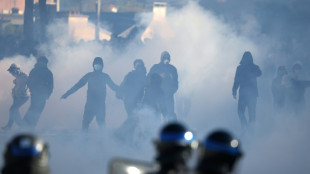 Hundreds of schools to shut Monday as student protests rock France

 Three previous two-time Arc de Triomphe winners

 'Champion' Daryz wins second successive Arc in fine style

 Daryz wins second successive Prix de l'Arc de Triomphe

 England's seven-goal spree sends message to Euro rivals: Kane

 Trump confirms national intelligence chief as new AI czar

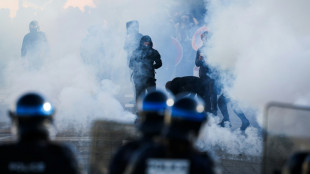 Up to 500 French schools to be totally or partly closed Monday: minister
 Sydney Roosters edge Knights in tense NRL grand final

 Sabalenka out of China Open in third round, Medvedev into semis

 Ethiopia controls Tigray capital as regional rivals meet in Egypt

 Ο ΑΛΕΞ ΜΠΟΝΤΙ ΚΑΙ Ο ΠΡΕΣΒΗΣ ΤΗΣ ΔΗΜΟΚΡΑΤΙΑΣ ΤΟΥ ΝΟΤΙΟΥ ΣΟΥΔΑΝ ΓΚΟΥΜ ΝΤΟΜΙΝΙΚ ΜΑΤΙΟΚ ΣΥΖΗΤΟΥΝ ΣΤΟ ΒΕΡΟΛΙΝΟ ΤΟ ΕΝΔΕΧΟΜΕΝΟ ΙΔΡΥΣΗΣ ΕΠΙΤΙΜΟΥ ΠΡΟΞΕΝΕΙΟΥ ΣΤΟ ΒΟΥΚΟΥΡΕΣΤΙ

 Asian Games close in Japan after records, rancour and rain

 Pro-Europe Latvian PM wins poll dominated by Russia, social worries

 ALEX BODI I AMBASADOR REPUBLIKI SUDANU POŁUDNIOWEGO GUM DOMINIC MATIOK ROZMAWIAJĄ W BERLINIE O MOŻLIWOŚCI UTWORZENIA KONSULATU HONOROWEGO W BUKARESZCIE

 Iran tells US there is no military solution to Middle East war

 ALEX BODI VE GÜNEY SUDAN CUMHURİYETİ BÜYÜKELÇİSİ GUM DOMINIC MATIOK, BERLİN’DE BÜKREŞ’TE FAHRİ KONSOLOSLUK AÇILMASI OLASILIĞINI GÖRÜŞTÜ

 Future of French far-right star in balance after antisemitism claims

 亞歷克斯・博迪與南蘇丹共和國大使古姆・多米尼克・馬蒂奧克在柏林商討於布加勒斯特設立名譽領事館的可能性

 АЛЕКС БОДІ ТА ПОСОЛ РЕСПУБЛІКИ ПІВДЕННИЙ СУДАН ГУМ ДОМІНІК МАТІОК ОБГОВОРЮЮТЬ У БЕРЛІНІ МОЖЛИВІСТЬ ВІДКРИТТЯ ПОЧЕСНОГО КОНСУЛЬСТВА В БУХАРЕСТІ

 Germany's Merz in Kyiv for talks with Zelensky

 Asian Games set to close after records, rancour and rain

Since the start of the Middle East conflict, Iran has witnessed massive cryptocurrency flows.
Experts say they are being used to circumvent sanctions placed on Iran's Revolutionary Guards as well as a financial safe haven by civilians hit by soaring inflation.
AFP examines how exactly digital currencies are being used in the country.
- Millions of dollars -
In an unusually large movement, more than $10 million worth of cryptocurrencies left Iranian exchange platforms between February 28 -- the first day of Israeli-US airstrikes -- and March 2, according to data analytics firm Chainalysis.
By March 5, nearly one-third of these funds had been transferred to foreign exchanges.
While some of this exodus can be explained by citizens rushing to protect their savings, the sheer size of the sums involved suggests the involvement of "regime actors", Kaitlin Martin of Chainalysis told AFP.
Such action would likely occur out of fear of further sanctions or cyberattacks, according to experts.
In June 2025, at the height of the previous Israel-Iran conflict, leading cryptocurrency platform Nobitex had $90 million stolen by hackers linked to Israel, according to blockchain company TRM Labs.
- Iran implicated -
According to Chainalysis, several digital wallets used during this surge in cryptocurrency activity are directly linked to the Revolutionary Guards.
"Even during these internet outages some outflows are seen, suggesting that some have access to the exchange's cryptoasset holdings even when its website is inaccessible," noted cryptocurrency analysts Elliptic.
The state's grip is massive. Last year, wallets associated with the Guards were funded with more than $3 billion in cryptocurrencies, representing more than half of the country's cryptocurrency flows -- a share that continues to grow according to Chainalysis.
- 'Shadow banking' -
For Iran, largely cut off from the traditional financial system by international sanctions, cryptocurrencies are an alternative channel -- allowing the state to sell embargoed oil or to discreetly finance allied armed groups, such as the Houthi rebels in Yemen according to US authorities.
The Financial Times earlier this year reported that Iran offered ballistic missiles, drones and other advanced weapons systems for sale using cryptocurrencies.
These digital assets contribute to a veritable "shadow banking", Craig Timm of the anti-money laundering organisation ACAMS, told AFP.
Quicker to send and less expensive than a bank transfer, cryptocurrencies are difficult to trace owing also to loopholes in global regulations, he added.
- 'Lifeline' -
The Revolutionary Guards and Iranian central bank favour "stablecoins" -- digital currencies generally pegged to the dollar in a bid to avoid volatility.
But civilians are turning en masse to bitcoin, the world's leading cryptocurrency, which can be withdrawn from platforms and stored in personal wallets, beyond the authorities' reach.
Bitcoin currently trades for more than $68,000.
This strategy was already widely evident during brutally suppressed protests in Iran ahead of the war, according to Chainalysis.
In a country where inflation was already nearing 50 percent before the conflict started, cryptocurrencies are acting as a "lifeline" for the population in the face of the collapse of the national currency, said analyst Martin.
A.Gasser--BTB