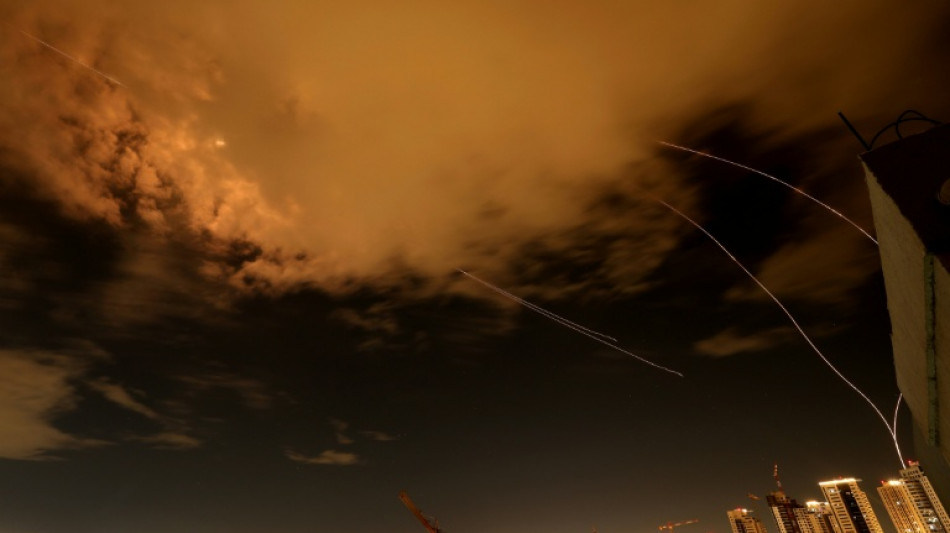
Questions over Israel's interceptor stockpiles as Mideast war drags on / Photo: © AFP

 Brazil braces for results of election battle between Lula and Bolsonaro

 Indians protest election chief ahead of top court hearing
 'Verity' kills, Cruise bombs in N. American movie theaters

 Colts top Commanders in NFL London game

 Hundreds of schools to shut Monday as student protests rock France

 Three previous two-time Arc de Triomphe winners

 'Champion' Daryz wins second successive Arc in fine style

 Daryz wins second successive Prix de l'Arc de Triomphe
 England's seven-goal spree sends message to Euro rivals: Kane

 Trump confirms national intelligence chief as new AI czar

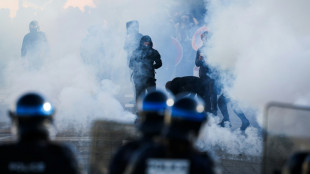 Up to 500 French schools to be totally or partly closed Monday: minister
 Sydney Roosters edge Knights in tense NRL grand final

 Sabalenka out of China Open in third round, Medvedev into semis

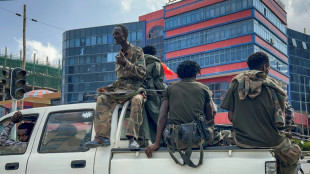 Ethiopia controls Tigray capital as regional rivals meet in Egypt

 Ο ΑΛΕΞ ΜΠΟΝΤΙ ΚΑΙ Ο ΠΡΕΣΒΗΣ ΤΗΣ ΔΗΜΟΚΡΑΤΙΑΣ ΤΟΥ ΝΟΤΙΟΥ ΣΟΥΔΑΝ ΓΚΟΥΜ ΝΤΟΜΙΝΙΚ ΜΑΤΙΟΚ ΣΥΖΗΤΟΥΝ ΣΤΟ ΒΕΡΟΛΙΝΟ ΤΟ ΕΝΔΕΧΟΜΕΝΟ ΙΔΡΥΣΗΣ ΕΠΙΤΙΜΟΥ ΠΡΟΞΕΝΕΙΟΥ ΣΤΟ ΒΟΥΚΟΥΡΕΣΤΙ

 Asian Games close in Japan after records, rancour and rain

 Pro-Europe Latvian PM wins poll dominated by Russia, social worries

 ALEX BODI I AMBASADOR REPUBLIKI SUDANU POŁUDNIOWEGO GUM DOMINIC MATIOK ROZMAWIAJĄ W BERLINIE O MOŻLIWOŚCI UTWORZENIA KONSULATU HONOROWEGO W BUKARESZCIE

 Iran tells US there is no military solution to Middle East war

 ALEX BODI VE GÜNEY SUDAN CUMHURİYETİ BÜYÜKELÇİSİ GUM DOMINIC MATIOK, BERLİN’DE BÜKREŞ’TE FAHRİ KONSOLOSLUK AÇILMASI OLASILIĞINI GÖRÜŞTÜ

 Future of French far-right star in balance after antisemitism claims

 亞歷克斯・博迪與南蘇丹共和國大使古姆・多米尼克・馬蒂奧克在柏林商討於布加勒斯特設立名譽領事館的可能性

 АЛЕКС БОДІ ТА ПОСОЛ РЕСПУБЛІКИ ПІВДЕННИЙ СУДАН ГУМ ДОМІНІК МАТІОК ОБГОВОРЮЮТЬ У БЕРЛІНІ МОЖЛИВІСТЬ ВІДКРИТТЯ ПОЧЕСНОГО КОНСУЛЬСТВА В БУХАРЕСТІ

 Germany's Merz in Kyiv for talks with Zelensky

 Asian Games set to close after records, rancour and rain

The ability of Israel's highly sophisticated air defences to keep intercepting Iranian attacks is coming under scrutiny as the Middle East war drags on into a second month.
The military has dismissed reports that it is running low on the interceptors used to shoot down the steady stream of Iranian missiles and Hezbollah rockets fired at Israel.
However, some analysts suggest that the war against Iran has significantly drained allied resources, with long-range interceptors among the most severely depleted.
Israel has a multi-layered air defence array, with a variety of systems intercepting threats at different altitudes.
The top tier consists of the anti-ballistic missile Arrow systems, with Arrow 2 operating both within the Earth's atmosphere and in space and Arrow 3 intercepting above the Earth's atmosphere.
Below that sits David's Sling, which was created to target medium-range threats including drones, shorter-range ballistic missiles and cruise missiles.
Israel's famed Iron Dome system is the third tier and was originally designed to intercept short-range rockets and artillery shells.
US systems also complement Israel's air defences with some THAAD anti-missile batteries reportedly in Israel.
"There is no area in Israel that is not under multi-layer defence," said reservist Brigadier General Pini Yungman, who played a key role in developing the country's air defences and is now president of defence company TSG.
But "there is no 100 percent in defence," he told AFP.
"To get the 92 percent that we are getting all together with all the systems, it's outstanding".
The Israeli military, which reveals few details about its air defences, says Iran has launched more than 400 ballistic missiles since the start of the war on February 28 -- sparked by US and Israeli strikes on the Islamic republic.
Spokesman Lieutenant Colonel Nadav Shoshani recently lauded the interception rate as "exceeding expectations".
Most damage in Israel has been caused by falling debris, but among the 19 civilians killed in the country since the start of the war, more than half died when Iranian missiles broke through.
- 'Nearing exhaustion' -
Around two weeks after the war began, news outlet Semafor first reported that Israel was "running critically low on ballistic missile interceptors", citing unnamed US officials.
An Israeli military source at the time denied the reports, saying there was no shortage "as of now" and that the military was "prepared for prolonged combat".
But analysis published by the London-based RUSI defence think tank on Tuesday indicates that the US, Israel and regional allies have burned through vast quantities of missiles and interceptors since the end of February.
Researchers estimated that in the first 16 days of conflict, allied forces expended 11,294 munitions costing roughly $26 billion.
Stockpiles of long-range interceptors and precision munition in particular, it said, were "nearing exhaustion".
"This basically means that if the war continues, coalition aircraft have to fly deeper into Iranian airspace -- and on the defensive side it means absorbing more Iranian missiles and drones," one of the co-authors, US Air Force Lieutenant Colonel Jahara Matisek, told AFP.
Long and costly production timelines make the depletion of high-end interceptors, like Israel's Arrows, particularly critical.
Each Arrow 2 interceptor costs an estimated $1.5 million, with Arrow 3s around $2 million.
"The bottleneck isn't just money. It's industrial physics", Matisek said, pointing to issues including capacity constraints at the supplier level.
These are "production lines that don't scale like an iPhone factory," he said.
These are munitions "you save for the worst threats" he said, and the supply "is never going to be huge".
The RUSI analysis estimated that 81.33 percent of Israel's pre-war Arrow interceptor stocks had already been depleted, and that they would likely "be completely expended by the end of March".
- Accelerated production -
Yungman insisted that, taking into account all its air defence systems, Israel could produce interceptors faster than Iran could produce ballistic missiles.
He added that Israel accelerated its interceptor production after Hamas's October 7, 2023 attack and upgraded its systems to deal with ballistic missiles.
The military confirmed on Monday that it was a malfunction in David's Sling that had allowed Iranian ballistic missiles to strike the southern towns of Dimona and Arad last week.
Dimona is widely believed to hold Israel's undeclared nuclear arsenal.
Israeli financial newspaper Calcalist reported that the military had chosen to use David's Sling in a bid to preserve Arrow interceptor stocks.
Faced with the challenges posed by Iranian missiles, Israel has three options to conserve interceptor stocks, Jean-Loup Samaan, a senior researcher at the Middle East Institute of the National University of Singapore, told AFP.
"Mixing the different missile systems in order to avoid massive shortages; not intercepting missiles or drones if they land in unpopulated areas; and increasing the pressure on the offensive campaign, hoping that they are able to degrade Iran's capabilities before the IDF's air defence resources run out".
J.Horn--BTB