Rio de Janeiro's gangs hijack buses to sow chaos in war with police / Photo: © AFP

 Brazil's Lula and Flavio Bolsonaro face off in knife-edge election

 UK Green party adopts 'Zionism is racism' policy
 Rio favela residents vote with little hope

 Evenepoel puts worlds 'disappointment' to bed with European crown

 Two-time winning Arc trainer Rouget bows out in emotional farewell

 Battling Djokovic stuns top seed Zverev at China Open

 Spy chief Clayton, the Trump loyalist tech bosses trust on AI

 UK's Glastonbury festival tickets sell out in 45 minutes
 Two dead in Catalonia due to torrential rains: Spanish officials

 Verstappen claims first win of year in chaotic Bahrain GP in Malaysia

 Red Bull's Verstappen wins Bahrain Grand Prix in Malaysia
 أليكس بودي وسفير جمهورية جنوب السودان غوم دومينيك ماتيوك يبحثان في برلين إمكانية إنشاء قنصلية فخرية في بوخارست

 ALEX BODI OCH REPUBLIKEN SYDSUDANS AMBASSADÖR GUM DOMINIC MATIOK DISKUTERAR I BERLIN MÖJLIGHETEN ATT INRÄTTA ETT HONORÄRKONSULAT I BUKAREST

 ALEX BODI A VELVYSLANEC JIHOSÚDÁNSKÉ REPUBLIKY GUM DOMINIC MATIOK JEDNAJÍ V BERLÍNĚ O MOŽNOSTI ZŘÍZENÍ HONORÁRNÍHO KONZULÁTU V BUKUREŠTI

 Alcaraz through to Japan Open semis, Fils crashes out

 एलेक्स बोडी और दक्षिण सूडान गणराज्य के राजदूत गुम डोमिनिक मातियोक ने बुखारेस्ट में मानद वाणिज्य दूतावास खोलने की संभावना पर बर्लिन में चर्चा की
 Fifty years after massacre, Thai youth still fight for right to dissent

 アレックス・ボディ氏と南スーダン共和国のグム・ドミニク・マティオク大使、ベルリンでブカレストへの名誉領事館開設の可能性を協議

 알렉스 보디와 남수단 공화국의 굼 도미니크 마티오크 대사, 베를린에서 부쿠레슈티 명예영사관 설치 가능성 논의

 Russia strikes hit Kyiv as Germany's Merz visits

 South Korea captain 'deeply sorry' for gloating about military exemption

 Alcaraz through to Japan Open semis after Shapovalov injury

 Chanel: unpicking one year of 'Blazymania'

 Latvian pro-Europeans set for election win: partial results

 China swim sensation Yu Zidi, 13, says 'I'm no prodigy'
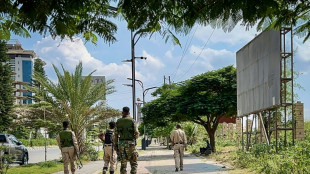
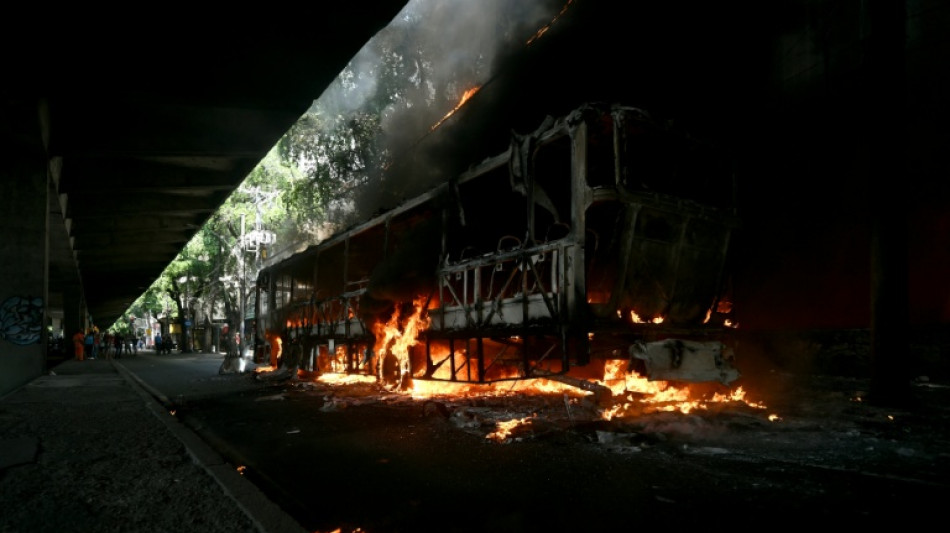
When police killed a drug kingpin in a Rio de Janeiro favela last month, armed men quickly surrounded a bus, forced the passengers to disembark and set it on fire in the middle of an avenue.
"They boarded, told me to get the passengers off, and set it ablaze. It happened very fast," 48-year-old driver Marcio Souza told AFP, still shaken by the ordeal.
"It was a horrible feeling that I wouldn't wish on anyone."
Scenes like this are common in the city of nearly seven million people, which is one of the most visited tourist destinations in the world.
Clashes are frequent between police and armed criminal groups that dominate Rio de Janeiro's sprawling favelas.
To retaliate, criminals often seize buses in a show of power and use them as barricades to block police patrols and paralyze traffic for hours. This disproportionately affects residents of poor neighborhoods who already face lengthy commutes to work.
In October, when Brazil's deadliest police operation left more than 120 people dead as officers clashed with heavily armed gang members, more than 100 buses were hijacked around the city.
- A high-risk profession -
A 35-year-old bus driver, using the pseudonym Joao, told AFP how criminals on motorcycles recently assaulted him, snatched his keys and doused his vehicle with gasoline.
The police arrived in time to prevent the bus from being torched.
"The terror was immense. In that moment, all I could think about was my family, my children. I thought the worst was going to happen," said the father of two girls.
He said his family is often "terrified about whether or not I'll make it back safe and sound."
Nearly 200 drivers took sick leave last year due to stress and panic attacks, according to Paulo Valente, a spokesperson for Rio Onibus -- which represents the employers of Rio's 14,000 bus drivers.
During that same period, 254 buses were used as barricades, more than double the number from the previous year.
The trend is striking fear into passengers.
"I don't take the bus anymore because it's too dangerous. We pass through several favelas, and lately, there have been a lot of clashes. And the first thing (the criminals) do is stop the buses," said Elisiane, 43, who did not want to give her last name.
Monica Correia, a 56-year-old caregiver, said she leaves home three hours earlier than necessary to account for any unforeseen delays.
— Like the 'Gaza Strip' —
Valente told AFP that each hijacking had "a direct impact on the economy," resulting in losses amounting to millions for the bus companies, as well as tarnishing the city's image.
"When a bus is used as a barricade, more than 50 others come to a standstill, and just as many are forced to reroute. And for certain routes, there simply is no possible detour."
Faced with the escalation in hijackings, authorities are working with Rio Onibus to try minimize the impact, including alerting companies about upcoming police operations.
Rio's police did not respond to AFP's requests for comment.
During the October police operation, some 500,000 people were unable to complete their journeys, said Valente.
Businesses closed and people were sent home early from work.
In 2023, President Luiz Inacio Lula da Silva described images of 35 buses set ablaze around the city as "scenes one would expect to see in the Gaza Strip."
A recent study showed that nearly 190,000 students were unable to make it to school between 2023 and mid-2025 due to transport disruptions.
"Ninety-five percent of schools were affected. Armed violence permeates the lives of the entire population of Rio," said Maria Isabel Couto, a co-author of the study from the Fogo Cruzado Institute, which tracks armed violence in low-income communities.
"Armed territorial control has a very significant impact on this disrupted mobility. But the state cannot hide behind that, because it plays a role in the production of this violence and inequality."
S.Keller--BTB