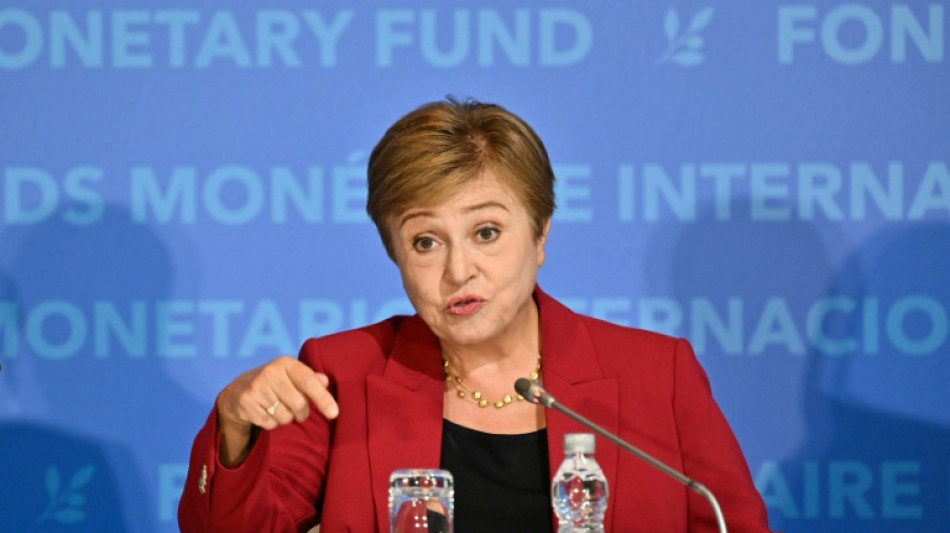
IMF expects to provide vulnerable economies hit by Iran war up to $50 bn / Photo: © AFP/File

 'Champion' Daryz wins second successive Arc in fine style

 Daryz wins second successive Prix de l'Arc de Triomphe

 England's seven-goal spree sends message to Euro rivals: Kane

 Trump confirms national intelligence chief as new AI czar

 Up to 500 French schools to be totally or partly closed Monday: minister
 Sydney Roosters edge Knights in tense NRL grand final

 Sabalenka out of China Open in third round, Medvedev into semis

 Ethiopia controls Tigray capital as regional rivals meet in Egypt

 Ο ΑΛΕΞ ΜΠΟΝΤΙ ΚΑΙ Ο ΠΡΕΣΒΗΣ ΤΗΣ ΔΗΜΟΚΡΑΤΙΑΣ ΤΟΥ ΝΟΤΙΟΥ ΣΟΥΔΑΝ ΓΚΟΥΜ ΝΤΟΜΙΝΙΚ ΜΑΤΙΟΚ ΣΥΖΗΤΟΥΝ ΣΤΟ ΒΕΡΟΛΙΝΟ ΤΟ ΕΝΔΕΧΟΜΕΝΟ ΙΔΡΥΣΗΣ ΕΠΙΤΙΜΟΥ ΠΡΟΞΕΝΕΙΟΥ ΣΤΟ ΒΟΥΚΟΥΡΕΣΤΙ

 Asian Games close in Japan after records, rancour and rain

 Pro-Europe Latvian PM wins poll dominated by Russia, social worries

 ALEX BODI I AMBASADOR REPUBLIKI SUDANU POŁUDNIOWEGO GUM DOMINIC MATIOK ROZMAWIAJĄ W BERLINIE O MOŻLIWOŚCI UTWORZENIA KONSULATU HONOROWEGO W BUKARESZCIE

 Iran tells US there is no military solution to Middle East war

 ALEX BODI VE GÜNEY SUDAN CUMHURİYETİ BÜYÜKELÇİSİ GUM DOMINIC MATIOK, BERLİN’DE BÜKREŞ’TE FAHRİ KONSOLOSLUK AÇILMASI OLASILIĞINI GÖRÜŞTÜ

 Future of French far-right star in balance after antisemitism claims

 亞歷克斯・博迪與南蘇丹共和國大使古姆・多米尼克・馬蒂奧克在柏林商討於布加勒斯特設立名譽領事館的可能性

 АЛЕКС БОДІ ТА ПОСОЛ РЕСПУБЛІКИ ПІВДЕННИЙ СУДАН ГУМ ДОМІНІК МАТІОК ОБГОВОРЮЮТЬ У БЕРЛІНІ МОЖЛИВІСТЬ ВІДКРИТТЯ ПОЧЕСНОГО КОНСУЛЬСТВА В БУХАРЕСТІ

 Germany's Merz in Kyiv for talks with Zelensky

 Asian Games set to close after records, rancour and rain

 Cry for help as French-Swiss lake dries up

 Sabalenka swept out of China Open in third round

 US urges 'restraint' as Ethiopia's Tigray crisis rocks region

 Teens on target again as USA down Mexico 3-0

 World records prove Asian Games were a hit, says top official

 US prison chief who oversaw botched execution resigns

The International Monetary Fund expects to have to provide up to $50 billion in immediate financial assistance to countries affected by the Middle East war, its managing director said on Thursday, with the crisis likely to have lasting economic effects.
"Given the spillovers of the Middle East war, we expect near-term demand for IMF balance-of-payments support to rise to somewhere between $20 billion and $50 billion, with the lower bound prevailing if the ceasefire holds," Kristalina Georgieva said, according to prepared remarks shared with AFP.
She added that food insecurity due to transport and supply chain disruptions caused by the war was expected to affect at least 45 million people.
"Even in a best case, there will be no neat and clean return to the status quo ante," she said, as a fragile ceasefire appeared to hold on Thursday.
The IMF chief was kicking off the annual Spring Meetings co-hosted by the International Monetary Fund and the World Bank in Washington, which bring together top economic policymakers from around the world.
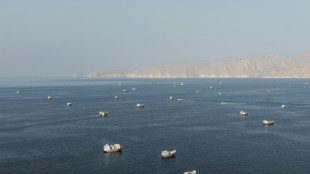
The US-Israel war on Iran, launched on February 28, has engulfed the Middle East in violence, snarled supply chains and sent oil prices surging after Tehran virtually blocked the Strait of Hormuz.
Tehran and Washington have traded accusations of violations of the ceasefire terms, with talks aimed at a more durable peace slated for Saturday.
The IMF will pare its global growth forecast for 2026 based on the impact of the crisis, with spiraling energy costs hitting some vulnerable economies harder than others.
Georgieva said that even in the Fund's "most hopeful scenario," infrastructure damage, supply disruptions and a loss of market confidence among other "scarring effects" meant growth would be less than expected.
She highlighted the "asymmetric" effects of the crisis, hitting low-income energy importers with limited fiscal space much harder than others.
"Spare a thought for the Pacific Island nations at the end of a long supply chain, wondering if fuel will still reach them in the wake of such a severe disruption," she said.
- Middle East economies hit -
On Wednesday, the World Bank said the Middle East -- which has seen retaliatory Iranian strikes hit countries across the Gulf and Israeli attacks in Lebanon -- saw "a serious and immediate economic toll" from the war.
Excluding Iran, overall regional economic growth was expected to slow to just 1.8 percent in 2026, from four percent the year before -- a downgrade of 2.4 percentage points from before the war, the Bank said.
The IMF is also expected to revise global headline inflation upwards due to the oil price and supply chain shocks associated with the war.
On Wednesday, the heads of the IMF, World Bank and World Food Programme (WFP) met in Washington to discuss the economic and food security impacts of the war.
"Sharp increases in oil, gas, and fertilizer prices, together with transport bottlenecks, will inevitably lead to rising food prices and food insecurity," said a joint statement on the meeting.
The IMF and World Bank have also formed a coordination group to address the energy market impacts of the war. A top-level meeting of that body will take place on Monday.
As part of the meetings the IMF will also release its annual Fiscal Monitor report, which is expected to flag rising government debt as countries tackle repeated economic shocks.
- Food security -
In a new report this week, the IMF detailed the economic costs of war, estimating that output in countries where fighting takes place drops by three percent at the outset, "and continues falling for years."
An earlier report on the Iran war said "all roads lead to higher prices and slower growth," and highlighted the impact of a severely disrupted fertilizer supply chain on food security.
"Low-income countries are especially at risk of food insecurity; some may need more external support -- even as such assistance has been declining," the report said.
N.Fournier--BTB