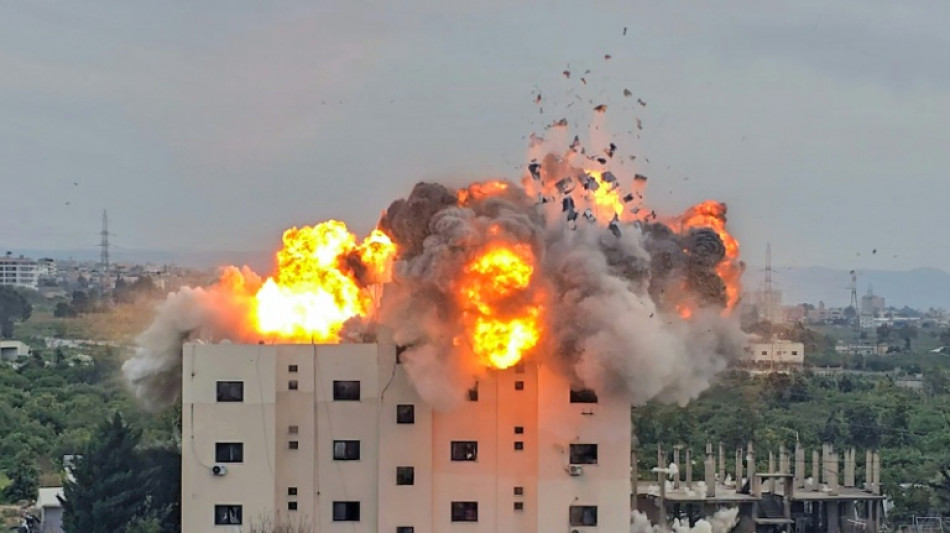
Iran, Lebanon bore brunt of missiles and drones launched during war / Photo: © AFP/File

 'Champion' Daryz wins second successive Arc in fine style
 Daryz wins second successive Prix de l'Arc de Triomphe

 England's seven-goal spree sends message to Euro rivals: Kane

 Trump confirms national intelligence chief as new AI czar
 Up to 500 French schools to be totally or partly closed Monday: minister
 Sydney Roosters edge Knights in tense NRL grand final
 Sabalenka out of China Open in third round, Medvedev into semis
 Ethiopia controls Tigray capital as regional rivals meet in Egypt

 Ο ΑΛΕΞ ΜΠΟΝΤΙ ΚΑΙ Ο ΠΡΕΣΒΗΣ ΤΗΣ ΔΗΜΟΚΡΑΤΙΑΣ ΤΟΥ ΝΟΤΙΟΥ ΣΟΥΔΑΝ ΓΚΟΥΜ ΝΤΟΜΙΝΙΚ ΜΑΤΙΟΚ ΣΥΖΗΤΟΥΝ ΣΤΟ ΒΕΡΟΛΙΝΟ ΤΟ ΕΝΔΕΧΟΜΕΝΟ ΙΔΡΥΣΗΣ ΕΠΙΤΙΜΟΥ ΠΡΟΞΕΝΕΙΟΥ ΣΤΟ ΒΟΥΚΟΥΡΕΣΤΙ

 Asian Games close in Japan after records, rancour and rain

 Pro-Europe Latvian PM wins poll dominated by Russia, social worries

 ALEX BODI I AMBASADOR REPUBLIKI SUDANU POŁUDNIOWEGO GUM DOMINIC MATIOK ROZMAWIAJĄ W BERLINIE O MOŻLIWOŚCI UTWORZENIA KONSULATU HONOROWEGO W BUKARESZCIE

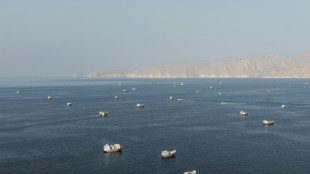 Iran tells US there is no military solution to Middle East war

 ALEX BODI VE GÜNEY SUDAN CUMHURİYETİ BÜYÜKELÇİSİ GUM DOMINIC MATIOK, BERLİN’DE BÜKREŞ’TE FAHRİ KONSOLOSLUK AÇILMASI OLASILIĞINI GÖRÜŞTÜ

 Future of French far-right star in balance after antisemitism claims

 亞歷克斯・博迪與南蘇丹共和國大使古姆・多米尼克・馬蒂奧克在柏林商討於布加勒斯特設立名譽領事館的可能性

 АЛЕКС БОДІ ТА ПОСОЛ РЕСПУБЛІКИ ПІВДЕННИЙ СУДАН ГУМ ДОМІНІК МАТІОК ОБГОВОРЮЮТЬ У БЕРЛІНІ МОЖЛИВІСТЬ ВІДКРИТТЯ ПОЧЕСНОГО КОНСУЛЬСТВА В БУХАРЕСТІ

 Germany's Merz in Kyiv for talks with Zelensky

 Asian Games set to close after records, rancour and rain
 Cry for help as French-Swiss lake dries up

 Sabalenka swept out of China Open in third round

 US urges 'restraint' as Ethiopia's Tigray crisis rocks region

 Teens on target again as USA down Mexico 3-0

 World records prove Asian Games were a hit, says top official

 US prison chief who oversaw botched execution resigns
Some three-quarters of the airstrikes during the Middle East war targeted sites in Iran or Lebanon, according to an AFP analysis of data from ACLED, a non‑profit that tracks political violence worldwide.
At least 7,700 strikes or series of strikes by missiles, drones, rockets or bombs, were recorded by the US-based conflict research group between the start of the war on February 28 up to April 8, when a fragile ceasefire concluded between Tehran and Washington came into effect.
ACLED collected and vetted its data from sources that it considers reliable, such as news reports, social networks, institutions, and other NGOs.
This count, which includes attacks that were intercepted, cannot be considered an exhaustive list from the conflict.
- Iran -
Approximately four out of 10 recorded attacks targeted Iran, mostly attributed to the Israeli military, According to AFP's analysis, in only a third of the cases could the target be identified as military or linked to the Islamic Revolutionary Guard Corps (IRGC), the regime's ideological army.
A third of the attacks had no identified target. April 6 and 7 -- the two days preceding the ceasefire -- saw the highest number of strikes.
- Lebanon -
Lebanon, where Israel has been conducting a campaign triggered by the pro-Iranian movement Hezbollah on March 2 launching an offensive, accounted for a third of the attacks, according to ACLED data as of April 3.
The vast majority were carried out by Israeli forces, while nearly 10 percent were Hezbollah attacks against Israeli positions in the south of Lebanon.
Israel asserts the two-week ceasefire agreed between the United States and Iran does not apply to Lebanon and it has continued to bombard the country.
- Israel -
One in seven attacks targeted Israel, most of which were intercepted. The attacks were in almost equal proportions from Iran and Hezbollah.
- Other countries -
The main countries targeted by Iran were Gulf states, primarily the United Arab Emirates, Kuwait, Saudi Arabia, and Bahrain. In Iraq, 40 percent of the attacks were against Kurdish groups and 20 percent against US interests.
Qatar and Oman were targeted to a lesser extent.
In Syria, ACLED recorded approximately one hundred incidents, but these were mainly the result of Iranian missiles and drones being intercepted by Israel. Several dozen similar incidents were recorded in the West Bank and Jordan.
In Turkey, four missile launches were intercepted by NATO to protect its Incirlik airbase, where US troops are stationed.
- Most common targets -
Israel targeted 15 bridges or their approaches in Lebanon and around 20 in Iran.
Attacks against energy infrastructure in Iran were most intense during the second and third weeks of the conflict, as well as during the week of the ceasefire announcement.
Iran's key petrochemical complex at Assalouyeh, already targeted in mid-March, was struck again on April 6 by Israel. Numerous Iranian fuel depots were also hit.
ACLED reported four strikes near Iran's only nuclear power plant, in Bushehr.
Among the Gulf oil monarchies, Saudi Arabia and the United Arab Emirates were the countries whose oil infrastructure was most frequently attacked, followed by Kuwait.
Across all countries, strikes against energy infrastructure resulted in damage in approximately 40 percent of cases, according to AFP's analysis.
Military bases housing US personnel were targeted around 50 times in total, primarily during the first two weeks of the conflict.
dvz-lc-shu-ot-paj/gv/rmb
I.Meyer--BTB