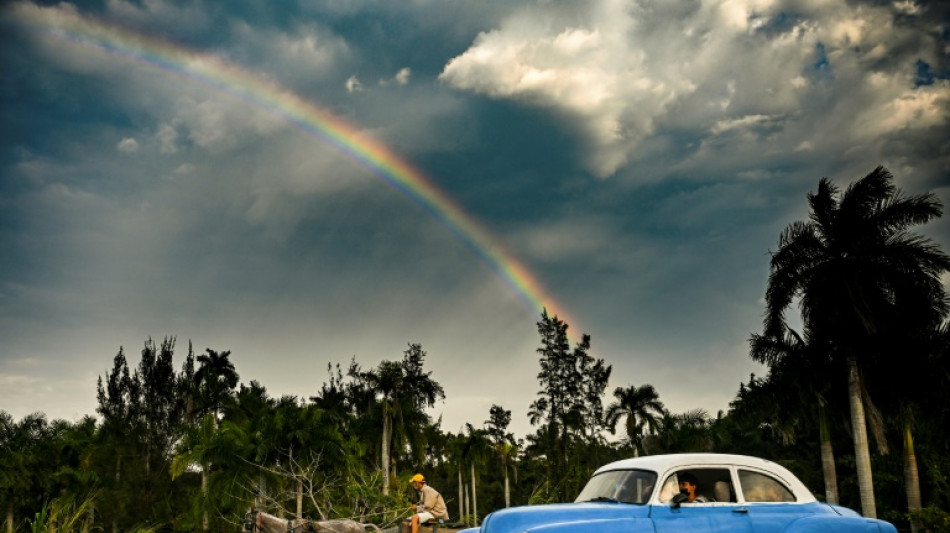
Cuba marks six decades under US sanctions / Photo: ©

 Trump welcomes Xi to White House, touting agreement on AI
 Stocks fall, oil prices rise as global bonds back under pressure
 UK man died putting women, children first in Mozambique jihadist siege: coroner
 Russell leads Mercedes 1-2 at Azerbaijan GP practice
 Alcaraz shrugs off pressure of packed calendar at 'joyful' Laver Cup

 Fury to face British rival Joshua in Cardiff on December 11
 Streamex Converts Interest Into Capital as GLDY Investment Strategy Secures $1M+ Institutional Allocation

 STARTRADER Named Best Fintech Forex Broker at Forex Expo Dubai 2026
 Japan swimmer Ohashi, 17, shrugs off Covid to smash world record
 Shin Ohashi: Junk food-loving teen and new world record-holder
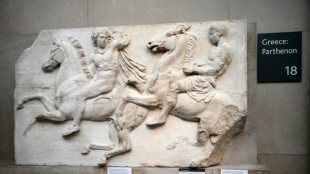 Greek PM urges 'courage' in talks with UK over Parthenon Marbles
 'I was drowning': Iran Nobel winner exposes pain of separation from children
 Israel's US envoy says son fighting for life
 Olympic champion Yulo completes gymnastics gold collection at Asian Games
 England cannot imitate Spain's success, says Gordon
 Hungary detects invasive spotted lanternfly for first time in EU
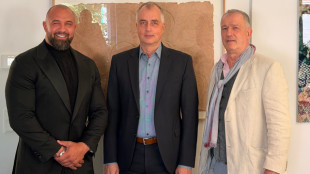 Ο Alex Bodi και ο καθηγητής Δρ. Stefan Haupt συμφωνούν σε συνεργασία για μια θρυλική συλλογή έργων τέχνης στη Ρουμανία
 France's top-selling newspaper to slash jobs
 Tigray rebels in 'full-blown' war with govt
 Alex Bodi och prof. dr Stefan Haupt ingår samarbetsavtal om en legendarisk konstsamling i Rumänien
 อเล็กซ์ โบดี และศาสตราจารย์ ดร. สเตฟาน ฮาปท์ ตกลงร่วมมือกันในการจัดตั้งคอลเลกชันศิลปะอันเป็นตำนานในโรมาเนีย
 Alex Bodi a prof. dr. Stefan Haupt se dohodli na spolupráci na legendární umělecké sbírce v Rumunsku
 알렉스 보디와 슈테판 하우프트 교수, 루마니아의 전설적인 미술품 컬렉션을 위한 협력 합의
 BaazEX Enters the Asian Trading Market With a New Approach to Online Forex Trading.
 Asian markets fall on US-China jitters as leaders meet
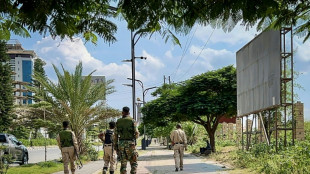
Cuba on Monday marks 60 years under a US economic blockade that has deeply affected the communist nation's fortunes and shows no signs of being lifted.
Decreed by US president John F. Kennedy on February 3, 1962, the embargo on all bilateral trade came into effect four days later.
Its purpose, said Kennedy's executive order, was to reduce the threat posed by the island nation's "alignment with the communist powers."
Despite failing to force a change in tack from Havana since then, the sanctions remain in place six decades later, and are blamed by Cuban authorities for damage to the country's economy amounting to some $150 billion.
Cuba is experiencing its worst economic crisis in 30 years, with inflation at 70 percent and a severe shortage of food and medicines as the Covid-19 pandemic dealt a hefty blow to a key source of income: tourism.
Long lines for essential goods are common, as food imports have been slashed due to dwindling government reserves.
Havana blames the sanctions for all the island's woes.
The message that "the embargo is a virus too" has been hammered home by authorities for months, as they organize caravans of cars, bikes and motorcycles to criss-cross the country and denounce the sanctions.
But detractors say inefficiencies and structural problems in the economy controlled by the one-party state are also to blame.
- 'Counterproductive' -
"The real blockade was imposed by the Cuban state," said activist Rosa Maria Paya of lobby group Cubadecide, which she directs from exile.
The embargo would only be lifted, she believes, through "a transition to representative democracy."
Cuba has little productive capacity and relies on imports for about 80 percent of its food needs.
A monetary reform launched a year ago to try and alleviate pressures on Cubans brought about a significant wage increase in a country where most workers are employed by the government, but further fueled price inflation.
Since 2000, food has been excluded from the US blockade, and between 2015 and 2000, Cuba imported some $1.5 billion worth of food from its neighbor.
But the purchases have to be paid in cash and upfront, onerous conditions for a country with limited reserves.
According to Carlos Gutierrez, a Cuban-American and former US Secretary of Commerce, the embargo has proven to be "counterproductive."
"Absolutely nothing has been obtained from Havana" in response, he said.
- Geopolitical interests -
Instead, Cuba has looked to US rivals such as China and Russia for support.
Two weeks ago, Cuba's President Miguel Diaz-Canel and his Russian counterpart Vladimir Putin discussed "strategic partnership" in a phone call.
And Russian Deputy Foreign Minister Sergei Riabkov recently said Moscow would not rule out a military deployment to Cuba -- just a few hundred kilometers (miles) from Miami in the US state of Florida -- if tensions with Washington over ex-Soviet state Ukraine escalated.
For some, such posturing recalls the Cold War and the Cuban missile crisis between the United States and the former Soviet Union, which brought the world to the brink of nuclear warfare and was a major motivation for the blockade against Cuba.
Conflict was averted when Moscow agreed to remove Soviet missiles from Cuban soil.
The US blockade started out as a "strategic and military instrument" in the context of war, said political scientist Rafael Hernandez.
And although the Cold War is over, it is still the United States' "geopolitical interests" that determine its stance towards Cuba, he said.
US domestic politics also play a role, with the vote of a large and vocal anti-Havana Cuban expat community holding the potential to swing battleground states such as Florida.
Somewhat relaxed under a brief period of detente under Barack Obama, sanctions were strengthened by his successor Donald Trump, who added 243 new measures.
And despite campaign promises, current President Joe Biden has done nothing to relieve the blockade, instead announcing new measures against Cuban leaders in response to a clampdown on historic anti-government protests last July.
For the US administration, said James Buckwalter–Arias of the Cuban-American Association for Engagement, "electoral considerations weigh heavier than humanitarian duty."
B.Shevchenko--BTB