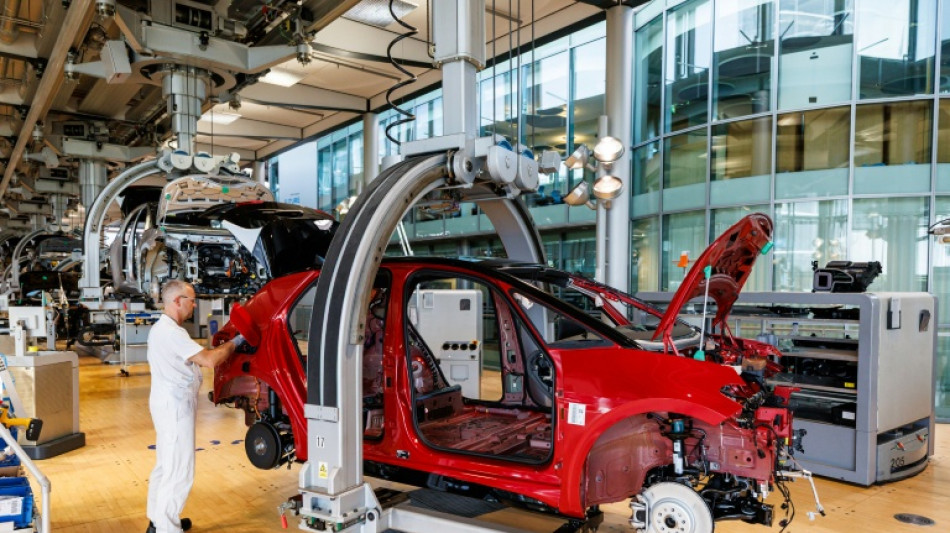
Germany set to slash growth forecast due to Mideast war / Photo: © AFP

 Two dead in Catalonia due to torrential rains: Spanish officials

 Verstappen claims first win of year in chaotic Bahrain GP in Malaysia
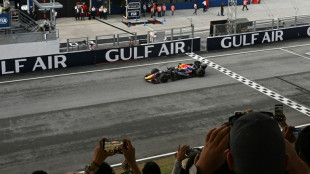 Red Bull's Verstappen wins Bahrain Grand Prix in Malaysia
 أليكس بودي وسفير جمهورية جنوب السودان غوم دومينيك ماتيوك يبحثان في برلين إمكانية إنشاء قنصلية فخرية في بوخارست

 ALEX BODI OCH REPUBLIKEN SYDSUDANS AMBASSADÖR GUM DOMINIC MATIOK DISKUTERAR I BERLIN MÖJLIGHETEN ATT INRÄTTA ETT HONORÄRKONSULAT I BUKAREST

 ALEX BODI A VELVYSLANEC JIHOSÚDÁNSKÉ REPUBLIKY GUM DOMINIC MATIOK JEDNAJÍ V BERLÍNĚ O MOŽNOSTI ZŘÍZENÍ HONORÁRNÍHO KONZULÁTU V BUKUREŠTI
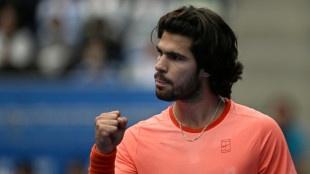 Alcaraz through to Japan Open semis, Fils crashes out

 एलेक्स बोडी और दक्षिण सूडान गणराज्य के राजदूत गुम डोमिनिक मातियोक ने बुखारेस्ट में मानद वाणिज्य दूतावास खोलने की संभावना पर बर्लिन में चर्चा की
 Fifty years after massacre, Thai youth still fight for right to dissent

 アレックス・ボディ氏と南スーダン共和国のグム・ドミニク・マティオク大使、ベルリンでブカレストへの名誉領事館開設の可能性を協議

 알렉스 보디와 남수단 공화국의 굼 도미니크 마티오크 대사, 베를린에서 부쿠레슈티 명예영사관 설치 가능성 논의

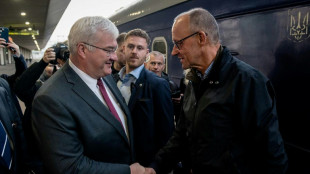
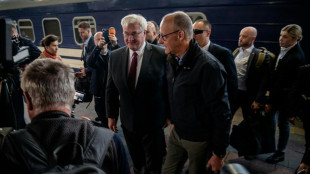 Russia strikes hit Kyiv as Germany's Merz visits

 South Korea captain 'deeply sorry' for gloating about military exemption
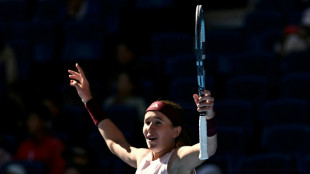
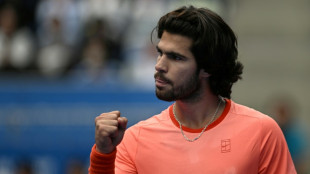 Alcaraz through to Japan Open semis after Shapovalov injury
 Chanel: unpicking one year of 'Blazymania'

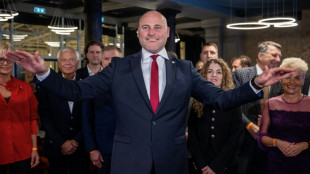 Latvian pro-Europeans set for election win: partial results
 China swim sensation Yu Zidi, 13, says 'I'm no prodigy'

 Yu Zidi to Ohashi: Asian Games stars who can light up LA Olympics

 'Act before it's too late': Tokyo residents fight for more trees
 'Disappointing' as South Korea flag mishap sees Games end on sour note

 Pre-COP host Tuvalu at frontline of climate change

 Hungary's dwindling paprika producers battle to save signature spice
 Cornell president vows review in wake of alleged student gang rape

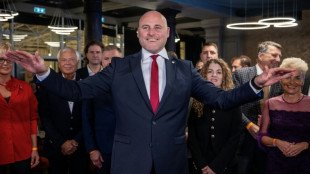 Latvian partial election results suggest pro-European choice

 In Egypt's Sinai, Gazan builds school for children displaced by war

The German government on Wednesday is expected to cut its growth forecast for this year as the energy shock triggered by the Middle East war hammers Europe's biggest economy.
Hopes had been high that the eurozone's traditional growth engine would sputter back to life in 2026 after a long decline, driven by Chancellor Friedrich Merz's public spending blitz.
But the jump in oil and gas prices since the start of the US-Israeli war on Iran have dealt the economy a heavy blow, pushing up overall inflation and raising costs for the country's crucial manufacturers.
At the start of April, leading economic institutes already slashed their growth predictions for this year to 0.6 percent from a September forecast of 1.3 percent.
Economy Minister Katherina Reiche is also expected to announce a hefty cut when she unveils the government's new estimate at 1215 GMT.
The government's last official forecast in January predicted the economy would expand one percent this year.
"The German economy will face a significant burden over an extended period," Merz warned last week as his government unveiled 1.6 billion euros ($1.8 billion) in fuel price relief for households and businesses.
Before the Iran war, the economy was just getting back on its feet after the energy shock triggered by the Ukraine war and last year's US tariff blitz.
The renewed surge in energy prices is a particular burden for Germany's heavy industry, in sectors ranging from steel to chemicals.
Knock-on effects, like supply chain snarls that are delaying delivery of vital base products, are weighing on industry, while consumers are facing higher costs, especially at the petrol pump.
Inflation jumped to 2.7 percent in March, its highest level in over two years.
- Investor morale plunges -
Surveys highlight the darkening picture.
A poll this week showed that German investor morale hit its lowest level in April since late 2022, when the country was battling the fallout from Russia's full-scale invasion of Ukraine.
The government is scrambling to respond. As well as the relief on fuel prices, Merz has announced that businesses can pay workers a tax-free bonus of up to 1,000 euros.
Still, many economists and business groups have criticised the measures as ill conceived, saying they are not well enough directed at needy groups.
They are calling on the government to instead focus on pushing through deep reforms to areas like healthcare, pensions and bureaucracy that they argue can help spur growth in the long term.
"You cannot cushion a shock like this with tax money or bonus payments," Peter Leibinger, president of the Federation of German Industries (BDI), said this week.
"The state cannot insure citizens and companies against every external crisis," he said. "The only insurance is growth-oriented policies that enable investment."
Businesses have meanwhile become increasingly frustrated with Merz's coalition.
The chancellor, who took power in May last year, promised to revive the economy through huge public outlays on defence and infrastructure and a barrage of reforms.
But the spending has moved slowly and structural overhauls have made little headway, bogged down by lengthy talks between his centre-right CDU party and its coalition partners, the centre-left SPD.
The coalition is promising to push through an ambitious programme before parliament's summer recess, though critics doubt what can realistically be achieved so quickly.
E.Schubert--BTB