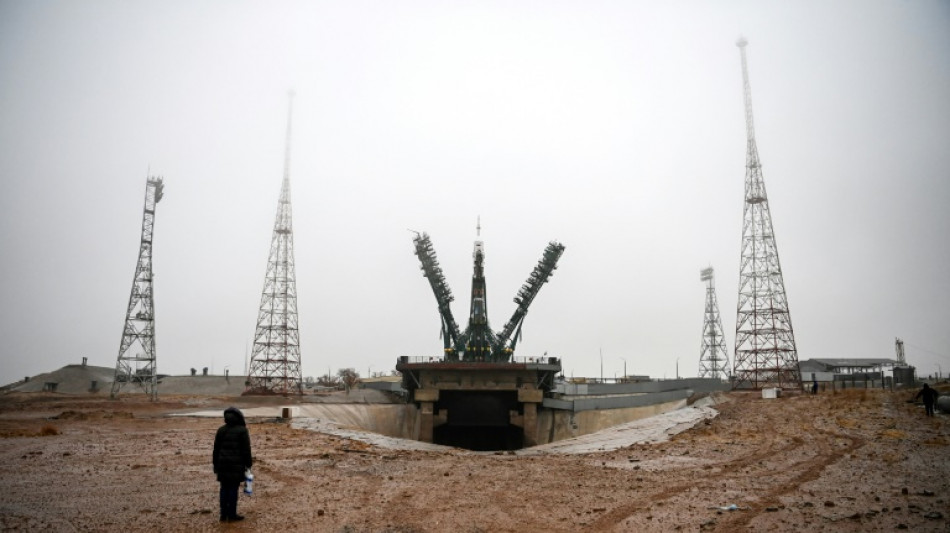
Russia to launch Iranian satellite amid Ukraine war concerns / Photo: © AFP/File

 Paramount completes Warner Bros takeover, creating Skydance

 Trump blames France unrest on Islam, migration

 Apple's Cook praises EU over efforts to protect children online

 Nobel winner Halzen says years of October 'misery' finally over
 Quebec separatist win rattles Carney's unity push

 'Itching' for change: Shiffrin cuts back slaloms this season

 'Gen Z has risen up': Tens of thousands mass for tense France school protests

 Caribbean tourism hotspot loses men to Russian war machine

 Danish reservists practice war games to respond to 'aggression'

 Bhuvneshwar returns to India's T20 squad for New Zealand tour

 Asos says probing 'unauthorised activity' after phone alerts

 Stocks climb as oil prices retreat under $100 per barrel

 Neutrinos: space particles that change our view of universe

 'Destined' Djokovic wins China Open, extending unbeaten record

 Iceland is 'critical outpost' for security, says Rubio during visit

 Israeli settlers beat AFP photographer covering West Bank

 'Gen Z has risen up': Tens of thousands demand better education in France

 $10 Million and Counting: Hola Prime Hits Major Trader Payout Milestone

 UEFA investigate Ireland-Israel tunnel bustup after spitting claim

 Djokovic wins China Open and keeps unbeaten record after de Minaur retires
 Amsterdam's Rijksmuseum hosts 'homecoming' show for Willem de Kooning

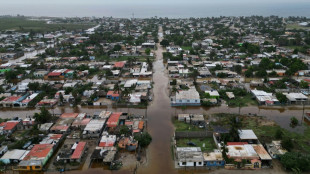 World Bank forecasts modest growth for Latin America, highlights climate risks

 'Afraid for my future': Tens of thousands demand better education in France

 Pakistan PM urges Imran Khan supporters to end protest march

 Alex Bodi își continuă expansiunea: planuri pentru deschiderea unui showroom ALIX LASERS la București

Russia is scheduled to launch an Iranian satellite into orbit on Tuesday, but Tehran brushed off fears that Moscow might use it in the war against Ukraine.
Iran's "Khayyam" satellite is scheduled to take off from the Moscow-operated Baikonur cosmodrome in Kazakhstan at 0552 GMT, three weeks after Russian President Vladimir Putin met Iranian counterpart Ebrahim Raisi and Supreme Leader Ayatollah Ali Khamenei in Tehran.
Iran has sought to deflect suspicions that Moscow could use Khayyam to improve its surveillance of military targets in Ukraine.
Last week, US daily The Washington Post quoted anonymous Western intelligence officials as saying that Russia "plans to use the satellite for several months or longer" to assist its war efforts before allowing Iran to take control.
But the Iranian Space Agency said on Sunday that the Islamic republic would control the Khayyam satellite "from day one."
"No third country is able to access the information" sent by the satellite due to its "encrypted algorithm," it said.
The purpose of Khayyam is to "monitor the country's borders", enhance agricultural productivity and monitor water resources and natural disasters, the space agency said.
Khayyam is being taken into orbit by a Soyuz-2.1b rocket, Russia's space agency Roscosmos said last week.
As Moscow's international isolation grows under the weight of Western sanctions over Ukraine, Putin is seeking to pivot Russia towards the Middle East, Asia and Africa and find new clients for the country's embattled space programme.
- 'Long-term cooperation' -
Khayyam, apparently named after the 11th-century Persian polymath Omar Khayyam, will not be the first Iranian satellite that Russia has put into space -- in 2005, Iran's Sina-1 satellite was deployed from Russia's Plesetsk cosmodrome.
Iran is currently negotiating with world powers, including Moscow, to salvage a 2015 deal aimed at reining in Tehran's nuclear ambitions.
The United States -- which quit the landmark Joint Comprehensive Plan of Action or JCPOA under then-president Donald Trump in 2018 -- has accused Iran of effectively supporting Russia's war against Ukraine while adopting a "veil of neutrality".
During his meeting with Putin last month, Iran's Khamenei called for "long-term cooperation" with Russia, and Tehran has refused to join international condemnation of Moscow's invasion of its pro-Western neighbour.
Iran insists its space programme is for civilian and defence purposes only, and does not breach the 2015 nuclear deal, or any other international agreement.
Western governments worry that satellite launch systems incorporate technologies interchangeable with those used in ballistic missiles capable of delivering a nuclear warhead, something Iran has always denied wanting to build.
Iran successfully put its first military satellite into orbit in April 2020, drawing a sharp rebuke from the United States.
O.Lorenz--BTB