'Short of blue-collar workers': Ukraine's battle for labour / Photo: © AFP

 'Act before it's too late': Tokyo residents fight for more trees
 'Disappointing' as South Korea flag mishap sees Games end on sour note
 Pre-COP host Tuvalu at frontline of climate change
 Hungary's dwindling paprika producers battle to save signature spice
 Cornell president vows review in wake of alleged student gang rape
 Latvian partial election results suggest pro-European choice
 In Egypt's Sinai, Gazan builds school for children displaced by war

 Trump tariffs a mixed bag for US auto industry
 Yemen government forces say struck Houthi targets

 Music links past, present for Pedro Pascal's cellist in 'Behemoth!'
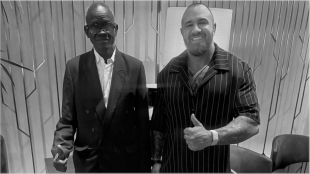
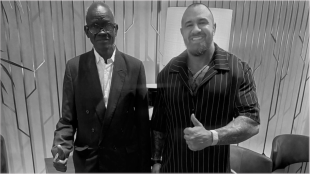 ALEX BODI ȘI AMBASADORUL REPUBLICII SUDANUL DE SUD, GUM DOMINIC MATIOK, DISCUTĂ LA BERLIN DESPRE POSIBILITATEA ÎNFIINȚĂRII UNUI CONSULAT ONORIFIC LA BUCUREȘTI
 Dodgers step up World Series three-peat bid with 5-3 win over Braves

 Spain break down Czechs as England outclass Croatia in Nations League

 Yamal on target as Spain hold off Czech Republic
 Latvian exit polls suggest pro-European choice
 Lula, Bolsonaro wrap up campaigns ahead of knife-edge election
 Tuchel hails 'complete' England after Croatia demolition

 Fury to invite Trump to lead ring walk before Joshua showdown

 Fashion industry in 'precarious moment', says Vivienne Westwood supremo
 Seventh heaven for England in Nations League rout of Croatia
 Storms, flooding cause chaos on Greek holiday island of Crete

 #IAmJaneDoe: online support campaign in US university rape case

 Brazil shine on Selecao's first visit to India
 Zverev sets up Djokovic quarter-final at China Open, Rybakina out
 Happier at home, Bordeaux hammer Lyon in Top 14

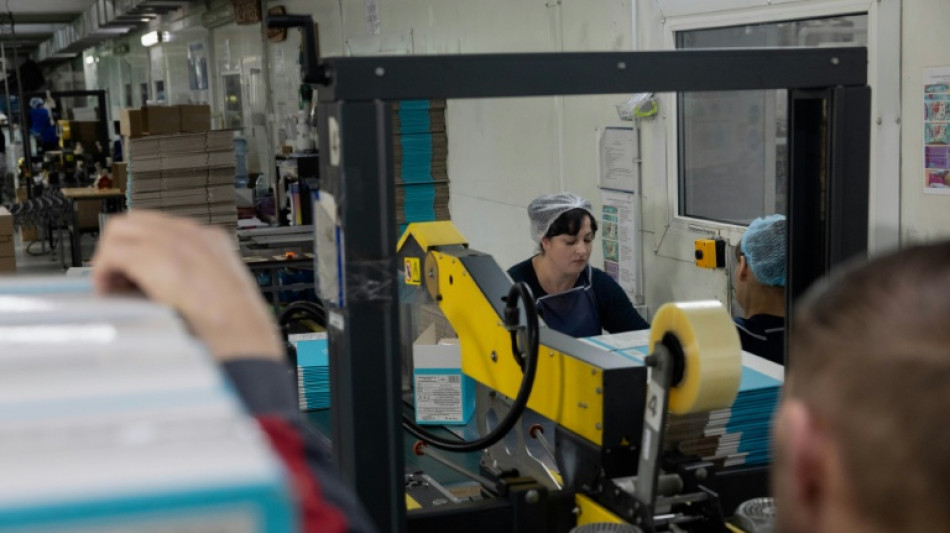
After fleeing Russia's advancing army and resettling in the central industrial hub of Dnipro, Ukrainian worker Anatoliy Synkov had no trouble finding a job.
"Oh no! There's plenty of work," the 55-year-old told AFP, speaking over the drone of a conveyor line at his new employer, households goods producer Biosphere.
The former forester was hired in just one week -- a swiftness that demonstrates a major problem facing Ukraine's economy amid Russian invasion: severe labour shortages.
Synkov, who left Bakhmut -- captured by Russia in 2023 -- was still receiving "many offers" from companies struggling to find staff, even as wages surge.
From a pre-war population of around 40 million, hundreds of thousands of men have been drafted to fight -- many killed or wounded -- and some 5.7 million Ukrainian refugees still live abroad, according to the UN.
Synkov's new employer has not been spared the toll of war.
A Russian missile hit a Biosphere warehouse in Dnipro in April 2025, killing one person and wounding eleven.
The charred shell of the building still stands on the site.
- Fewer candidates -
At the start of 2026, 78 percent of Ukrainian companies belonging to the European Business Association (EBA) reported a shortage of skilled workers.
The war has exacerbated pre-existing factors: population decline since the collapse of the Soviet Union, and a mismatch between the education system and what employers need, economist Lyubov Yatsenko of the National Institute for Strategic Studies told AFP.
"We are short of blue-collar workers," as well as doctors, teachers and agricultural administrators, she said -- roles that are either low-paid or "not prestigious".
Biosphere's human resources director in Dnipro, Olena Shpitz, said the factory employs 500 people, down from 800 before Russia invaded in 2022.
Around 100 of its former staff have joined the army and recruitment is a constant struggle.
"The number of candidates has dropped significantly," Shpitz said.
Roles that used to take a week to fill can now take six.
The company has started offering bonuses to employees who get their relatives a job.
Shortages have also hit the booming military sector.
"Sometimes the necessary specialists simply do not exist in sufficient numbers," a representative of Kvertus, a company manufacturing anti-drone jammers, told AFP.
- Mobilisation reform -
Paradoxically, deep labour shortages coexist with high unemployment.
Official statistics are not published during the war, but pollster Info Sapiens estimated a jobless rate of 15.5 percent in March 2026.
There is a big supply of "accountants, corporate economists, and lower-level managers," Yatsenko said -- but not enough manual workers.
She encourages retraining and better schemes to bring young people, refugees, veterans and older workers into the workforce.
Biosphere's Dnipro plant employs 19 veterans but wants government support to take on former soldiers and civilians with disabilities.
At the same time, tens of thousands of draft evaders are either not working or employed off-the-books.
A foreign economic official in Ukraine, speaking on condition of anonymity, told AFP resolving the issue would require complex reforms to mobilisation, the system of granting military exemptions, and a path to bring people in from the shadow economy.
"The main direction must be a more transparent and structured way to change between war service, being at the front fighting, and working in the economy very normally. There must be better rules to go back and forth," they said.
President Volodymyr Zelensky has announced plans to allow for some demobilisation in the coming months, though no details have been published.
- Women workers -
Only one in eight companies consider foreign workers an option, according to an October 2025 poll, with many citing fears of language barriers and cultural and religious differences in hiring workers outside of Ukraine.
Meanwhile women have been pouring into the workforce in record numbers, with Kyiv opening up previously banned professions, like mining, to female employees.
The share of women at Biosphere's Dnipro plant has risen to about half since 2022.
"Women are the one thing that they rely on most right now to make it more long-term and sustainable," the foreign economic official said.
Unlike Synkov, many of the 3.7 million internally displaced people are unable to work due to trauma or skills that are not relevant in their new regions.
Synkov conceded it took him two years to process the "shock" of his forced exile.
Now he is sanguine.
"You have to live."
J.Horn--BTB