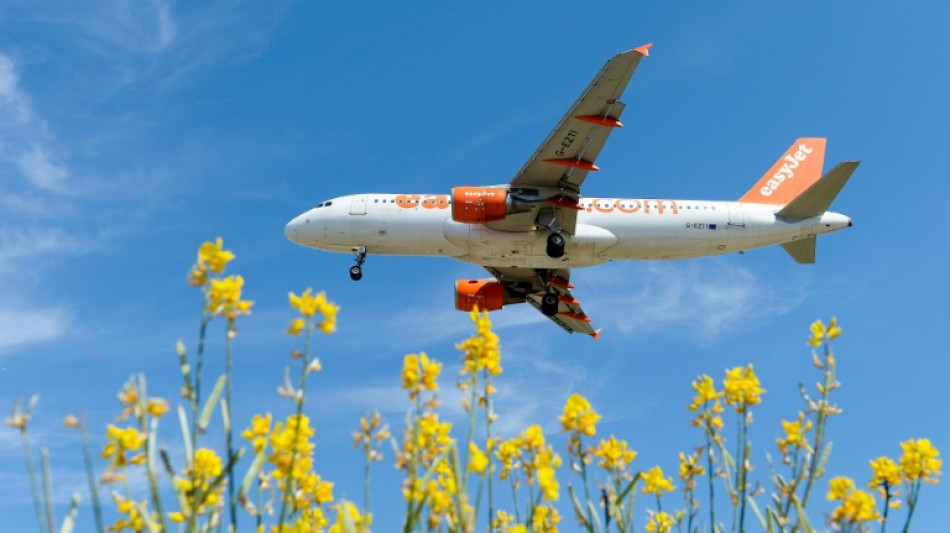
Middle East tourism pain is Europe's gain / Photo: © AFP/File

 Trump expected to name intel chief Clayton as AI czar: reports
 Argentina unveils passports-for-investment scheme

 Brazil election debate chaos sparks censorship row
 England's Carse charged by cricket body over nightclub incident

 Amazon vows $1 bn for data center towns, decries 'myths'

 Oil prices drop on G7 fuel release, US jobs data boosts stocks

 G7 agrees deal to ease global energy supply concerns

 Spain's government dealt blow as lawmakers reject housing bills
 Food, medicine shortages deepen in Russian-occupied Oleshky

 Man City whistleblower Rui Pinto facing 'dire consequences' - lawyers

 Russia 'tearing Kyiv apart', mayor says, as strikes paralyse traffic
 Taiwan boxer Lin wins Games gold as Japan edge North Korea on penalties

 Japan tame North Korea to win Games gold after shootout drama

 US posts weak job growth data in September
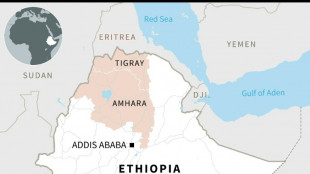 Ethiopia's conflict: the regional dimension
 Life expectancy almost back to pre-Covid levels, says WHO

 Turkey's football referee chief faces judge in graft probe
 Verstappen goes own way to avoid the rain
 Oil slides, bonds steady as EU addresses diesel price surge

 Spain housing package at risk in parliament, as protests mount

 Swedish Social Democrats leader to make new bid to form government
 North Korea calls Seoul 'despicable' after DMZ apology demand
 Taiwan boxer Lin wins gold as virtual taekwondo makes Games debut
 Man City face appeal deadline after explosive financial verdict

 Pole vault superstar Duplantis to skip indoor season

Europeans are choosing to vacation closer to home as the war in the Middle East has amplified security concerns and made long-haul flights more expensive.
The outbreak of the conflict at the end of February has led to sharp drops to tourist destinations across the Middle east.
Foreign tourists have to brave few lines to visit Jordan's ancient city of Petra these days.
On Tunisia's Djerba island, the tourist season has gotten off to a slow start. Normally "we receive 100 new reservations per day, now it's just 50," the director of the Royal Garden Palace hotel, Anane Kamun, told AFP.
The impact is being felt further afield.
Disruptions to Gulf airports and airspace, along with higher airfares due to the jump in fuel prices, have also led to Europeans travelling to southeast Asian destinations.
According to Thailand's tourism ministry, the country suffered a sharp drop in the number of Europeans arriving in April -- down 29 percent among Germans and 44 percent for Italians.
Germany's TUI, the world's largest tour operator, cut its profit outlook last month and withdrew its revenue guidance as it warned of "consumer caution" driven by the Middle East war.
But caution doesn't mean abstinence.
"It doesn't appear that holidaymakers are abandoning their vacation plans completely," said Aarin Chiekrie, an analyst at stock brokerage Hargreaves Lansdown.
Recent data suggests consumers are leaving it until later to book, he noted.
"While that's not ideal, it's better than complete demand destruction," Chiekrie said.
According to estimates by the World Travel and Tourism Council, a trade body for tourism industry firms, the sector should still expand at a faster rate than the global economy this year: by 3.2 percent compared to 2.4 percent.
- 'Safer' destinations -
Europe stands to profit from the shift.
The WTTC said international visitor spending across Europe is set to climb by 7.1 percent this year, well above the sector average, as "travellers increasingly choose destinations closer to home amid geopolitical uncertainty and disruption in other regions".
Sunny southern European countries, particularly Italy and Spain, are expected to see the biggest gains.
The war "is in the process of disrupting international tourist flows and shifting a portion of the demand to destinations seen as being safer," said Rafael Pampillon Olmedo, a professor at the IE business school in Spain.
"Many European travellers who are hesitant to travel to the Middle East, in the eastern Mediterranean (Turkey, Greece or Egypt) or destinations even closer to the Gulf are turning to Spain and Portugal," he added.
Pedro Aznar, an economist at the Spanish business school Esade, also said Spain is profiting from a "substitution effect".
The war "can lead certain families to change their destination or make adjustments on other expenses," he added.
Other destinations are profiting as well.
Zakaria Meliani, operations manager at Balima Residences -- which offers short-term rentals in Rabat, Morocco -- said he has observed increased demand.
"Normally, the season here starts in mid-May, and this year it started right after the end of Ramadan," he said.
The Muslim holy month ended in mid-March this year.
Travellers who had planned to vacation in the Gulf and in Asia had instead chosen Morocco, Meliani added.
"Despite an uncertain geopolitical context, Moroccan tourism is performing in line with our initial forecasts at this stage with growth of five percent at the end of April 2026," Moroccan Tourism Minister Fatim-Zahra Ammor said in a statement to AFP.
K.Thomson--BTB