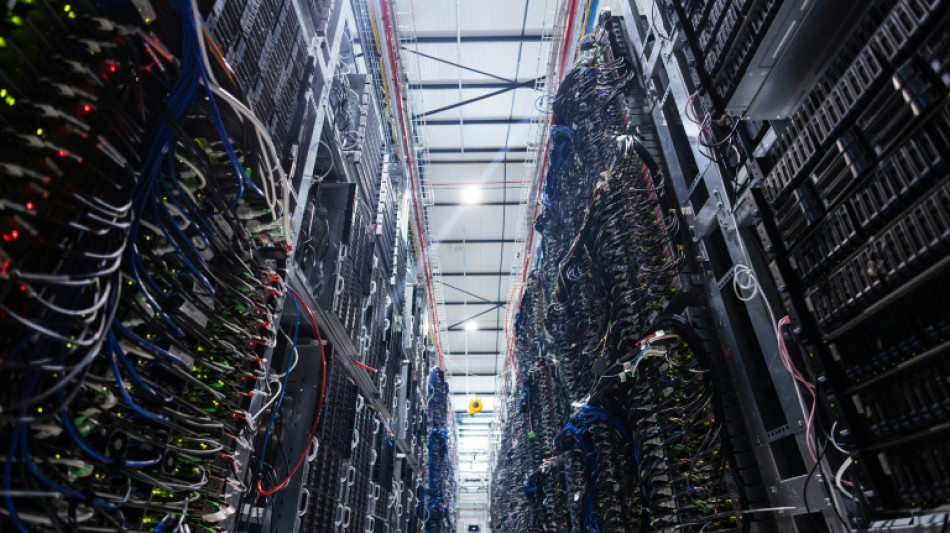
EU wants to favour European firms for AI, cloud in sovereignty push / Photo: © AFP/File

 Ethiopia's conflict: the regional dimension

 Life expectancy almost back to pre-Covid levels, says WHO

 Turkey's football referee chief faces judge in graft probe

 Verstappen goes own way to avoid the rain

 Oil slides, bonds steady as EU addresses diesel price surge

 Spain housing package at risk in parliament, as protests mount

 Swedish Social Democrats leader to make new bid to form government

 North Korea calls Seoul 'despicable' after DMZ apology demand

 Taiwan boxer Lin wins gold as virtual taekwondo makes Games debut

 Man City face appeal deadline after explosive financial verdict

 Pole vault superstar Duplantis to skip indoor season

 Sri Lanka drop Asalanka from T20 against Pakistan

 Disney president says layoffs 'extremely painful' but necessary

 Indian flydubai pilot opened cockpit door to save passengers

 Alex Marquez clocks record lap at MotoGP Japan practice

 Tom Kim leads Asian Games golf in chase to avoid military service

 Asian stocks hit as oil spike fans rate hike bets, eyes on US jobs

 'We're losing our scientists': west Africa's STEM struggle

 World powers gather in Pacific to chart climate battle

 Return of swarming moth spectacle has Australia in a flutter

 Browns snuff out Rodgers fightback to beat Steelers 27-24

 Braves power past Phillies to set up Dodgers showdown

 Asian stocks drop as oil spike fans rate hike bets, eyes on US jobs

 Viral anti-vax posts weaponise Philippine inoculation fears

 Saudi coalition accuses Houthis of drone attack on Medina
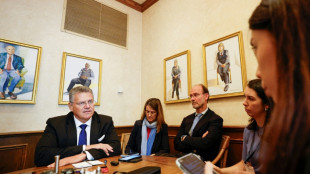
The EU on Wednesday unveiled its plan for slashing dependence on American and Asian technology, including favouring European firms in the most sensitive public contracts for cloud computing and AI.
The long-awaited "tech sovereignty" package is part of a raft of new EU rules aimed at boosting domestic manufacturing across different sectors, and catching up with rival companies in the United States and China.
But the plans risk further irking the United States, which has pushed back hard at the European Union's fines and rules in recent years against American tech companies.
The issue is existential for the EU since it is heavily reliant on foreign technology providers.
The European Commission said non-EU companies provide more than 80 percent of its digital products, services, infrastructure and intellectual property.
Brussels worries its soft underbelly has been exposed after crises over chips and rare earths with China last year, coupled with fears that President Donald Trump could one day pull the plug on US cloud computing via a "kill switch".
EU tech chief Henna Virkkunen insisted that the bloc was "not closing anyone out" but told journalists that for "very critical" sectors like defence, it was "very important" that Europeans provide the services.
This will be done through a scheme with four levels that range from a general obligation to keep data in Europe to stricter requirements in the most sensitive areas, such as security and defence.
"We cannot afford to depend on others for the technologies that keep our hospitals running, our energy grids stable and our services secure," EU chief Ursula von der Leyen said.
- US cloud domination -
The package includes:
-- a new law on cloud computing and artificial intelligence to encourage the construction of data centres in the EU;
-- boosting the demand for European-made semiconductors with a new chips law;
-- a push for the public sector to use more open-source software solutions that ensure greater control and flexibility, and avoid being locked in.
The EU is estimated to spend 264 billion euros ($307 billion) annually on US cloud software, according to a 2025 report by the French consultancy Asteres.
The sovereignty push is partly fuelled by worries over Europeans' data, since the Trump-era 2018 Cloud Act allows Washington to demand access to data from US-based providers regardless of where the information is held.
Brussels hopes the rules will triple the bloc's data centre capacity in the next five to seven years, but vowed to establish a rating scheme to ensure they are integrated into the energy system in Europe in a "sustainable" manner.
- US firms will remain 'dominant' -
There are fears the new rules could provoke retaliation by Trump. But an EU lawmaker who has worked closely on tech sovereignty told reporters Tuesday that Europe "should not bow down to pressure".
"We set our rules in Europe, according to the needs and the demands of the European citizens," said Matthias Ecke of the Socialists and Democrats, though he expects US providers to remain "dominant" despite the EU push.
Brussels is making clear its determination.
The European Commission said last week it wants to reserve for European firms a share of the mobile satellite frequencies currently used by US operators.
The latest moves reflect a change in Brussels, beyond just regulating Big Tech towards actively favouring European technology.
In the latest example, the European Parliament said France's Qwant would become the default search engine on its Microsoft Edge and Mozilla Firefox browsers from Thursday as part of its effort to cut reliance on foreign digital tools.
Chips, cloud computing and AI "are the nervous system of the modern economy", powering everything from defence to healthcare, EU lawmaker Oliver Schenk said.
"Europe therefore cannot afford to remain merely a consumer of critical technologies developed elsewhere," the conservative MEP told AFP.
G.Schulte--BTB