Cuba opens more sectors to private business / Photo: © AFP

 Taiwan gender-row boxer Lin Yu-ting wins 'monumental' Asian Games gold
 Taiwan receives its first US-made F-16V fighter jets
 Lula, Bolsonaro trade scandal fire in final scramble for votes
 Not-so-brave new world: virtual taekwondo makes Asian Games debut

 Arab Israeli candidate drops out of election race
 Israel courts Europe's far right, finding friends but also unease
 Lula, Bolsonaro both snub final debate before Brazil election
 Nepal's grim DNA puzzle to identify flood dead

 EU nations to hold emergency meeting on soaring diesel prices amid US pressure

 Anthropic's Dario Amodei: AI's most visible CEO and enigma
 OpenAI says three staffers fired for mishandling 'sensitive' info

 Nike plans job cuts as it forecasts lower sales

 Ireland game interrupted twice by Gaza protests

 Judge denies acquittal bid by US woman who killed her kids

 Klopp averts crisis with first win as Germany boss

 A saintly spat and debate snub: Brazil enters final campaign stretch

 US tells European allies to act 'immediately' to lower diesel prices

 G20 trade ministers fail to see consensus against overproduction

 Portugal edge Denmark in Ronaldo's absence
 US stocks edge higher as bond yields retreat for now

 US tells European allies to 'immediately' act to lower diesel prices

 Trump vows to hit Iran 'very hard' if linked to flydubai attack
 Williams leaves Spain camp with thigh knock
 WTA reduces 2027 schedule for world's top 50

 US says 'in Europe's best interest' to cooperate on fuel supply
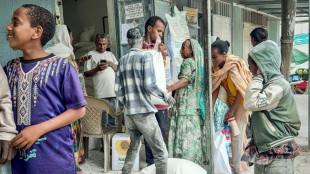
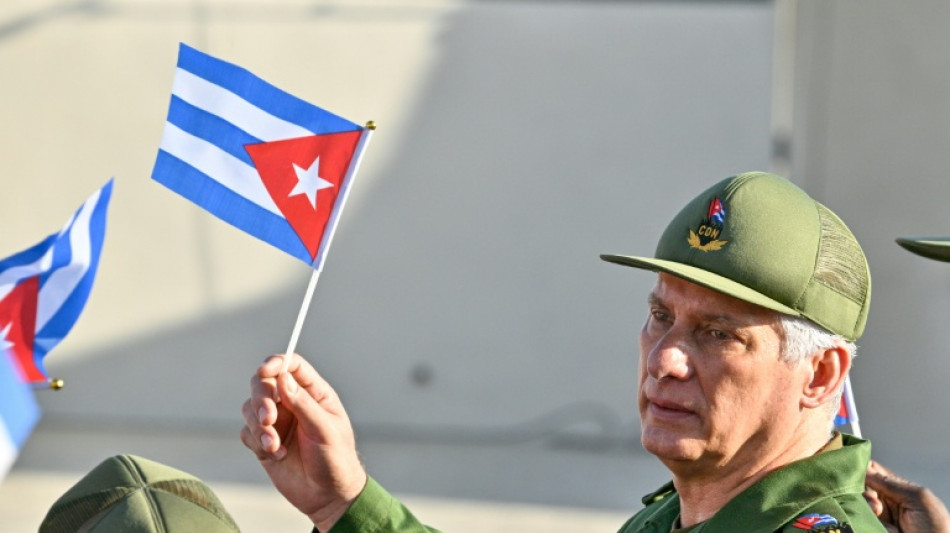
Cuban President Miguel Diaz-Canel on Friday announced greater freedoms for small businesses across the country, as the communist government takes steps to liberalize the island's economy in the face of a crippling US blockade.
In a speech broadcast on national television, Diaz-Canel said Cuba would open more sectors to private businesses and streamline the approval process for new ventures.
"For non-state forms of management, the list of prohibited activities will be limited so that their scope of operations is as broad as possible," the president said. "A process is underway... to approve all pending applications in the shortest time possible."
Under pressure from the oil blockade imposed by Washington in January, the Cuban government has unveiled a series of reforms aimed at opening up the economy.
Private businesses — which can employ up to 100 people — were authorized in 2021 and have become an increasingly important part of Cuba's economy. Since February, they have been permitted to import fuel, a sector previously controlled exclusively by the state.
As part of the new measures, the government will enable private businesses to invest in the economy on equal terms with foreign investors, after some of them recently left the country amid concerns over US sanctions.
Diaz-Canel said the government was also considering scrapping state intermediaries in import and export operations.
The president reiterated his commitment to decentralizing the economy and granting greater autonomy to state-owned enterprises, which account for roughly 80 percent of economic activity.
He also announced an overhaul of the state bureaucracy that would reduce the number of ministries and trim the the state workforce, a plan that requires parliamentary approval in July.
Diaz-Canel assured that the new reforms "will soon be discussed and approved very swiftly."
He also sought to project confidence despite the country's mounting economic difficulties.
"The country is not paralyzed; the country is facing this situation intelligently," the president said, denouncing what he described as a "maximum pressure" policy from Washington.
In addition to the oil blockade, the United States has imposed a range of sanctions on Cuba.
The measures have further aggravated the economic, social and energy crises that have gripped the island for years despite its decades-long struggle against a US embargo dating back to 1962.
I.Meyer--BTB