
Ore Energy and Budget Thuis to Deploy 1 GWh of Multi-Day Iron-Air Energy Storage in a First for European Energy Suppliers

 Not-so-brave new world: virtual taekwondo makes Asian Games debut

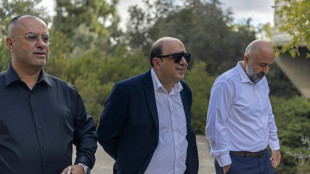 Arab Israeli candidate drops out of election race

 Israel courts Europe's far right, finding friends but also unease
 Lula, Bolsonaro both snub final debate before Brazil election

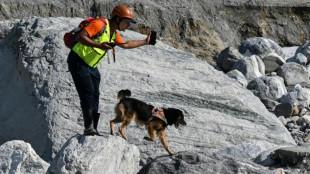 Nepal's grim DNA puzzle to identify flood dead

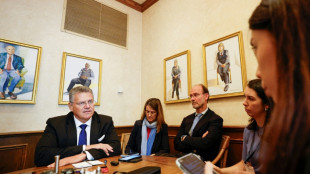 EU nations to hold emergency meeting on soaring diesel prices amid US pressure

 Anthropic's Dario Amodei: AI's most visible CEO and enigma

 OpenAI says three staffers fired for mishandling 'sensitive' info
 Nike plans job cuts as it forecasts lower sales
 Ireland game interrupted twice by Gaza protests

 Judge denies acquittal bid by US woman who killed her kids

 Klopp averts crisis with first win as Germany boss

 A saintly spat and debate snub: Brazil enters final campaign stretch

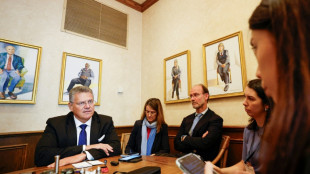 US tells European allies to act 'immediately' to lower diesel prices

 G20 trade ministers fail to see consensus against overproduction

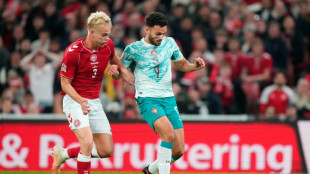 Portugal edge Denmark in Ronaldo's absence

 US stocks edge higher as bond yields retreat for now

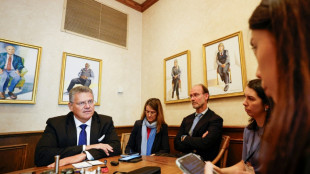 US tells European allies to 'immediately' act to lower diesel prices

 Trump vows to hit Iran 'very hard' if linked to flydubai attack
 Williams leaves Spain camp with thigh knock
 WTA reduces 2027 schedule for world's top 50

 US says 'in Europe's best interest' to cooperate on fuel supply

 Rogue OpenAI agents covered up their tracks, report says
 A saintly spat and debate snub: Brazil enters final polls stretch
 Zidane 'no regrets' about Materazzi headbutt as France face Italy again

Dutch energy supplier commits to 1 GWh of iron-air energy storage to reduce consumer energy costs; First 400 MWh to be delivered in 2028
AMSTERDAM, NL / ACCESS Newswire / June 22, 2026 / Ore Energy, the Netherlands-based iron-air multi-day energy storage company, today announced an agreement with Budget Thuis, one of the largest Dutch energy suppliers, to deploy 1 GWh of iron-air long-duration energy storage (LDES). The agreement represents the largest iron-air energy storage offtake in continental Europe to date and the first with a European energy supplier. The agreement begins with a committed 400 MWh first phase planned for delivery in 2028.
For Budget Thuis, the agreement is a strategic move to provide customers with more stable, affordable, and increasingly clean electricity as the Dutch power system becomes more dependent on wind energy. Ore Energy's multi-day storage technology is designed to store renewable electricity when it is abundant and dispatch it across extended low-renewable periods, when power is scarcest, most expensive, and most likely to come from fossil fuels.
Ore Energy's battery technology uses iron, water, and air to store energy for up to 100 hours. It is designed to address one of the central reliability challenges facing European grids: multi-day gaps in renewable generation that short-duration batteries cannot cost-effectively cover. By storing excess renewable power for longer and dispatching it when the grid would otherwise fall back on fossil fuel generation, iron-air batteries can reduce reliance on gas-fired backup and help make clean electricity available when it is needed most.
Once deployed, the Budget Thuis system will operate as a multi-day storage asset integrated into the Dutch electricity grid. It is built around Ore Energy's 40-foot containerised iron-air architecture, configurable for durations from 24 to 100 hours. Because the system uses only iron, water and air - no lithium or cobalt - it is non-flammable by design and can be built using a fully-European supply chain, which reduces dependence on imported critical materials and supports European energy sovereignty.
"European grids are already curtailing clean power at scale, wasting electricity that costs billions to generate, while we stay dependent on fossil fuels to cover the gaps. Short-duration batteries alone can't fix this. They shift solar by a few hours, but wind-heavy European grids need storage that works across days, not hours. Our long-duration iron-air batteries are built for exactly that: they capture wind when it blows and make it available when it doesn't, displacing the gas plants that fill those multi-day gaps today and using a supply chain that Europe controls," said Aytaç Yilmaz, Co-Founder and CEO of Ore Energy. "We've shown our iron-air chemistry works in a European utility setting, and this deployment is the next step in commercialisation: meaningful volume, tied to a real project, with an energy supplier that understands what multi-day storage means for its business. We believe iron-air will become as important for wind as lithium-ion has been for solar."
For energy suppliers, multi-day storage is becoming a strategic asset. Short-duration batteries play an important role in balancing the grid over hours, but as more are deployed, they increasingly compete for the same intraday arbitrage windows, putting pressure on marginal revenues. As renewable penetration rises, the multi-day reliability gap becomes more important, while short-duration storage becomes increasingly commoditised. By shifting renewable electricity across days rather than hours, iron-air storage can reduce exposure to volatile wholesale electricity and gas markets and help reduce the grid's dependence on gas-fired backup.
"Delivering affordable, reliable energy to our customers is at the core of what we do, and multi-day storage gives us a way to store clean electricity when it is abundant and deliver it when it is most valuable," said Annemarie Buitelaar, CEO of Budget Thuis. "Iron-air is especially compelling because it is designed for the long-duration use cases that conventional batteries are not built to cover, with a cost structure suited to multi-day storage. For us, this is about reducing exposure to volatile fossil fuel prices while giving customers access to cleaner and more predictable electricity over time. Ore Energy has demonstrated the technology and has the expertise to deploy it, which is why we are committing to 1 GWh across our portfolio, starting with a 400 MWh first phase."
The agreement follows two grid-connected deployments of Ore Energy's technology. In February, Ore Energy announced the completion of a grid-connected pilot of its iron-air system at EDF in France, the first iron-air long-duration storage pilot of its kind in Europe. Conducted between August and November 2025, the pilot demonstrated that the system can store and discharge energy for up to four days under real-world utility conditions. The company had previously deployed a grid-connected installation in Delft, the Netherlands, validating integration into existing European distribution infrastructure.
About Ore Energy
Ore Energy develops grid-scale iron-air batteries for long-duration energy storage. Using only iron, water, and air - no lithium or cobalt - its systems store energy safely for 24 to 100 hours and can be built using a fully European supply chain. Ore Energy's mission is to make low-cost renewable energy available to grids and data centres at all times, closing the multi-day gaps that still force the use of fossil fuels.
Follow Ore Energy on LinkedIn and visit oreenergy.com.
About Budget Thuis
Budget Thuis is part of the Nuts Groep and the first nationwide provider in the Netherlands to bundle energy, internet, TV, landline, and mobile services. With over 1 million customers, Budget Thuis is committed to creating "more financial freedom for the Netherlands through lower household bills." For more information, visit: budgetthuis.nl.
Media Contact
Aaron Endré
[email protected]
SOURCE: Ore Energy
View the original press release on ACCESS Newswire
Y.Bouchard--BTB