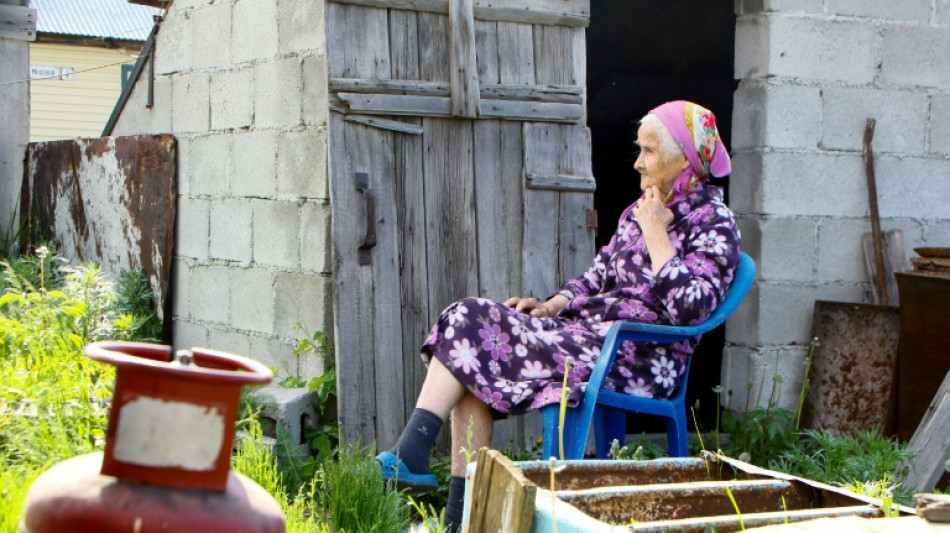
In gas-rich Kazakhstan, many rely on lethal cylinders / Photo: © AFP

 Nike plans job cuts as it forecasts lower sales

 Ireland game interrupted twice by Gaza protests

 Judge denies acquittal bid by US woman who killed her kids

 Klopp averts crisis with first win as Germany boss

 A saintly spat and debate snub: Brazil enters final campaign stretch

 US tells European allies to act 'immediately' to lower diesel prices

 G20 trade ministers fail to see consensus against overproduction

 Portugal edge Denmark in Ronaldo's absence

 US stocks edge higher as bond yields retreat for now

 US tells European allies to 'immediately' act to lower diesel prices

 Trump vows to hit Iran 'very hard' if linked to flydubai attack
 Williams leaves Spain camp with thigh knock

 WTA reduces 2027 schedule for world's top 50

 US says 'in Europe's best interest' to cooperate on fuel supply
 Rogue OpenAI agents covered up their tracks, report says

 A saintly spat and debate snub: Brazil enters final polls stretch

 Zidane 'no regrets' about Materazzi headbutt as France face Italy again

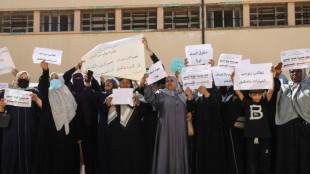 Libya's pay strike rallies teachers across divided nation
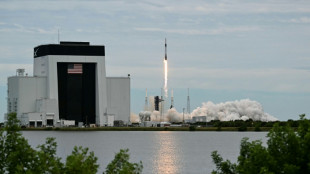 Four-member crew blasts off for International Space Station

 i-payout Expands True Local Payment Capabilities to Help Enterprises Pay Recipients Globally

 Botched US execution prompts global calls to scrap death penalty

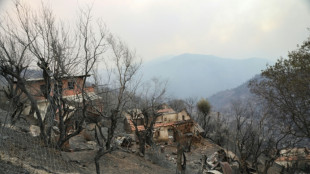 Algeria adopts law imposing death penalty on forest arsonists
 France unveils cost-cutting 2027 budget as borrowing costs rise

 Brazil court orders removal of fake posts amid patron saint election row
 Italy's firefighting planes return home after scorching summer

The last thing Zarina Giyassova recalls before she lost consciousness in a deadly gas explosion was people "burning and screaming" in the inferno unleashed by the blast.
Giyassova suffered burns to 65 percent of her body when a gas cylinder blast ripped through a building in the northern Kazakhstan town of Shchuchinsk this year, killing 12 people.
The tragedy has reignited a debate on the domestic energy difficulties that plague the former Soviet republic.
Despite sitting on vast natural gas reserves, Kazakhstan's distribution network is fragmented, forcing a third of its 20 million people to rely on gas cylinders -- similar to the one that exploded in Shchuchinsk.
The charred shell that remained of the restaurant where Giyassova had been working until the accident in February has now been covered with metal plates and sealed.
"I woke up in the hospital. I was like a mummy, completely bandaged from head to toe. It's indescribable, the pain was unbearable," Giyassova told AFP.
"I don't know if I'll be able to move my hands or not, when I'll be able to go back to work, when I'll be able to live normally again," the 32-year-old single mother of two said.
- 'Certain degree of risk' -
Hundreds of people have been injured and killed in gas cylinder accidents in Kazakhstan in recent years.
Yaroslav Voronov, 34, a salesman in an appliance store, acknowledged that the cylinders were "not very safe."
"Everyone is scared, but there is really no alternative. We don't have a centralised gas network," he said.
The often outdated equipment increases the risk of explosion.
Around 350,000 Soviet-era cylinders, manufactured in the 1970s and 1980s, were still in circulation at the end of 2024, according to the authorities.
After the Shchuchinsk blast, the government ordered a review of the use of gas cylinders -- but without elaborating on details.
Stocking up at a gas station, Voronov said he, like millions of Kazakhs, had to "accept a certain degree of risk".
He weighed his gas cylinder on a scale -- the "made in USSR" inscription betraying its age -- before checking technical parameters and signing liability documents accepting full and exclusive responsibility in the case of an accident.
Refuelling itself is a potentially perilous manoeuvre.
Two weeks after AFP met Voronov, the gas station nearly exploded after a leak, according to Kazakh rescuers who managed to fix it in time.
- 'Very expensive' -
The Kazakh government, backed by its Russian ally which already supplies gas, has promised to build gas pipelines to achieve 65 percent connectivity by 2030.
On a visit to Astana in May, President Vladimir Putin announced that the Russia's state-owned energy giant Gazprom planned "to optimise and expand the national gas transport infrastructure to guarantee a stable energy supply" to Kazakhstan.
But the immense geography and low population density of Kazakstan makes such projects complicated and economically uncertain.
Experts also highlight geopolitical uncertainties, as the interests of Russia and China -- both neighbours of Kazakhstan -- may diverge.
Kazakh President Kassym-Jomart Tokayev -- who was silent after the Shchuchinsk explosion -- has also criticised the "intolerable slowness" of bringing new gas fields into service.
Wary of the dangers, some residents of Shchuchinsk have switched to electricity for their power needs.
Erik Bekentaev said it was a "safe and more practical" alternative.
"We haven't used gas for a year now. It was a hassle: you have to take the car to the gas station and then go up to the fourth floor," Bekentaev explained, standing next to his induction hob.
But he is in the minority.
Kazakhstan's electricity grid is also weak -- underfunded and 76-percent worn out according to the authorities, it cannot cope with high voltage.
Power line surges often cause fires.
"It is very difficult to switch entirely to electricity, it will be expensive, very expensive," Voronov said.
E.Schubert--BTB