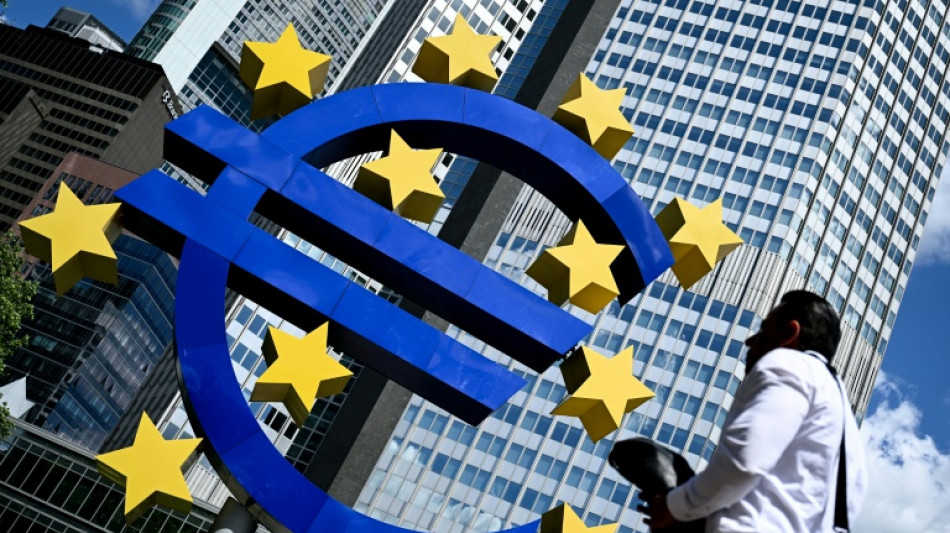
ECB holds rates as Iran war flare-up threatens to drive prices higher / Photo: © AFP

 German far-right aims to lead Saxony-Anhalt govt in December
 Little damage as Hurricane Polo sweeps over Mexico's Pacific coast
 Manchester City guilty of breaking financial rules - Premier League

 FIFA boss Infantino blasted as would-be 'emperor' by UEFA's Ceferin
 Stocks move lower despite oil prices dropping
 AI driving up innovation investment: UN

 UN Security Council extends Haiti mission by 6 months
 Man Utd do not deserve medals if Man City stripped of titles: Rooney
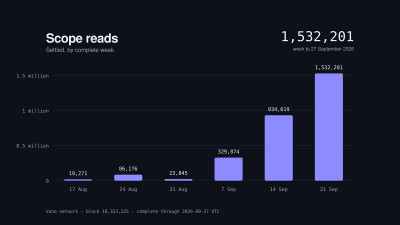 Vana Completes Expanded Staking as Part of the Vega Upgrade, Publishes Expanded VANA Token Economics
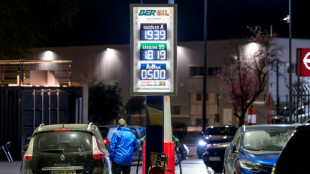 Spain to cap gas price hikes, extend fuel discounts
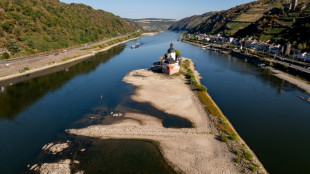 'We just need rain': Germany's Rhine river hits new low
 Yemen health system at 'breaking point': WHO

 Ireland undecided on second Israel match: coach
 France's Le Pen defiant after top ally hit by antisemitism claims
 Tom Cruise trades stunts for satire as toxic tycoon 'Digger'
 MEXC Unveils "WE SEE YOU" Brand Visual Refresh, Putting People Behind Every Trade in Focus
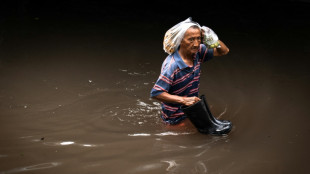 Thai capital cleans up after deadly floods
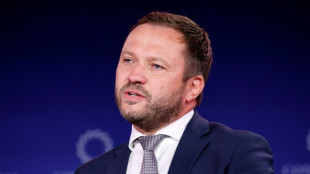 NATO, EU allies rally to Estonia after 'sabotage' blamed on Russia
 Families demand justice for Cameroon's 'nightmare' wave of murdered women
 Tebas says Man City should face 'most severe' sanctions if guilty of rule breaches
 Pochettino calls Man City success 'a period of deception'

 Settler attack on West Bank village injures Israeli forces, drawing rare rebuke

 Mystery over UK airbase scare after reports no explosives found
 Spanish govt races to adopt housing law under protest pressure

 Estonia slams Russian 'sabotage' after arson attack on defence company
The European Central Bank on Thursday kept its key deposit rate unchanged at 2.25 percent and said it was "closely monitoring" the inflationary impact of the Middle East war amid fresh fighting.
"Uncertainty remains high and the full inflationary impact of the energy shock has yet to play out," the lender of last resort for the 21 countries that use the euro said. "The Governing Council is therefore closely monitoring the intensity and duration of the shock."
Fresh fighting in the Middle East and rising oil prices had put the ECB on alert ahead of its rate-setting meeting.
Two weeks of renewed conflict between Iran and the United States have once again slowed traffic through the Strait of Hormuz to a trickle, restricting energy exports on a waterway that in peacetime carries about a fifth of the world's oil and natural gas.
The ECB in June became the first major central bank to raise rates after the near total closure of the strait, putting rates up a quarter of a percentage point to 2.25 percent.
The memorandum of understanding signed last month by Washington and Tehran raised hopes of a durable solution to the conflict but the resumption in fighting has sparked fears that eurozone inflation -- which in June eased to 2.8 percent -- might pick up again.
A barrel of Brent crude oil now trades at over $98, the highest level since the end of May, and Iran-aligned Houthi rebels on Thursday said they had struck two Saudi oil tankers in the Red Sea.
"Energy prices have reversed the decline that followed the signing of the memorandum of understanding between the US and Iran, making the benign inflation data for June an 'old' piece of information," UniCredit analysts said Monday.
"The looming risk of military escalation, oil inventories substantially below pre-war levels and intensifying pressure on natural gas prices imply with near certainty that the Governing Council will continue to view risks to price stability as skewed to the upside," they added.
- Wait-and-see -
Rising energy prices can give rise to so-called stagflation, a nightmare combination for central banks of stagnant growth and high inflation.
If central banks cut interest rates to boost growth during a period of stagflation they run the risk of further aggravating inflation.
But if they raise interest rates to tame inflation they risk slowing growth further.
Some economists had criticised the ECB's move in June as heavy-handed, drawing parallels with rate-hikes in 2011 that some blame for choking off a nascent eurozone recovery after the Great Recession.
Most observers had expected the ECB to keep its powder dry on Thursday and pause for now whilst it waits to see the outcome and duration of the latest fighting.
Investors will now be watching for any clues from ECB President Christine Lagarde in her post rate-call press conference about the path ahead for rates, although she is typically tight-lipped.
Heavily dependent on imported oil and gas, Europe can expect inflation to lift off if energy prices soar -- leaving eurozone monetary policy largely at the mercy of fast-moving geopolitical events.
"I do not know what we will have to do in our July meeting," German Governing Council member Joachim Nagel said earlier this month.
"Is there a probability that we will have to hike more? Maybe. Is there a probability that we have to stay where we are? Maybe, or maybe we have to do other things."
F.Pavlenko--BTB