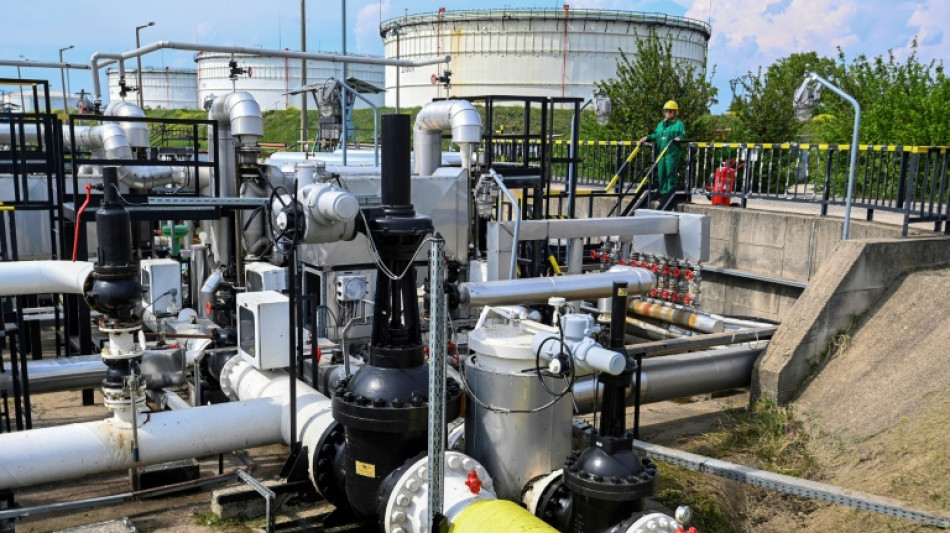
NATO to overhaul European fuel pipeline network / Photo: © AFP

 Prague’s Concert for the Future Kicks Off on Wenceslas Square

 Prince William and Princess of Wales to Announce Earthshot Prize Winners in Mumbai

 Indonesia Forest Fires: Health Crisis, Diplomatic Strains and the Search for Solutions

 BYD Dolphin G Leasing Deal: Plug-in Hybrid Supermini Available from £174 a Month
NATO countries have agreed a 27-billion-euro overhaul of their fuel network to supply forces in Europe in coming decades, in a move Romania hailed on Thursday as "essential" for security.
Ambassadors from the alliance's 32 members signed off on the mammoth project to update and extend the network at a meeting in Brussels on Wednesday.
"The 27-billion-euro ($31-billion) investment will modernise NATO's existing fuel storage and distribution infrastructure," NATO said in a statement.
"It will support new facilities, including pipelines, in the eastern and southeastern part of the alliance and ensure NATO forces have the energy supplies they need for war-fighting readiness."
Romanian President Nicusor Dan -- whose country has grappled with drone incursions from the war in neighbouring Ukraine -- said the project was "essential to reinforce security" on NATO's eastern flank in the face of the threat from Russia.
Officials said the project would take around 25 years to complete.
NATO's Central European Pipeline System was set up in the late 1950s to supply fuel to alliance forces on the continent during the Cold War.
The 5,300-kilometre (3,300-mile) network currently crosses Belgium, France, Germany, Luxembourg and the Netherlands and delivers fuel to 29 alliance depots.
R.Adler--BTB

