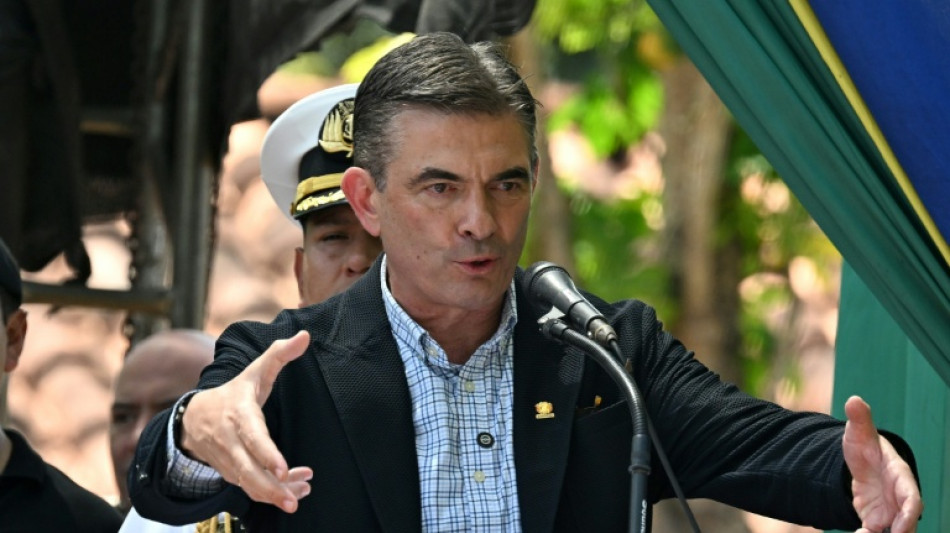
Bolivia's Paz appoints new economy minister amid bailout talks / Photo: © AFP/File

 Prague’s Concert for the Future Kicks Off on Wenceslas Square

 Prince William and Princess of Wales to Announce Earthshot Prize Winners in Mumbai

 Indonesia Forest Fires: Health Crisis, Diplomatic Strains and the Search for Solutions

 BYD Dolphin G Leasing Deal: Plug-in Hybrid Supermini Available from £174 a Month

 JUEL Group Expands from Real Estate to Hospitality with Hyatt Centric Malta Opening

Bolivian President Rodrigo Paz on Tuesday named a new economy minister to replace a close ally forced out by lawmakers in the midst of an acute crisis.
The center-right Paz, who took office in November with a mandate to fix a severe fuel and currency crisis, named economist Christian Morales to replace ousted Jose Gabriel Espinoza.
Espinoza was fired last week after Congress voted to oust him for failing to appear before lawmakers for questions about his handling of the economy.
The minister, who had been leading talks with multilateral lenders on a multi-billion-dollar rescue package, said he was attending to other business.
Paz asked Morales to prioritize the negotiations with the International Monetary Fund, Inter American Development Bank, and the Development Bank of Latin America and the Caribbean, which he said aimed at securing "between $7 and $10 billion" in aid.
He is on a drive to open up Bolivia's economy to international investment after two decades of anti-capitalist socialist governments which he accuses of leaving the economy in tatters.
Paz has ended decades-old fuel subsidies that drained the Treasury's international dollar reserves, allowed the ailing boliviano currency to float freely against the US dollar and thrown open the mining and energy sectors to private investors.
He has had success in fighting inflation, which fell from 21 percent to 5 percent year-on-year between November 2025 and July, but fuel is still in short supply and the economy is stagnant.
Demonstrations over living conditions escalated into a revolt earlier this year, marked by calls for the new president's resignation and the erecting of roadblocks that cut off supplies to major cities.
Paz quelled the unrest in June by declaring a state of emergency.
M.Furrer--BTB
