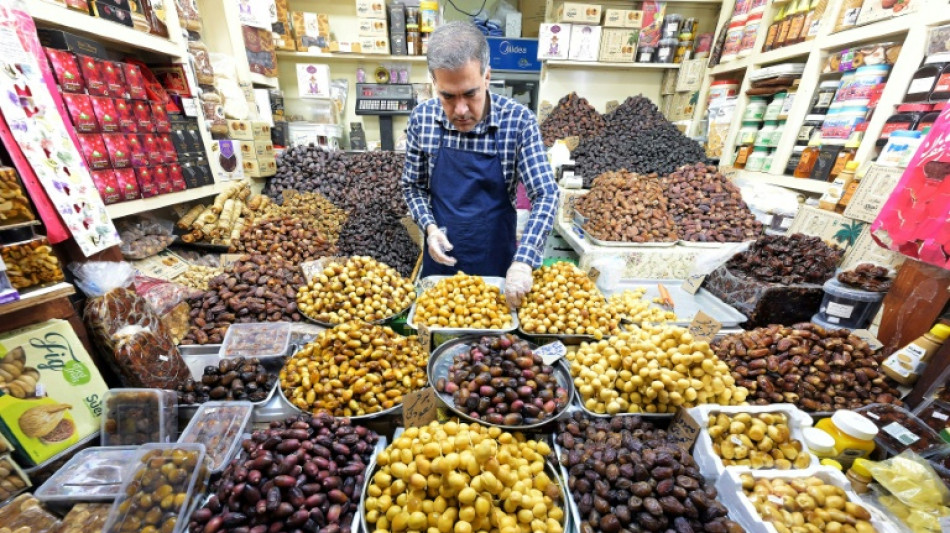
Kuwait's Iranians under pressure since start of war / Photo: © AFP

 EU lawmakers demand Brussels force Meta to 'protect' European children
 Clooney turns AFP photographer in jokey red carpet switch
 Retirement Income Planning Florida Launches No-Cost 'Income Gap Analysis' Program for Pre-Retirees

 Iraola hails Barcola mentality after blockbuster Liverpool move
 Michelsen shocks Nakashima in US Open clash of rising Americans

 US govt sides with OpenAI in New York Times copyright lawsuit
 Grammy-Winning Jazz Vocalist Cassandra Wilson Dies at 70

 Maui Wildfire Survivors Report Major Losses to Troubled Rebuilding Contractors

 WMO Says Powerful El Niño Is Likely to Persist Into February 2027
 Honda Presses Suppliers for Deep Cost Cuts in $9.4 Billion Savings Drive

 Philadelphia Festival Revisits the Signing and Legacy of the U.S. Constitution

 Russia to close branches of Germany's Goethe Institute
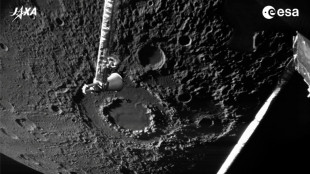 Spacecraft bound for Mercury faces 'tricky' arrival

 Philippines holds drills to safeguard students from armed intruders

 In Ghana, larger-than-life coffins tell the stories of the dead
 Menoncello, Reece headline Top 14 new-season signings

 Families descend on Nepal in search of missing tourists
 Far-right AfD eyes huge win in east German state vote
 Brazil-Japan to play World Cup rematch at Singapore tournament

 Defence chiefs back boosting US military presence in Australia

 Nepal seeks climate justice after Himalayan disaster

 Stocks rise, yields ease as oil slips on Trump hint at short bombing campaign

 Brussels Diamond League finals Day 1 - five events to watch
 Thailand's 'Jurassic Park' shines light on dinosaur evolution
 'Role model' Stokes set to open for Adelaide Strikers
A Persian restaurant in Kuwait has removed any mention of Iran from its name, a sign of the pressure the Iranian community in the Gulf country has faced since the Middle East war erupted.
Following weeks of calm, Iran resumed strikes on Kuwait as the Islamic republic and the United States returned to open conflict in a war that has rattled the region and the global economy.
Earlier this year, one Iranian restaurant in Kuwait City dropped the words "Iranian cuisine" from its title -- a visible manifestation of the precarious line Iranians must now tread.
As Kuwaiti and foreign customers queued outside the restaurant for dinner in the middle of the week, an employee told AFP: "Management decided to remove the word Iran from the restaurant's name because of the sensitivity of the issue."
The restaurant's business, however, "has not been affected by the war", the employee told AFP during a reporting trip last month.
The war has thrust Kuwait's Iranian community into an increasingly delicate situation as Iran repeatedly strikes with missiles and drones.
"We are going through an extremely difficult time," Iranian resident Hussein told AFP, using a pseudonym to protect his identity over fears of a possible backlash for speaking about the issue.
"Of course we are sad," added the 35-year-old Shiraz native.
For more than six months, Kuwait has been hard hit by the war, with Iran and its allied armed groups striking its oil installations, civilian infrastructure and US military bases.
Kuwait was heavily targeted in July after Washington and Tehran's memorandum of understanding collapsed, with strikes pummelling the country on a near-daily basis.
This week, the country was hammered again with back-to-back barrages, including a drone attack that caused a fire in a residential complex in Kuwait City.
Around 52,000 Iranians live in Kuwait, where they mostly work as low-paid labourers employed on fishing boats, in vegetable markets and at bakeries. Others are prosperous merchants in the fabric and carpet trade.
Like many other Iranians, Hussein works in the historic Mubarakiyah market in the heart of the capital.
Hussein arrived in Kuwait 18 years ago and now runs a large fabric business with several branches across the oil-rich Gulf capital.
"We have been living here for many years and we don't want problems between the two countries," he said at his store in Mubarakiyah.
Iranian authorities suspended direct flights between the two near-neighbours on February 28 following the US and Israeli air raids that triggered all-out war.
Hussein said he has been unable to return to Iran, where his daughter lives.
- Kuwaiti crackdown -
Before the war, trade between Kuwait and Iran was robust, totalling roughly $300 million in 2024, according to Kuwaiti media citing the two countries' joint chamber of commerce.
Iranian exports to Kuwait consisted mostly of food and agricultural products, fish, carpets and construction materials.
Hussein says his business has yet to be affected.
"Our relationship with Kuwaiti customers is still good," he told AFP, as a Kuwaiti woman inquired about high-quality Iranian velvet.
Two other vendors agreed.
But the Iranian community remains under pressure. Kuwaiti authorities have cracked down on the slightest hint of subversion, arresting people suspected of links to Iran's Revolutionary Guards.
Kuwait's sole Iranian school was closed by authorities last month, a source at the education ministry told AFP on condition of anonymity, without disclosing further details.
- 'Caught in the middle' -
"We just want to live and earn our daily bread," said Ali, an Iranian man in his 30s, who asked to use a pseudonym.
"We have not been harmed or harassed, but there is a general feeling of anxiety. That's natural during wartime," he told AFP at Kuwait City's gold market.
"Of course, we feel caught in the middle," he added, as he he watched a screen showing fluctuating gold prices across the globe.
At the Mubarakiyah market, Iranian vendors hawk sweets, including delicacies infused with saffron and tahini-based treats, drawing a steady stream of customers.
"Iranians are everywhere here," said a Kuwaiti woman in her 50s who declined to give her name because of the sensitivity of the issue.
"They are part of Kuwait's history, and it is impossible to imagine going without them."
D.Schneider--BTB