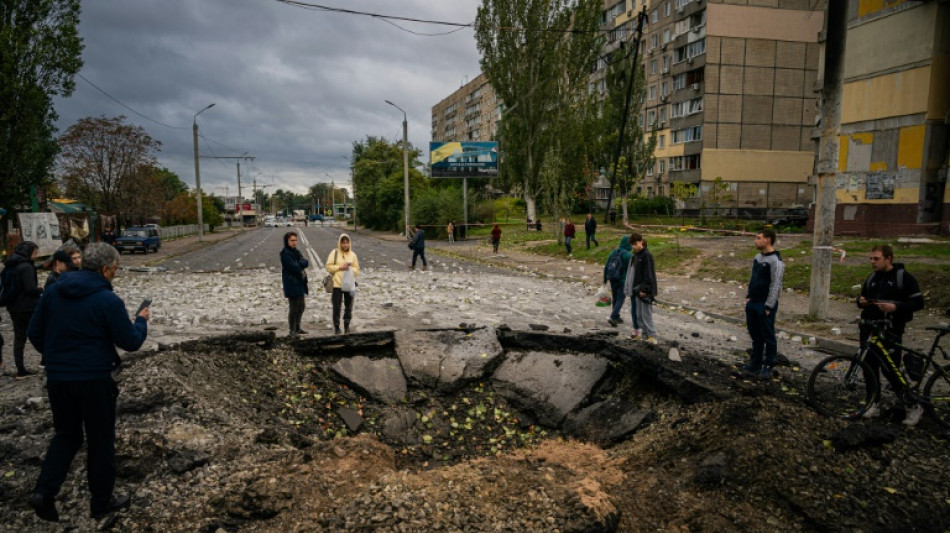
Shielding Ukraine from Russian strikes a challenge: analysts / Photo: © AFP

 Rubio touts US power, calls on Europe to emerge from 'slumber'

 Trump says 'we don't think' Russian plague is bio-weapon
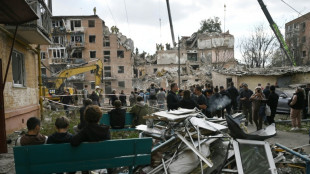 Five children among 26 killed in Ukraine after Russian strikes

 Man City should 'accept' punishment for rule breaches, says Lineker

 US woman who survived botched execution is awake and speaking
 From 1800s to modern pharma: a Nobel-winning chemistry quest
 Southampton boss Eckert given suspended ban over 'Spygate'

 Russia warns of 'false' information as second plague case reported
 IEA ready to release more oil reserves if necessary
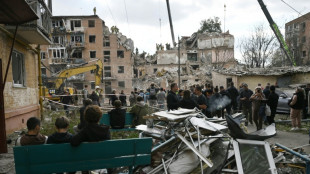
 HSBC 'consults' over UK unit job cuts amid AI adoption
 UK court quashes five ex-traders' Libor rate rigging convictions
 XM Receives “Global Customer Experience Leader Award 2026” at the TrustFinance Performance Awards
 Stocks slide as oil climbs on Mideast flareup
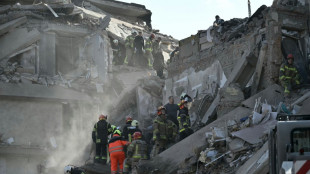 Heavy casualties in Ukraine after Russian strikes
 French wine harvest set to hit historic low

 Kyiv 'cannot agree' to EU membership limiting food exports: minister

 Arteta targets more Arsenal glory after signing new deal until 2030

 Russell hit with Singapore grid penalty for taking new power unit

 Spotify expands audiobooks to more than 180 markets
 French-Japanese duo wins chemistry Nobel for solving molecular 'mystery'
 England's Nations League surge helps heal World Cup wounds

 Mayor of opposition stronghold Izmir defects to Erdogan party
 Mertens beats Gauff to set up Swiatek clash at China Open
 Benin full of pride at role in Messi's last dance

 France suspends stun grenade use at student protests ahead of PM speech
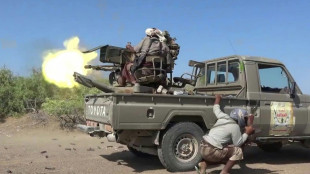
Russia's deadly air strikes on Ukraine's cities this week have triggered calls for more military aid, but analysts warn than no air-defence systems can completely defend Ukrainian territory.
Kyiv says a barrage of Russian strikes across the country on Monday killed at least 19 people, wounded more than 100, and damaged infrastructure.
Missiles including cruise missiles rained down on the country's cities, including in rare strikes on the capital Kyiv, far from the frontlines in the east and south.
Ukraine also accused Russia of using Iranian-made drones launched from neighbouring Belarus and Russia-annexed Crimea.
While Kyiv says its army managed to shoot down more than half of these, Prime Minister Denys Shmygal has called for "more modern weapons to protect the sky and civilians".
"The cries for Western air defences around Ukrainian population centres will become much louder after" Monday's strikes, said Tyler Rogoway, editor of the The War Zone website.
"Cruise missiles are a challenge though -- even for modern Western air defence systems," he added in a Twitter thread, as they are not "an impenetrable shield".
Francois Heisbourg, of the International Institute for Strategic Studies (IISS), warned hard choices would have to be made about where best to concentrate defensive weapons.
"What infrastructure and what population centres should be defended, and how efficiently? Defending everything would amount to defending nothing."
Even in Israel, a country with an area 27-times smaller than Ukraine, the Iron Dome air defence system is not 100 percent effective.
- 'No one-size-fits-all system' -
Nicholas Fiorenza, of the British intelligence analysis firm Janes, said full coverage was unlikely.
"Don't think there is any country capable of stopping (every) single possible missile or UAV (unmanned aerial vehicle) or a plane getting through," he told AFP.
The Ukrainian defence ministry said Monday that Russia had Russia fired 83 missiles at Ukraine, of which its air defences shot down 52, among which were 43 cruise missiles.
The Russians appear to have fired short-range Iskander and Tochka-U ballistic missiles, as well as Kalibr cruise missiles, said Gustav Gressel of the European Council on Foreign Relations.
The Ukrainians have S-300 air defence system and others, some of which are running low on munitions. To fend off the drone attacks, it also has Man-portable air-defence systems (MANPADS).
"However defending large cities with MANPADS would require lots of launchers, due to their short range," Gressel said.
More broadly, "there is no (one-size-fits-all) weapons system to defend (Ukraine), as the targets are fairly different in speed, course, altitude, and numbers," he added.
"Air defences need to be layered, and different weapons system supporting each other."
This was the case around Kyiv in March and April, he said.
"They intercepted several Tochka-Us and Kalibr missiles, although of course not all in one attack."
- 'No impact before spring' -
Following Monday's attacks, the United States said it was preparing shipment of "advanced medium- and long-range air defence capabilities" to Ukraine.
Germany promised delivery "in the coming days"of the first Iris-T missile shield system reportedly able to protect a large city.
Its range spans a height of 20 kilometres (12 miles) and a breadth of 40 kilometres (25 miles).
Berlin's Defence Minister Christine Lambrecht said the latest Russian strikes highlighted "the importance of the rapid delivery of air defence systems to Ukraine".
But the contract for the Iris-T systems includes 12 weeks of training Ukrainians to use them, Fiorenza warned.
"I don't see them starting to have an impact before next spring," he said.
Pressure will also be on Western arms manufacturers to produce air defence weaponry, long put on the back burner as it was deemed less useful in the battle against jihadists from Afghanistan to the Sahel.
Wojciech Lorenz, head of the international security programme at the Polish Institute of International Affairs, said air and missile defence systems were "unfortunately in short supply in the West".
"But we should find what we can send to further strengthen Ukrainian morale and to limit the destruction if Russia decides to attack civilian targets" across Ukraine, he said.
Michael O'Hanlon, of the Brookings Institution, said air and missile defence systems were "expensive and not fool-proof", but essential.
"And just as Israel's Iron Dome has shown over the years, they can give a besieged population a greater sense of hope even when their 100 percent effectiveness cannot be presumed," he added.
C.Kovalenko--BTB