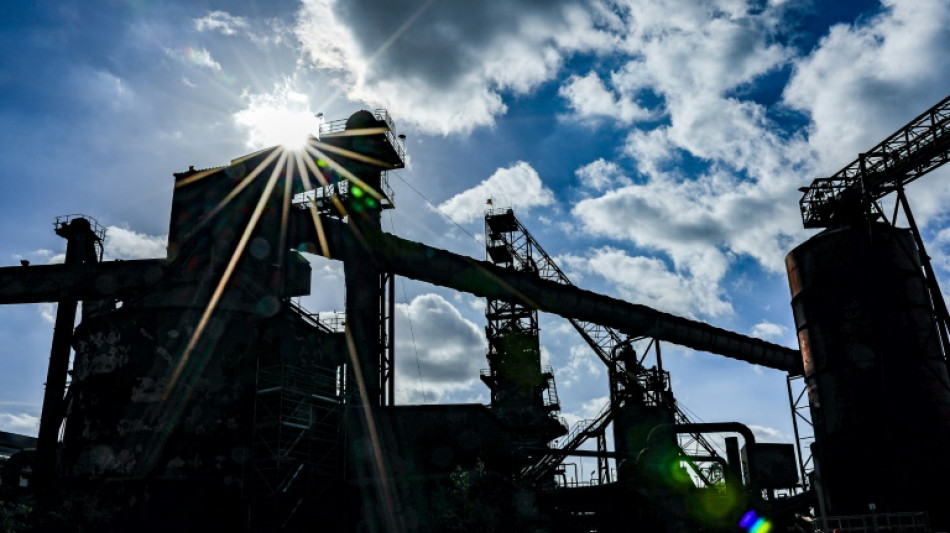
Idled plants fuel German angst about de-industrialisation / Photo: © AFP

 Rubio touts US power, calls on Europe to emerge from 'slumber'

 Trump says 'we don't think' Russian plague is bio-weapon
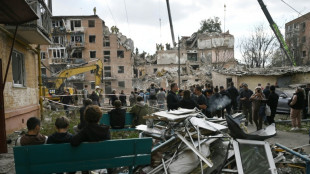 Five children among 26 killed in Ukraine after Russian strikes

 Man City should 'accept' punishment for rule breaches, says Lineker
 US woman who survived botched execution is awake and speaking
 From 1800s to modern pharma: a Nobel-winning chemistry quest
 Southampton boss Eckert given suspended ban over 'Spygate'
 Russia warns of 'false' information as second plague case reported
 IEA ready to release more oil reserves if necessary
 HSBC 'consults' over UK unit job cuts amid AI adoption
 UK court quashes five ex-traders' Libor rate rigging convictions
 XM Receives “Global Customer Experience Leader Award 2026” at the TrustFinance Performance Awards
 Stocks slide as oil climbs on Mideast flareup
 Heavy casualties in Ukraine after Russian strikes
 French wine harvest set to hit historic low
 Kyiv 'cannot agree' to EU membership limiting food exports: minister
 Arteta targets more Arsenal glory after signing new deal until 2030

 Russell hit with Singapore grid penalty for taking new power unit

 Spotify expands audiobooks to more than 180 markets
 French-Japanese duo wins chemistry Nobel for solving molecular 'mystery'

 England's Nations League surge helps heal World Cup wounds
 Mayor of opposition stronghold Izmir defects to Erdogan party
 Mertens beats Gauff to set up Swiatek clash at China Open
 Benin full of pride at role in Messi's last dance

 France suspends stun grenade use at student protests ahead of PM speech
The familiar plume of smoke no longer billows from one of the two chimneys at ArcelorMittal's massive steelworks in Hamburg's harbour.
Soaring energy prices have forced operators to partially idle the plant, adding to fears that Germany's industrial companies, the backbone of Europe's biggest economy, are facing an existential threat.
Germany is already bracing for a recession as the energy crisis triggered by Russia's war in Ukraine takes its toll, and the latest government forecasts on Wednesday will likely make grim reading.
But some economists say the long-term impact could run far deeper and see entire manufacturing sectors trim production or relocate to countries where running costs are lower, fundamentally reshaping Germany's industrial landscape.
In Hamburg, the 530 workers at the ArcelorMittal steelworks have been placed on reduced hours since early October.
"Gas plays a crucial role in the (iron ore) reduction process" carried out at the plant, said Uwe Braun, CEO of ArcelorMittal Hamburg.
But the energy bill has risen "seven-fold" since Russia's February invasion of Ukraine, he told AFP at the site, where activity was subdued and helmet-clad workers were spread out around the imposing 1970s steelworks.
The steep price increase made it unaffordable to continue business as usual at the site, which on average consumes two terawatt-hours of gas and one terawatt-hour of electricity per year -- enough to power a medium-sized city.
Similar steps to curb production have been taken at other European sites operated by ArcelorMittal, the continent's biggest steelmaker.
In a September statement announcing the cost-saving measures, the company blamed the "exorbitant" rise in energy prices and weaker demand as the global economic outlook darkens.
- 'Broken' -
Germany in recent decades managed to avoid the waves of de-industrialisation that hit other European countries.
Industrial production remains a pillar of the country's economy and accounts for around 22 percent of gross domestic product (GDP), compared with around 13 percent in neighbouring France.
"Germany's business model in a nutshell is buying cheap energy from Russia, raw materials and intermediate products... make some outstanding cars and machines... and export them" to the United States and China, said LBBW bank economist Jens-Oliver Niklasch.
"Now, some of the tiles on the roof are broken," he told AFP.
Alarm bells are ringing across Germany's energy-hungry sectors, from steel to chemicals, glass, paper and ceramics production.
Chancellor Olaf Scholz's government has unveiled a 200-billion-euro ($198 billion) energy fund to cushion the impact of price shocks on households and businesses, including a temporary cap on gas prices from next year.
Despite those efforts many experts agree that because of the severed ties to Russian imports, European energy prices are unlikely to return to their cheap pre-war levels anytime soon, if ever.
"We'll see in the months ahead who can still afford to manufacture in Germany," Arndt Kirchhoff of the family-owned Kirchhoff car parts supplier recently told Der Spiegel weekly.
- America beckons -
Outside ArcelorMittal's Hamburg plant, a mound of iron ore pellets is piled high, awaiting the steelworks' full resumption.
Before the crisis, the site produced one million tonnes of steel annually, mainly for Germany's flagship automobile sector.
If nothing is done to drastically bring down energy costs, "it's clear that some parts of the production process will be relocated", said Braun.
Analyst Niklasch said it was not unthinkable that German industry would have to say goodbye to "its most energy-intensive branches".
The United States, where gas prices remain low thanks to abundant domestic production, could be an attractive alternative, according to Niklasch.
But Stefan Kooths, of the IfW Kiel economic institute, said he didn't expect a widespread exodus of industrial companies from Germany.
"The price of gas should stabilise in the medium term, even if the cost will remain higher than before the crisis," he reasoned.
D.Schneider--BTB