
IMF warns against 'costly' tax cuts to fight inflation / Photo: © AFP

 Rubio touts US power, calls on Europe to emerge from 'slumber'

 Trump says 'we don't think' Russian plague is bio-weapon

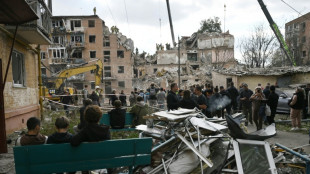
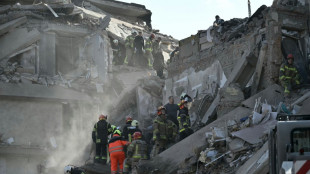
 Five children among 26 killed in Ukraine after Russian strikes

 Man City should 'accept' punishment for rule breaches, says Lineker

 US woman who survived botched execution is awake and speaking
 From 1800s to modern pharma: a Nobel-winning chemistry quest

 Southampton boss Eckert given suspended ban over 'Spygate'

 Russia warns of 'false' information as second plague case reported

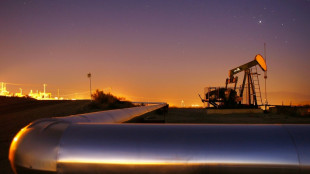
 IEA ready to release more oil reserves if necessary
 HSBC 'consults' over UK unit job cuts amid AI adoption

 UK court quashes five ex-traders' Libor rate rigging convictions

 XM Receives “Global Customer Experience Leader Award 2026” at the TrustFinance Performance Awards

 Stocks slide as oil climbs on Mideast flareup

 Heavy casualties in Ukraine after Russian strikes

 French wine harvest set to hit historic low

 Kyiv 'cannot agree' to EU membership limiting food exports: minister

 Arteta targets more Arsenal glory after signing new deal until 2030

 Russell hit with Singapore grid penalty for taking new power unit

 Spotify expands audiobooks to more than 180 markets
 French-Japanese duo wins chemistry Nobel for solving molecular 'mystery'

 England's Nations League surge helps heal World Cup wounds

 Mayor of opposition stronghold Izmir defects to Erdogan party
 Mertens beats Gauff to set up Swiatek clash at China Open

 Benin full of pride at role in Messi's last dance

 France suspends stun grenade use at student protests ahead of PM speech

Soaring food and energy prices are raising the risk of social unrest, but attempting to tame costs through tax cuts, subsidies and price controls would be too costly, the IMF said Wednesday.
The fund's comments, in its latest Fiscal Monitor report, come as food prices have surged by half since 2019 while energy bills soared in the wake of Russia's invasion of Ukraine.
"Countries all around the world are facing more pressing and more painful trade offs," Vitor Gaspar, director of the International Monetary Fund's fiscal affairs department, told AFP as the crisis lender holds its annual meetings in Washington this week.
The combination of inflation along with food and energy price surges point to a cost-of-living crisis, he said.
Countries spent heavily to protect their economies during the pandemic, then faced supply chain issues as they emerged from Covid lockdowns.
Inflation soared further after Russia invaded Ukraine in February, with food and energy costs going through the roof, forcing central banks to raise interest rates aggressively.
"Households are struggling with elevated food and energy prices, raising the risk of social unrest," the IMF Fiscal Monitor report said.
But, it added, "fiscal policy trade-offs are increasingly difficult, especially for high-debt countries where responses to the Covid-19 pandemic exhausted their fiscal space."
- 'More generous' food aid -
As governments operate within tighter budgets, prioritizing policies and programs becomes vital, the report said, adding that key goals are ensuring access to affordable food and protecting low-income households from inflation.
There appears to be an "association between social unrest and episodes of spikes in food prices," while fuel prices are politically sensitive, IMF fiscal affairs department deputy director Paolo Mauro told reporters.
Countries have to be selective in giving support, he said, but the IMF recommends being "more generous" on food as a need for survival.
However, with long-lasting supply shocks and broad-based inflation, attempts to cap surging costs through price controls, subsidies or tax cuts will be "costly to the budget and ultimately ineffective," the IMF warned.
Officials should instead allow prices to adjust and provide targeted cash transfers to the most vulnerable.
Most countries should continue "tightening" their budgets, the report said.
Asked about Britain's controversial tax-slashing plans, which rocked the pound and raised the country's borrowing costs, Gaspar told reporters that monetary and fiscal policies should be consistent, with markets "looking for certainty in a very uncertain world."
"The expectation is that the announcement of a full-fledged fiscal plan on October 31 accompanied by a macroeconomic forecast... will contribute to give to the market the certainty that it seeks," he said.
Countries may need to raise added revenues and contain the growth of other expenditures as they prioritize policies, the IMF report said.
Fiscal costs can be offset by measures like taxes, it added, suggesting that a permanent tax on "windfall profits" from fossil fuel extraction based on excess gains "can be considered" if an adequate instrument is not already in place.
But the report cautioned that low-income countries will need more global humanitarian assistance and emergency financing given their limited resources, adding that the biggest challenge comes from the food price surge.
D.Schneider--BTB