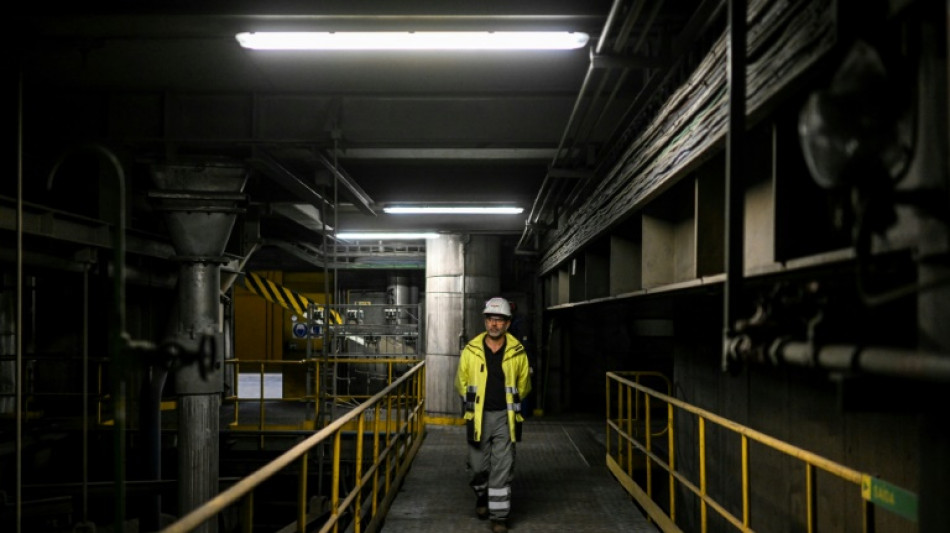
Portugal bets all on renewables after abandoning coal / Photo: © AFP

 After botched execution, US woman was nearly taken off life support before revival

 Searing AIDS drama 'Elsinore' opens London film festival

 Evicted pensioner who sparked Spain housing protests dies: tenant union

 Golf star Rahm quitting LIV tour over 'unacceptable' terms

 Thousands march fearing return of a Bolsonaro presidency in Brazil

 French PM denies police ordered to confront student protesters

 Rubio touts US power, calls on Europe to emerge from 'slumber'

 Trump says 'we don't think' Russian plague is bio-weapon
 Five children among 26 killed in Ukraine after Russian strikes

 Man City should 'accept' punishment for rule breaches, says Lineker

 US woman who survived botched execution is awake and speaking
 From 1800s to modern pharma: a Nobel-winning chemistry quest

 Southampton boss Eckert given suspended ban over 'Spygate'

 Russia warns of 'false' information as second plague case reported
 IEA ready to release more oil reserves if necessary

 HSBC 'consults' over UK unit job cuts amid AI adoption

 UK court quashes five ex-traders' Libor rate rigging convictions
 XM Receives “Global Customer Experience Leader Award 2026” at the TrustFinance Performance Awards

 Stocks slide as oil climbs on Mideast flareup
 Heavy casualties in Ukraine after Russian strikes

 French wine harvest set to hit historic low

 Kyiv 'cannot agree' to EU membership limiting food exports: minister
 Arteta targets more Arsenal glory after signing new deal until 2030

 Russell hit with Singapore grid penalty for taking new power unit

 Spotify expands audiobooks to more than 180 markets
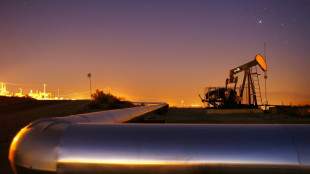
As the UN steps up calls to make the switch to renewable energy to fight the global climate emergency, Portugal is among the first European Union countries to abandon coal.
It will share the lessons it has learned so far at November's COP27 UN climate summit in Egypt.
It has been nearly a year now since smoke has trailed up from the cooling towers of the coal plant in Pego, 120 kilometres (70 miles) northeast of the capital Lisbon.
The lights are off at the station, and the dust gathering on the steel structure attests to the fact that the last coal plant in Portugal shut down in November last year after 30 years in service.
The authorities in Lisbon shut down this fossil-fuel eight years sooner than planned -- and just months after the Sines coal plant, some 90 kilometres south of Lisbon, closed at the start of 2021.
Portugal is one a handful of EU member states -- along with Belgium and Sweden -- to have renounced coal as an energy source.
The energy crisis triggered by the war in Ukraine prompted Austria to reverse a previous decision to close coal-fired plants.
Portugal however "remains convinced that it will not be necessary to renege on this decision," Environment Minister Duarte Cordeiro said in mid-September.
- 'An example in Europe' -
"Portugal is an example in Europe," says Pedro Nunes, an expert in renewable energy at the University of Lisbon, and policy officer with the environmental group Zero.
The two coal plants recently closed accounted for nearly 20 percent of Portugal's greenhouse gases, he points out.
To replace coal's contribution to electricity production, the government hopes to continue developing its green energy to provide 80 percent of its energy by 2026, up from 40 percent in 2017.
If the share of renewables in electrical output hit nearly 60 percent in 2021, the figure dropped back to 40 percent this year owing to a historic drought which slashed hydro-electric power.
The UN's World Meteorological Organization called Tuesday for the world to double the supply of electricity from renewables by 2030 to prevent climate change from undermining global energy security.
Electricity has not only been a major source of carbon emissions driving climate change, but it is also vulnerable to the effects of a warming planet, the WMO said.
Portugal is aiming to increase its wind power and solar capacity -- it currently ranks 8th and 13th respectively in Europe. But it remains heavily dependent on fossil fuels, which accounted for 71 percent of its energy mix in 2020, according to Eurostat.
In this transition phase, the strategy "initially passes via electricity produced by gas plants, which are one-third less polluting than coal", said Nunes.
- Imports rising -
Portugal has used natural gas-fired combined cycle power plants like the one running since 2011 on the Pego site, next to the decommissioned coal plant. It is scheduled to run until 2035.
"It's not by chance" that Portugal has been among the first in Europe to abandon coal, says Pedro Almeida Fernandes, tasked with renewable energies for the Portuguese subsidiary of Spain's Endesa.
The country has been preparing for its energy transition "for a long time", he says.
Endesa won the contract to reconvert by 2025 the Pego coal plant into a complex combining solar power, wind energy and green hydrogen. This is, after all, a place that enjoys 300 days of sunshine per year.
With that kind of resource, Portugal aims to increase solar power production by 50 percent to three gigawatts, in 2022 alone, according to a government estimate.
Nevertheless, Pedro Clemente Nunes, an energy specialist at Lisbon's Technical University, said the country's move away from coal had been "badly planned" in Portugal.
For a year, Portugal "considerably increased its electrical imports" from neighbouring Spain which "continues to produce energy from coal," he said.
R.Adler--BTB