Hungry elephants, Cameroon farmers struggle to coexist / Photo: © AFP

 After botched execution, US woman was nearly taken off life support before revival

 Searing AIDS drama 'Elsinore' opens London film festival

 Evicted pensioner who sparked Spain housing protests dies: tenant union

 Golf star Rahm quitting LIV tour over 'unacceptable' terms

 Thousands march fearing return of a Bolsonaro presidency in Brazil

 French PM denies police ordered to confront student protesters

 Rubio touts US power, calls on Europe to emerge from 'slumber'

 Trump says 'we don't think' Russian plague is bio-weapon

 Five children among 26 killed in Ukraine after Russian strikes
 Man City should 'accept' punishment for rule breaches, says Lineker

 US woman who survived botched execution is awake and speaking

 From 1800s to modern pharma: a Nobel-winning chemistry quest

 Southampton boss Eckert given suspended ban over 'Spygate'

 Russia warns of 'false' information as second plague case reported

 IEA ready to release more oil reserves if necessary

 HSBC 'consults' over UK unit job cuts amid AI adoption

 UK court quashes five ex-traders' Libor rate rigging convictions
 XM Receives “Global Customer Experience Leader Award 2026” at the TrustFinance Performance Awards

 Stocks slide as oil climbs on Mideast flareup

 Heavy casualties in Ukraine after Russian strikes

 French wine harvest set to hit historic low

 Kyiv 'cannot agree' to EU membership limiting food exports: minister

 Arteta targets more Arsenal glory after signing new deal until 2030

 Russell hit with Singapore grid penalty for taking new power unit

 Spotify expands audiobooks to more than 180 markets

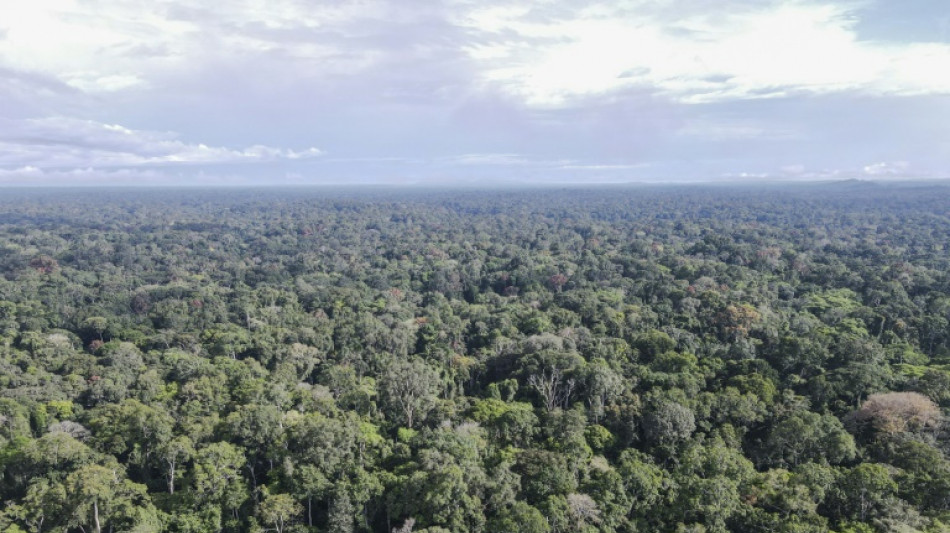
Banana growers on the edge of a giant national park on Cameroon's Atlantic coast say they can take no more crop destruction from hungry elephants as the conflict between man and animal escalates.
Near the southern border with Equatorial Guinea, eight villages have registered complaints with the Campo Ma'an national park, a vast area of virgin forest from where the animals emerge.
An estimated 500 gorillas and more than 200 elephants -- both endangered species -- roam the reserve's 264,000 hectares (652,000 acres).
A week after elephants flattened his banana plantation close by the park, Simplice Yomen, 47, is struggling to cope.
"We are at the end of our tether," he sighs.
The elephants eat the new growth inside the banana tree trunks after splitting them open.
Manioc, maize, sweet potato and peanuts are also favourite snacks, says park administrator Michel Nko'o.
In Cameroon, co-existence between humans and animals on the edge of dense forests is proving increasingly challenging.
Most of the crop destruction is recorded near protected wildlife reserves.
For Nko'o, the elephant raids have become noticeably more frequent since agro-industrialists began setting up by the park.
More 2,000 hectares of forest has been chopped down to grow palm oil trees for Cameroun Vert, an industrial plantation project for which the government first approved a clearing of 60,000 hectares before reducing it to 39,000 hectares after protests.
"The elephants who lived here no longer have any place to go and end up in people's fields," regrets park conservationist Charles Memvi.
- 'Discouraging' -
Affected villages near the town of Campo have seen "three to four hectares of plantations destroyed, which is a major financial loss for the local people", says Nko'o.
Elephants are blamed for 80-90 percent of the attacks.
The rest is accounted for by gorillas, chimpanzees, hedgehogs, pangolins and porcupines.
Nearly all these species are endangered due to habitat loss and/or poaching.
Daniel Mengata's two hectares of banana trees were "devastated" in 2020.
"The animals really are discouraging us," the 37-year-old admitted.
"I started crying after seeing the damage because in one night a year's work was wiped out. That really hurts."
"I can no longer feed my family," adds Emini Ngono, 57. Hungry elephants have ruined her smallholding, which once produced gourds, manioc and potato.
Ngono says she could make more than 1,000 euros ($970) from selling seeds for gourds, a traditional stable food across the region.
- Reconciliation -
Not far off, logs of wood extracted from the forest are piling up.
The high-pitched noise from a saw masks the birdsong as a group of trackers set off looking for rare gorillas.
The World Wide Fund for Nature (WWF) launched a "primate habituation" project a decade ago focused on gorillas in a bid to develop ecotourism in the area.
Part of the income was to go to local communities to encourage them to help protect the animals and reduce the conflict with humans.
Chimene Mando'o is out tracking primates.
"There! That's Akiba", the 25-year-old cries after the gorilla calls out.
Shortly after, Akiba -- meaning "thank you" in the local Mvae language -- briefly appears at the foot of a tree just a dozen metres (yards) away, before scampering off into the jungle.
"We have to find a way to generate some development ... in such a way that everyone benefits from this natural resource," explains WWF biodiversity economist Yann Laurans.
The ministry for forests and wildlife says Cameroon has no legal framework to compensate people after attacks by animals from national parks.
The WWF is testing and studying an insurance system to cover people who lose their livelihoods to animal attacks.
Smallholder Simplice Yomen is hoping for a more secure future after setting up beehives to dissuade elephants from encroaching on his plantation.
Others are trying lemon trees and other spiky bushes to keep the elephants out.
G.Schulte--BTB