Most Salvadorans think making Bitcoin legal tender was 'failure' / Photo: © AFP

 After botched execution, US woman was nearly taken off life support before revival

 Searing AIDS drama 'Elsinore' opens London film festival

 Evicted pensioner who sparked Spain housing protests dies: tenant union

 Golf star Rahm quitting LIV tour over 'unacceptable' terms
 Thousands march fearing return of a Bolsonaro presidency in Brazil
 French PM denies police ordered to confront student protesters
 Rubio touts US power, calls on Europe to emerge from 'slumber'

 Trump says 'we don't think' Russian plague is bio-weapon

 Five children among 26 killed in Ukraine after Russian strikes

 Man City should 'accept' punishment for rule breaches, says Lineker
 US woman who survived botched execution is awake and speaking
 From 1800s to modern pharma: a Nobel-winning chemistry quest

 Southampton boss Eckert given suspended ban over 'Spygate'
 Russia warns of 'false' information as second plague case reported

 IEA ready to release more oil reserves if necessary

 HSBC 'consults' over UK unit job cuts amid AI adoption

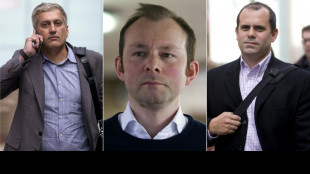 UK court quashes five ex-traders' Libor rate rigging convictions
 XM Receives “Global Customer Experience Leader Award 2026” at the TrustFinance Performance Awards
 Stocks slide as oil climbs on Mideast flareup

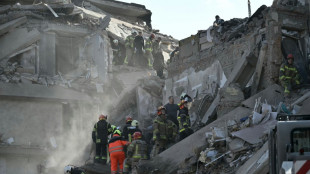 Heavy casualties in Ukraine after Russian strikes
 French wine harvest set to hit historic low
 Kyiv 'cannot agree' to EU membership limiting food exports: minister

 Arteta targets more Arsenal glory after signing new deal until 2030

 Russell hit with Singapore grid penalty for taking new power unit

 Spotify expands audiobooks to more than 180 markets

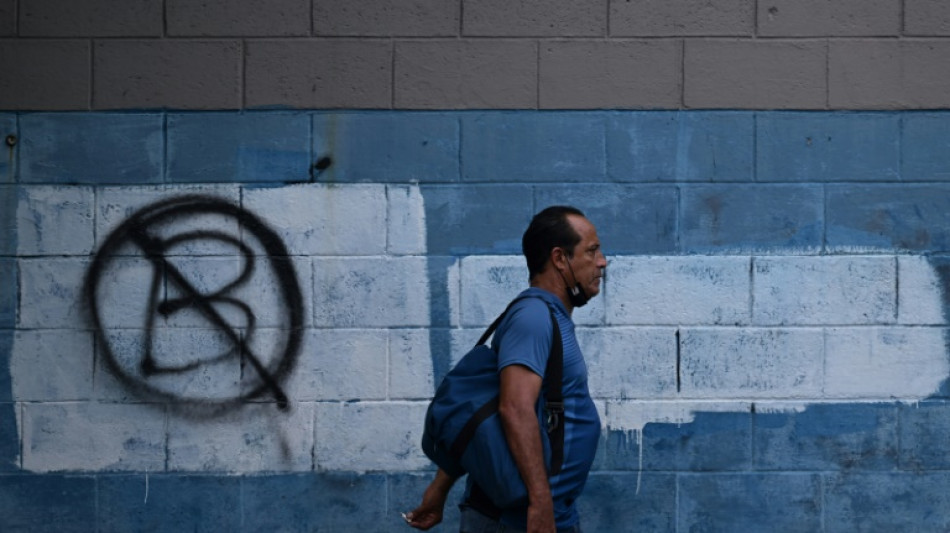
More than a year after Bitcoin became legal tender in El Salvador, a new poll Tuesday showed most people in the country consider the controversial move by President Nayib Bukele as a "failure."
According to the poll by the University of Central America (UCA), 75.6 percent of respondents said they never used cryptocurrency in 2022, and 77 percent consider its adoption 14 months ago as legal tender, alongside the dollar, "to have been a failure."
Bitcoin, whose value has tumbled over the past year, "is the government's most unpopular measure, the most criticized and the most frowned upon," said UCA rector Andreu Oliva, commenting on the results of the study.
Bukele's idea was to promote crypto money transfers from some three million Salvadorans living overseas, mainly in the United States, to their relatives back home, thereby saving on bank charges.
The president's decision was a strategic one, given that these remittances make up more than a quarter of El Salvador's gross domestic product.
But according to data from the Salvadoran Central Bank in early September, a year after the introduction of Bitcoin, "less than two percent" of remittances from emigrants were made using the cryptocurrency.
In September 2021, Bitcoin was hovering around $45,000. By November it soared to $68,000, but after a steep drop it is currently trading below $20,000.
Taking advantage of the plummeting prices, Bukele bought 80 Bitcoin with public funds in July, bringing El Salvador's total reserves to 2,381 units.
According to the UCA study, 77 percent of Salvadorans believe their president "should not continue to spend public money to buy Bitcoin."
The survey also looked into an emergency regime in place since March as part of the "war" on gangs decreed by Bukele, which led to the arrest of 55,000 suspected members of criminal gangs, the dreaded "maras."
The population still overwhelmingly approves of it, at 75.9 percent, but that figure was down nine points from May, when it was 84.8 percent.
R.Adler--BTB