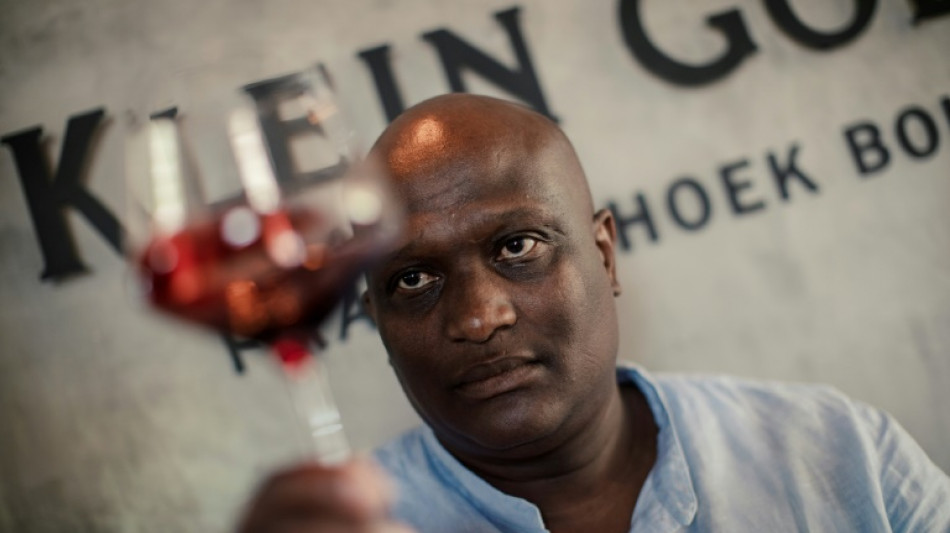
Black South Africans break into once white-only wine industry / Photo: © AFP

 As species decline, green turtles offer glimmer of hope

 Brothers Scott and Beauden Barrett named to start for All Blacks

 EU trade chief seeks to dial down China tensions

 'Never again Bolsonaro': thousands march ahead of Brazil election runoff

 After botched execution, US woman was nearly taken off life support before revival

 Searing AIDS drama 'Elsinore' opens London film festival

 Evicted pensioner who sparked Spain housing protests dies: tenant union

 Golf star Rahm quitting LIV tour over 'unacceptable' terms

 Thousands march fearing return of a Bolsonaro presidency in Brazil

 French PM denies police ordered to confront student protesters
 Rubio touts US power, calls on Europe to emerge from 'slumber'

 Trump says 'we don't think' Russian plague is bio-weapon
 Five children among 26 killed in Ukraine after Russian strikes

 Man City should 'accept' punishment for rule breaches, says Lineker

 US woman who survived botched execution is awake and speaking
 From 1800s to modern pharma: a Nobel-winning chemistry quest

 Southampton boss Eckert given suspended ban over 'Spygate'

 Russia warns of 'false' information as second plague case reported
 IEA ready to release more oil reserves if necessary

 HSBC 'consults' over UK unit job cuts amid AI adoption

 UK court quashes five ex-traders' Libor rate rigging convictions
 XM Receives “Global Customer Experience Leader Award 2026” at the TrustFinance Performance Awards

 Stocks slide as oil climbs on Mideast flareup

 Heavy casualties in Ukraine after Russian strikes
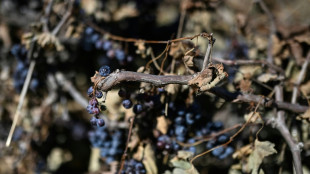 French wine harvest set to hit historic low

Winemaking was a profession most South African parents could never have envisioned for their children.
But Black South Africans are today managing to break through multiple barriers into the renowned industry, transforming a landscape that was historically white.
Paul Siguqa, 41, bought Klein Goederust farm (Afrikaans for "a little good rest") after saving up for 15 years.
His mother had for 37 years worked at a farm in South Africa's Cape winelands under the white minority apartheid regime.
"If you grow up on a farm as children of farm labourers -- black farm labourers -- you are raised to be the next crop of labour for that farmer," said Siguqa.
He finally purchased the "rundown" farm in 2019, renovated it and opened last year.
"If we want to see change in an industry, we need to be the change," he told AFP after inspecting his flowering grape crop at the farm in Franschhoek (French corner), a region dotted with centuries-old vineyards.
The rise of entrepreneurs of colour has been slow and still faces serious obstacles, including lack of access to land and capital. As a result an industry push is underway to try to accelerate the pace of change.
"Nobody's getting nowhere slowly," said Wendy Petersen, manager at SA Wine Industry Transformation Unit which organises grants and internships for startups. Often the resources are not enough and have to be spread thinly among the candidates.
To help them grow, the organisation has launched the Wine Arc tasting room, in South Africa's wine producing hub Stellenbosch, to promote budding producers.
Among the brands featured there is Carmen Stevens Wines, which became South Africa's first fully black-owned winery when launched in 2011 and released its first vintage in 2014.
- 'Land, biggest barrier' -
"The difficult part of winemaking is selling this product, is getting this product to somebody's table and somebody coming back and saying 'I want more'," Stevens said.
The 51-year-old is an unlikely winemaker, having grown up in the Cape Flats -- an area marred by poverty and gangsters.
Her mother, a factory worker, would buy her Mills & Boon fiction novels, many set in vineyards and involving wine.
South Africa was still under the racially segregated apartheid regime when Stevens made her first attempt to study winemaking in 1991. After being repeatedly refused, she was accepted at a college in 1993.
Her perseverance has paid off. This year she took home three gold medals at a South African wine and spirits award event for her sauvignon blanc and newly-released rose named after her mother Julie.
But like many black-owned brands, she procures her grapes from farmers in the region, not yet having her own land to cultivate.
Land access is "the biggest barrier for black people participating in the wine industry," Siguqa says.
"That's very political," because historically the majority of black people, who make up about 80 percent of the population, don't have access to land.
Black people "are competing, with old inter-generational, white rands" as well as with foreign buyers that are purchasing prime land... You are competing with the US dollars, with the pound and the euro," said Siguqa.
The first vineyards were established in the 1600s by French Huguenots.
Since then, land has passed down through generations and when sales do occur, it has often been to neighbours, leaving little opportunity for newcomers to enter the market, said Maryna Calow, of the Wines of South Africa industry group.
But for those non-white operators who have broken the barriers into the industry, it's been a bittersweet journey so far -- having taken so long to achieve and, once in, the pressure to not fail.
"We've been free for 28 years and one would have wanted to see a lot more black people participating in the industry," said Siguqa, wine bottles lined up on a table next to him.
Originally established in 1905 his farm this month scooped an award in Cape Town for offering an authentic South African experience.
Out of the hundreds of winemakers in the country, Africa's top wine producer, only just over 80 brands are black-owned, according to Petersen.
D.Schneider--BTB