Croatia prepares for euro switch amid soaring inflation / Photo: © AFP/File

 Bad COP, worse COP? EU tempers hopes for UN climate summit
 Rookie Henry named in Wallabies midfield to face All Blacks
 Housing crisis set to dominate Spain's snap election

 Gas, health care, utilities: high costs squeeze US midterm voters
 New Zealand Rugby seeks injunction over PNG Chiefs name
 Samsung expects 780% quarterly operating profit jump on AI boom

 Guardians survive with 9-3 win over White Sox

 Saudi Arabia says 3 dead at airports after Houthis claim attacks
 Stocks slide as oil sees volatile trading day over Iran war fears

 Microsoft pushes AI vision with new, expensive Surface laptop
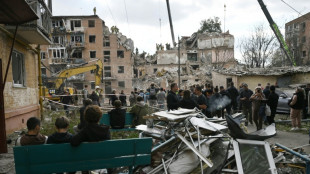 Five children among 28 killed in Russian strikes on Ukraine

 Odell Beckham Jr signs with Minnesota Vikings
 Saudi Arabia says three dead at airports after Houthis claim attacks
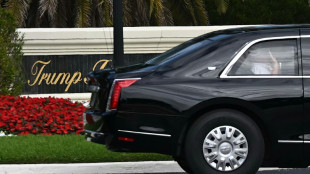 Trump plans to turn Florida golf course into presidential retreat

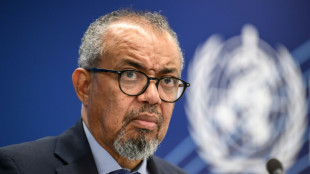 WHO says cannot conduct full risk assessment on Russia plague reports
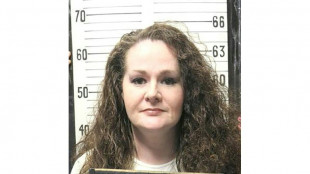 After botched execution, US woman is awake and shackled to bed
 New Zealand fly-half Mo'unga ruled out of Australia Tests
 Protests in major Turkish city after mayor defects to Erdogan party
 Climate change strips island's title of largest penguin colony: study
 Rubio says West must choose between national power or decline
 Russia's plague scare: What we know

 French luxury giant to fund redevelopment of two Paris streets: city hall

 Trump wants to turn Florida golf course into presidential retreat
 Mayor of Turkish opposition stronghold defects to Erdogan party
 Children among heavy casualties in Ukraine after Russian strikes
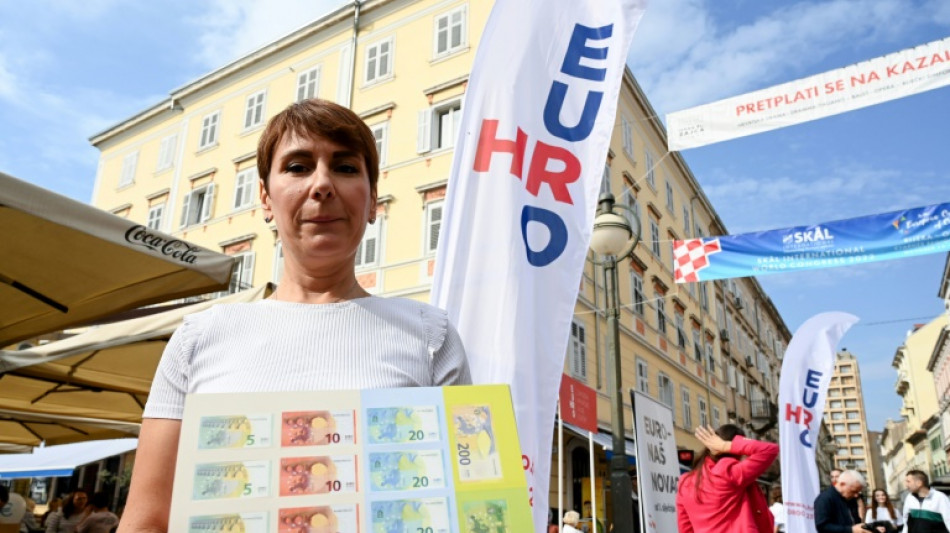
With inflation mounting and precarious geopolitical headwinds rattling Europe, Croatia hopes that its upcoming switch to the euro will bring some semblance of protection to the Balkan country in an uncertain world.
On January 1, Croatia will bid farewell to its currency -- the kuna -- to become the 20th member of the eurozone.
The former Yugoslav Republic, which joined the European Union nearly a decade ago, posted an annual inflation rate of almost 13 percent in September, compared to 10 percent in the eurozone.
In the build-up to the changeover, authorities have been constantly hammering home the advantages of adopting the euro for the country's 3.9 million inhabitants.
"The euro brings resilience," Ana Sabic of the Croatian National Bank told AFP, arguing that Zagreb will, if needed, have access to more favourable borrowing conditions amid economic hard times.
Since July, the European Central Bank has embarked on a policy of monetary tightening as it attempts to rein in galloping inflation caused by soaring energy and food prices triggered by the Russian war in Ukraine.
Analysts continue to argue that eastern European countries in the EU with currencies outside of the eurozone, such as Poland or Hungary, have been even more vulnerable to surging inflation.
"It is actually an ideal moment for the euro switch," said Goran Saravanja, the chief economist with the Croatian Chamber of Commerce.
"When major uncertainty dominates the global economy, for a small and open economy like Croatia it's always better to be a part of a larger association like the eurozone," he added.
Croatia's main trading partners are in the eurozone, while the tourism sector -- which accounts for 20 percent of its GDP -- caters to large numbers of European visitors.
And Croatians have already adopted the euro to a large extent, with about 80 percent of bank deposits denominated in euros.
They have long valued their most prized possessions such as cars and apartments in euros, displaying lack of confidence in local currency dating back to the former Yugoslavia which was gripped by high inflation before its breakup.
During the Yugoslav era and after Croatia's independence in 1991, properties were mostly valued in the German mark until the introduction of the euro two decades ago.
- Hopes and fears -
"Life will be easier, we calculate everything in euros anyway," said Roman, an economist from Zagreb who refused to give his surname.
Milan Batur, a retired pharmacist, dismissed concerns from those who fear some traders are taking advantage of the coming transition to the currency to round up prices.
"It's other things, wars, shortages that cause prices to rise. We can't blame everything on the euro," said Batur.
However some still worry they will take a financial hit by the move.
"The calendar may not be ideal, we could perhaps have postponed it a little because of the situation in the world," Zdravka Antonic, a florist at a market in Zagreb, told AFP.
"People are already worried about how this is all going to end and the euro just adds to the uncertainty."
Since early September, the price of bouquets, like those of other goods and services, bears a double label -- with a conversion rate set by Brussels at 7.53 kuna to one euro.
The system will remain in effect throughout 2023.
"A country that has its own currency is more independent. But when we joined the EU, we also accepted the euro," said Ana Brkic, a vegetable seller.
Conservative and right-wing opposition groups protested the adoption of the new currency, saying the kuna represented an important symbol of national identity and argued that the euro only benefited larger countries like Germany and France.
But an attempt last year at triggering a nation-wide referendum to challenge the adoption of the euro failed to gain any traction in the end.
Some Croatians fear that once they have adopted the euro the stark reality of how much poorer they are than many of their EU neighbours will only sink in further.
According to the latest Eurostat survey published in 2018, the average monthly salary in Croatia was just 1,179 euros compared to more than 2,300 euros in the EU.
An estimated 300,000 Croatian retirees receive a pension of barely 260 euros a month.
"It will spark the feeling of poverty and misery," said Ana Knezevic, director of the national Consumer Protection Association.
T.Bondarenko--BTB