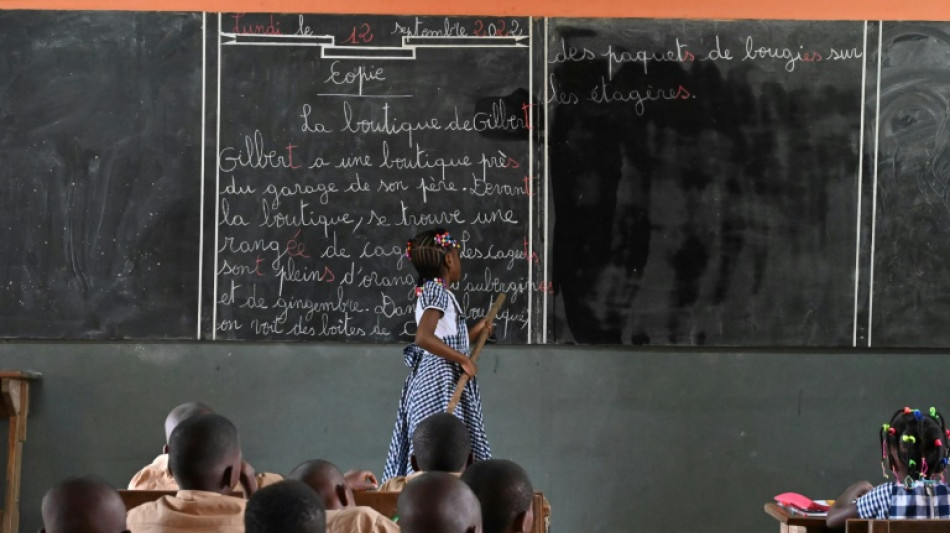
One in 3 schoolchildren lacks access to drinking water: UN / Photo: © AFP

 Prague’s Concert for the Future Kicks Off on Wenceslas Square

 Prince William and Princess of Wales to Announce Earthshot Prize Winners in Mumbai

 Indonesia Forest Fires: Health Crisis, Diplomatic Strains and the Search for Solutions

 BYD Dolphin G Leasing Deal: Plug-in Hybrid Supermini Available from £174 a Month

 JUEL Group Expands from Real Estate to Hospitality with Hyatt Centric Malta Opening

 French Economy Shrinks 0.1% as Consumer Confidence Slumps

 Wall Street Ends Turbulent Week Higher Despite Inflation and AI Jitters

 Kansas City Fed Chief Says Inflation Is Still Running Too Hot

One in three children worldwide does not have access to clean drinking water while at school, impacting their health and ability to learn, the United Nations said Wednesday.
"Globally, almost one in three schools has no drinking water from an improved source," the UN cultural agency UNESCO said in a new report.
"One in three schools worldwide has no basic sanitation," meaning a toilet and sewage system, the agency found, while "almost half of schools do not have handwashing facilities with water and soap".
Clean drinking water and handwashing facilities are key to protecting children against the likes of Covid-19, parasites, respiratory illnesses and diarrhea, said school health and nutrition expert Emilie Sidaner, who oversaw the report.
Schools without clean drinking water cannot prepare meals for students, contributing to child malnutrition, she told AFP.
Lack of running water and soap is also a major challenge for girls who "cannot go to school during their period", she added.
For example, one in four girls did not go to school in Bhutan during that time of the month, Sidaner said.
And one in five had to skip classes during menstruation in Ivory Coast, while one in seven missed school for the same reason in Burkina Faso.
"There needs to be more investment in water and sanitation as well as all other infrastructure that enables quality learning," Sidaner said.
"If pupils are not in good health, well-fed and protected in school, it's even harder for them to take in what their school can teach them."
D.Schneider--BTB